
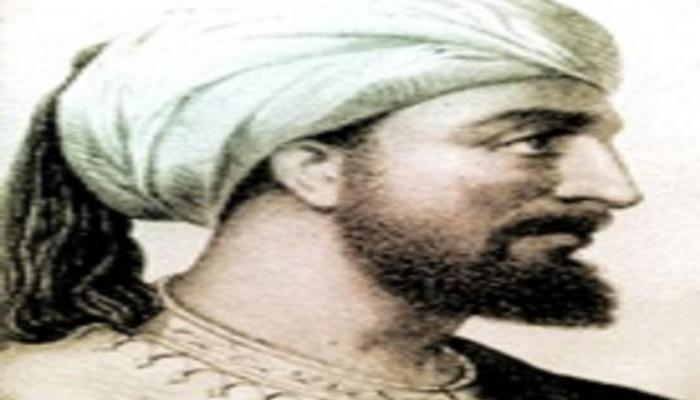

Today marks the anniversary of the death of the great scholar and Hadith compiler Abu Abdullah Muhammad ibn Yazid ibn Majah al-Qazvini, known as Ibn Majah. He was one of the authors of the six canonical Hadith collections and the creator of the famous «Sunan Ibn Majah». He passed away on February 20, 886 CE.
Born in Qazvin, Ibn Majah grew up in a scholarly environment, memorizing the Quran and immersing himself in Hadith studies. From 230 AH, he embarked on extensive travels to seek knowledge, visiting Khorasan, Basra, Kufa, Baghdad, Damascus, Mecca, Medina, and Egypt. During these journeys, he studied under many renowned teachers, including Ali ibn Muhammad al-Tanafsi, Ibrahim ibn al-Munzir al-Hizami, Jubara ibn al-Mughallis, Abdullah ibn Muawiyah, and Hisham ibn Ammar.
After more than fifteen years of travel, Ibn Majah returned to Qazvin, dedicating himself to teaching, writing, and narrating Hadith. Among his students were notable scholars such as Ali ibn Saeed al-Ghadani and Ibrahim ibn Dinar al-Jarshi.
Despite his prolific scholarship, most of Ibn Majah’s works have been lost over time, with only his «Sunan Ibn Majah» surviving. Ibn Kathir mentioned that he authored a Quranic commentary described as “comprehensive” and a historical book “complete in scope,” both of which have not survived. His «Sunan» received extensive attention from later scholars, including commentaries by al-Suyuti and Muhammad ibn al-Hadi al-Sindi.
Ibn Majah earned the admiration of his contemporaries; Ibn Khallikan described him as “a leading scholar of Hadith, knowledgeable in all its sciences,” and al-Dhahabi noted him as “a memorizer, critic, truthful, and broad in knowledge.” He passed away in Ramadan, 273 AH, leaving behind a legacy of scholarship that continues to inspire Hadith studies.
For more details and latest news, follow Misr Connect.




