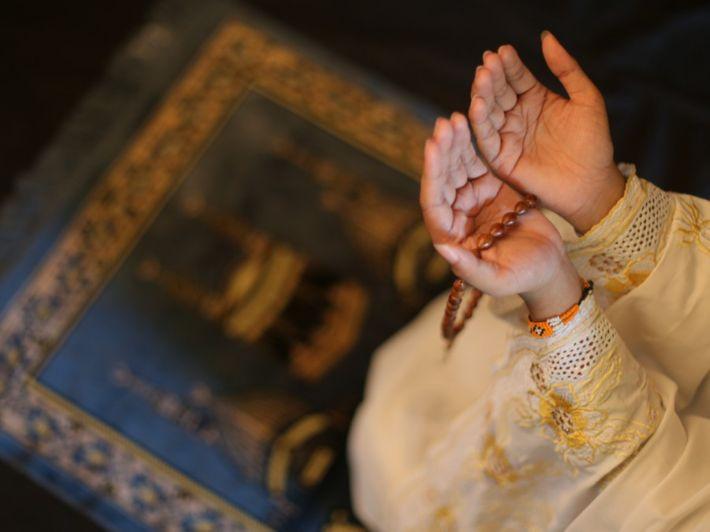

Evening adhkar are among the acts of worship Muslims recite toward the end of the day. They include remembrance of Allah, supplication for forgiveness and well-being, and seeking His protection.
The evening remembrance includes Quranic verses and prophetic supplications, most notably Ayat Al-Kursi, Surah Al-Ikhlas, Surah Al-Falaq, Surah An-Nas, Sayyid Al-Istighfar, and other established forms of dhikr.
Ayat Al-Kursi in the Evening Adhkar
Ayat Al-Kursi is recited once as part of the evening remembrance:
Allah—there is no deity except Him, the Ever-Living, the Sustainer of all. Neither drowsiness nor sleep overtakes Him. To Him belongs whatever is in the heavens and whatever is on the earth. Who is it that can intercede with Him except by His permission? He knows what lies before them and what lies behind them, and they encompass nothing of His knowledge except what He wills. His Kursi extends over the heavens and the earth, and preserving them does not tire Him. And He is the Most High, the Most Great.
[Al-Baqarah: 255]
A hadith mentions the virtue of reciting Ayat Al-Kursi at night and protection from Satan until morning.
Surah Al-Ikhlas, Al-Falaq and An-Nas
Surah Al-Ikhlas, Surah Al-Falaq, and Surah An-Nas are recited three times as part of the evening remembrance.
These three surahs contain meanings of monotheism, reliance upon Allah, and seeking refuge in Him from different forms of harm and evil.
Surah Al-Ikhlas
Say, “He is Allah, the One. Allah, the Eternal Refuge. He neither begets nor is born, nor is there to Him any equivalent.”
Surah Al-Falaq
Say, “I seek refuge in the Lord of daybreak, from the evil of what He has created, from the evil of the night when it grows dark, from the evil of those who blow on knots, and from the evil of an envier when he envies.”
Surah An-Nas
Say, “I seek refuge in the Lord of mankind, the King of mankind, the God of mankind, from the evil of the whisperer who withdraws, who whispers in the hearts of mankind, from among jinn and mankind.”
Prophetic Evening Adhkar and Supplications
We Have Entered the Evening and Sovereignty Belongs to Allah
This supplication is recited once:
We have entered the evening and sovereignty belongs to Allah. Praise belongs to Allah. There is no deity except Allah alone, without partner. To Him belongs sovereignty and to Him belongs praise, and He is over all things capable. My Lord, I ask You for the good of this night and the good that follows it, and I seek refuge in You from the evil of this night and the evil that follows it. My Lord, I seek refuge in You from laziness and the difficulties of old age. My Lord, I seek refuge in You from punishment in the Fire and punishment in the grave.
O Allah, By You We Enter the Evening
It is recited once:
O Allah, by You we enter the evening, by You we enter the morning, by You we live, by You we die, and to You is the return.
Sayyid Al-Istighfar
It is recited once:
O Allah, You are my Lord. There is no deity except You. You created me and I am Your servant. I uphold Your covenant and promise as much as I am able. I seek refuge in You from the evil of what I have done. I acknowledge Your blessings upon me, and I acknowledge my sin, so forgive me, for none forgives sins except You.
Sayyid Al-Istighfar is one of the most comprehensive forms of seeking forgiveness mentioned in the Sunnah. It combines acknowledgment of Allah's oneness, recognition of His blessings, admission of one's shortcomings, and a request for forgiveness.
In the Name of Allah, With Whose Name Nothing Can Cause Harm
It is recited three times:
In the name of Allah, with whose name nothing on earth or in heaven can cause harm, and He is the All-Hearing, the All-Knowing.
I Am Content With Allah as My Lord
It is recited three times:
I am content with Allah as my Lord, with Islam as my religion, and with Muhammad, peace and blessings be upon him, as my Prophet.
I Seek Refuge in the Perfect Words of Allah
It is recited three times:
I seek refuge in the perfect words of Allah from the evil of what He has created.
This supplication expresses seeking Allah's protection from every form of harm.
O Allah, Grant Me Well-Being in My Body
It is recited three times:
O Allah, grant me well-being in my body. O Allah, grant me well-being in my hearing. O Allah, grant me well-being in my sight. There is no deity except You.
This is a comprehensive supplication asking Allah for well-being in the body, hearing, and sight.
Allah Is Sufficient for Me
The following supplication is commonly included among evening remembrances and is recited seven times:
Allah is sufficient for me. There is no deity except Him. Upon Him I rely, and He is the Lord of the Mighty Throne.
Sending Blessings Upon the Prophet ﷺ
A Muslim may frequently send blessings and peace upon Prophet Muhammad, peace and blessings be upon him. One concise wording is:
O Allah, send blessings and peace upon our Prophet Muhammad.
The practice of sending blessings upon the Prophet is generally encouraged, while assigning a specific evening number to this particular wording should not be presented as an established Sunnah without evidence.
Glory Be to Allah and Praise Be to Him
This dhikr is said one hundred times:
Glory be to Allah and praise be to Him.
The Sunnah mentions great virtue for saying this remembrance one hundred times during the day.
When Is the Best Time for Evening Adhkar?
The time for evening adhkar begins after Asr and extends into the night. A Muslim can recite them during the evening while focusing on remembrance and supplication.
The adhkar may be recited in their established order, while particular attention should be given to those remembrances for which the Sunnah specifies a certain number of repetitions.
Why Are Evening Adhkar Important?
Evening adhkar combine Quran recitation, supplication, seeking forgiveness, and reliance upon Allah. They help the Muslim maintain remembrance of Allah and conclude the day with worship.
They also include supplications for protection, well-being, forgiveness, and seeking refuge from harm.
A Short List of Evening Adhkar
For a concise evening routine, a Muslim can maintain the following:
-
Ayat Al-Kursi once.
-
Al-Ikhlas, Al-Falaq, and An-Nas three times.
-
“We have entered the evening and sovereignty belongs to Allah” once.
-
“O Allah, by You we enter the evening” once.
-
Sayyid Al-Istighfar once.
-
“In the name of Allah, with whose name nothing can cause harm” three times.
-
“I am content with Allah as my Lord” three times.
-
“I seek refuge in the perfect words of Allah” three times.
-
“O Allah, grant me well-being in my body” three times.
-
“Glory be to Allah and praise be to Him” one hundred times.
What are the evening adhkar?
Evening adhkar are Quranic verses and prophetic supplications recited in the evening to remember Allah and seek forgiveness, protection, and well-being.
How many times are Surah Al-Ikhlas, Al-Falaq, and An-Nas recited?
Each of the three surahs is recited three times as part of the established morning and evening remembrance.
Is Ayat Al-Kursi part of the evening adhkar?
Yes. Ayat Al-Kursi is among the Quranic verses commonly recited as part of the evening remembrance, with a hadith mentioning its nighttime virtue and protection from Satan until morning.
How many times is Sayyid Al-Istighfar recited in the evening?
Sayyid Al-Istighfar is recited once as part of the evening adhkar.
When should evening adhkar be recited?
Evening adhkar are generally recited from after Asr through the evening, with the Muslim choosing a suitable time to remember Allah with attention and devotion.