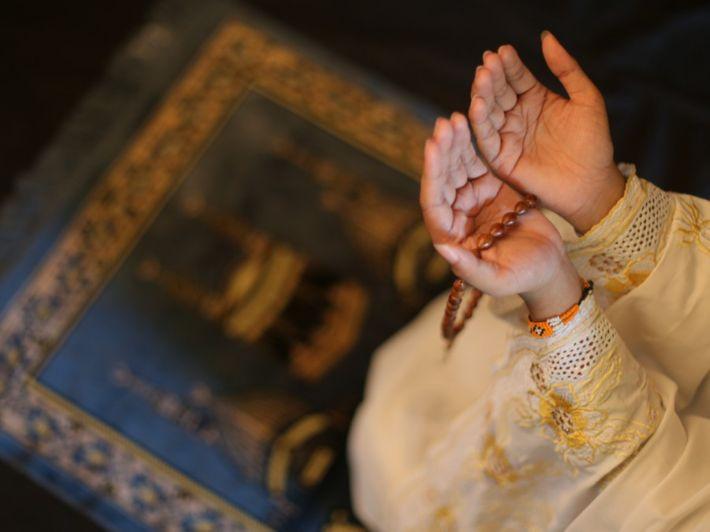

The time for morning Adhkar begins after the Fajr prayer and continues during the early part of the day. Many Muslims recite them after Fajr and before sunrise.
Morning Adhkar include Quranic verses, prophetic supplications, remembrance, and seeking forgiveness, making them a meaningful way to begin the day with the remembrance of Allah.
Morning Adhkar From the Quran
Ayat al-Kursi
Ayat al-Kursi is among the important verses recited as part of morning remembrance:
“Allah—there is no deity except Him, the Ever-Living, the Sustainer of all. Neither drowsiness nor sleep overtakes Him...”
It is recited once as part of the morning Adhkar.
Surah Al-Ikhlas, Al-Falaq, and An-Nas
Surah Al-Ikhlas, Surah Al-Falaq, and Surah An-Nas are each recited three times in the morning.
These short surahs are among the most well-known morning remembrances, combining affirmation of Allah’s oneness with seeking His protection from harm.
Essential Morning Duas and Adhkar
“We Have Entered the Morning and the Kingdom Belongs to Allah”
One of the morning remembrances begins:
“We have entered the morning and the kingdom belongs to Allah. Praise belongs to Allah. There is no deity except Allah alone, without partner...”
This remembrance begins the day by praising Allah, affirming His oneness, and acknowledging His power and ownership.
“O Allah, By You We Enter the Morning”
Another morning remembrance is:
“O Allah, by You we enter the morning, by You we enter the evening, by You we live, and by You we die, and to You is the resurrection.”
It expresses reliance upon Allah and recognition that life, death, and resurrection ultimately belong to Him.
Sayyid al-Istighfar
One of the most important morning supplications is Sayyid al-Istighfar, the Master Supplication for Seeking Forgiveness:
“O Allah, You are my Lord. There is no deity except You. You created me and I am Your servant. I remain faithful to Your covenant and promise as much as I am able. I seek refuge in You from the evil of what I have done. I acknowledge Your blessings upon me and acknowledge my sin, so forgive me, for none forgives sins except You.”
It is recited once in the morning while reflecting on repentance, Allah’s blessings, and the need for forgiveness.
The Dua for Forgiveness and Well-Being
Among the morning Adhkar is:
“O Allah, I ask You for forgiveness and well-being in this world and the Hereafter. O Allah, I ask You for forgiveness and well-being in my religion, my worldly affairs, my family, and my wealth...”
It is a comprehensive supplication asking Allah for forgiveness, protection, and well-being.
“In the Name of Allah, With Whose Name Nothing Can Harm”
The following remembrance is recited:
“In the name of Allah, with whose name nothing can harm on earth or in heaven, and He is the All-Hearing, the All-Knowing.”
It is repeated three times in the morning.
“I Am Pleased With Allah as My Lord”
Another important remembrance is:
“I am pleased with Allah as my Lord, with Islam as my religion, and with Muhammad, peace and blessings be upon him, as my Prophet.”
It is repeated three times.
Tasbih and Tahleel in the Morning
“There Is No Deity Except Allah Alone”
Among the most well-known morning Adhkar is:
“There is no deity except Allah alone, without partner. To Him belongs the kingdom and to Him belongs all praise, and He has power over all things.”
A Muslim may repeat this remembrance frequently in the morning, with one of the well-known forms being to recite it one hundred times.
“Glory Be to Allah and Praise Be to Him”
Another important remembrance is:
“Glory be to Allah and praise be to Him, as numerous as His creation, as pleasing to Him as His own satisfaction, as heavy as His Throne, and as extensive as the ink of His words.”
This remembrance is recited three times.
It is also recommended to frequently say:
“Glory be to Allah and praise be to Him.”
One well-known practice is to repeat it one hundred times.
How Can You Maintain Morning Adhkar Every Day?
The easiest way to maintain morning Adhkar is to make them a consistent part of the daily routine by setting aside time after Fajr for Quranic verses, supplications, and remembrance.
A person can begin with the essential Adhkar and then complete the rest calmly, while reflecting on their meanings rather than simply repeating the words quickly.
FAQ: Frequently Asked Questions About Morning Adhkar
When does the time for morning Adhkar begin?
The time for morning Adhkar begins after Fajr prayer and is best observed during the early part of the day.
How many times are Al-Ikhlas, Al-Falaq, and An-Nas recited?
Each of the three surahs is recited three times as part of the morning Adhkar.
How many times is Sayyid al-Istighfar recited in the morning?
Sayyid al-Istighfar is recited once in the morning.
How many times is the “In the Name of Allah” remembrance recited?
It is recited three times in the morning.
Can morning Adhkar be recited after sunrise?
A Muslim may remember Allah at any time, but it is preferable to maintain the morning Adhkar during their appropriate early-day period.