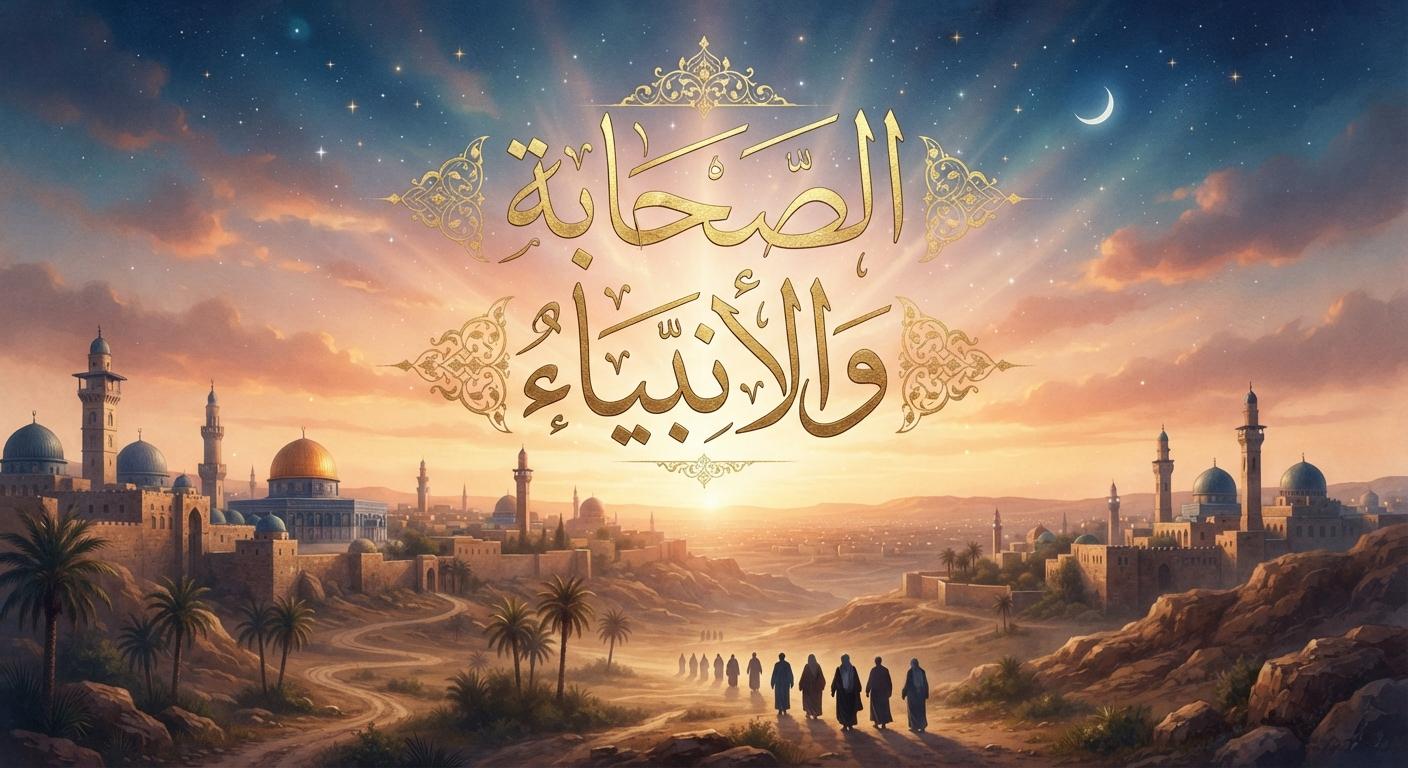

The concepts of the Companions and the prophets are fundamentally different in Islamic belief. Prophets were chosen by God to receive revelation and convey it to people, while the Companions were believers who met Prophet Muhammad, believed in him, and died as Muslims.
The distinction becomes clear when examining revelation, prophethood, religious mission, and the status of each group.
Who Are the Prophets?
Prophets are among the people chosen by God to receive revelation and guide humanity toward faith and the worship of God.
A prophet receives revelation from God and conveys what has been revealed to him. Depending on the particular prophet, this may involve a distinct religious law or adherence to a law brought by an earlier messenger.
Prophets were sent to guide their communities and call people toward monotheism, faith, and obedience to God.
Is Every Prophet a Messenger?
Scholars distinguish between a prophet and a messenger, although every messenger is also a prophet.
A messenger is sent with a divine message to a people, while a prophet may follow and uphold the religious law brought by a previous messenger while still receiving revelation from God.
Who Are the Companions?
A Companion is a person who met Prophet Muhammad while believing in him and died as a Muslim.
The term includes both men and women who believed in the Prophet and met him during his lifetime, regardless of whether their companionship with him was long or brief, provided they met the established definition of a Companion.
The Companions formed the first generation of Muslims who carried the teachings of Islam after the Prophet. They transmitted the Quran and Sunnah and played a major role in teaching and spreading Islam.
What Is the Difference Between the Companions and the Prophets?
The fundamental differences between the two groups can be understood through several important aspects.
Difference in Revelation
Prophets receive revelation from God, which is one of the defining characteristics of prophethood.
The Companions, however, were not prophets and did not receive prophetic revelation. They believed in and followed the revelation delivered by Prophet Muhammad.
Difference in Mission
Prophets were chosen by God to convey divine revelation and guide their communities.
The Companions were followers of Prophet Muhammad. They learned Islam from him, preserved his teachings, and transmitted them to later generations.
Difference in Status
Prophets and messengers hold an exceptionally high status because they were chosen by God to receive and convey revelation.
The Companions also have a highly respected position in Islam because they lived alongside the Prophet, believed in him, supported his mission, and transmitted his teachings.
However, prophethood is a distinct status that belongs only to prophets. A Companion does not become a prophet because of his devotion, virtue, or closeness to Prophet Muhammad.
Why Do the Companions Have a High Status in Islam?
The Companions hold a significant position because they lived with Prophet Muhammad, learned the Quran and Islamic teachings directly from him, witnessed the development of the early Muslim community, and endured major hardships for the sake of their faith.
They also transmitted a substantial part of the Sunnah and accounts of the Prophet's life to later generations.
Among the best-known Companions are the four rightly guided caliphs: Abu Bakr, Umar ibn Al-Khattab, Uthman ibn Affan, and Ali ibn Abi Talib.
Can a Companion Be a Prophet?
No. A Companion cannot be a prophet because Prophet Muhammad is the final prophet and messenger, and there is no prophet after him.
Those who lived with him and believed in his message were his Companions and followers, not prophets.
Conclusion
The fundamental difference is that prophets were chosen by God to receive and convey revelation, while the Companions were believers who met Prophet Muhammad, believed in him, and died as Muslims.
Prophethood is based on divine selection and revelation, while companionship is based on meeting the Prophet, believing in him, and following his message. Both have important positions in Islam, but their roles and religious status are fundamentally different.
Who is considered a Companion?
A Companion is someone who met Prophet Muhammad while believing in him and died as a Muslim.
Did the Companions receive revelation?
No. The Companions were not prophets and did not receive prophetic revelation.
Is every prophet a messenger?
Every messenger is a prophet, while scholars distinguish between the broader concepts of prophethood and messengership.
Is there a prophet after Muhammad?
No. Prophet Muhammad is regarded as the final prophet and messenger.
Who has the higher status, prophets or Companions?
Prophets and messengers have the higher status because of their divine selection, prophethood, and reception of revelation.