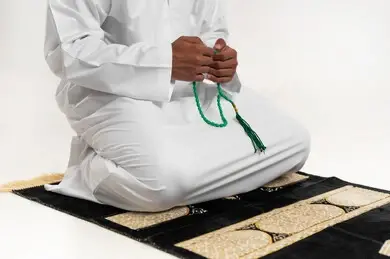

What dua is said after obligatory prayers? There is no single supplication that Muslims are required to recite after every obligatory prayer.
Instead, there are authentic post-prayer adhkar, while a Muslim may also make general supplications asking Allah for whatever is good in this life and the Hereafter.
A worshipper should maintain the established adhkar after prayer and may then make individual dua without believing that one particular formula is required after every obligatory prayer.
What Adhkar Are Recited After Prayer?
Among the well-known remembrances after obligatory prayers is seeking forgiveness by saying:
“Astaghfirullah” three times.
This is followed by:
“Allahumma anta as-salam wa minka as-salam, tabarakta ya dhal-jalali wal-ikram.”
Other established forms of remembrance include glorifying Allah, praising Him, and proclaiming His greatness.
Is There a Specific Dua After Every Prayer?
A Muslim is not required to recite one specific dua after every obligatory prayer.
There are established adhkar that are recommended after prayer, while general supplication allows the worshipper to ask Allah for forgiveness, mercy, guidance, provision, and other lawful needs.
Is Dua Better Before or After the Salam?
One of the best places for supplication is at the end of the prayer before the salam.
After completing the prayer with the salam, the worshipper should maintain the prescribed post-prayer adhkar and may then make individual supplication.
Is It Permissible to Make Dua After Prayer?
Yes, dua after prayer is permissible. A Muslim may ask Allah for forgiveness, mercy, guidance, provision, protection, and other lawful needs.
However, a specific supplication should not be continuously assigned to every prayer and treated as a fixed Sunnah without evidence.
How Should Dua Be Made After Obligatory Prayers?
The general practice is to make dua individually and quietly, without raising the voice in a way that disturbs other worshippers.
A Muslim may ask Allah for whatever lawful good they need and may use appropriate supplications from the Quran and Sunnah or other permissible words.
Ruling on Raising the Hands After Prayer
Raising the hands is established in various contexts of supplication, but scholars have differed regarding raising the hands specifically after obligatory prayers.
Some scholars permit raising the hands occasionally, while others emphasize that regularly raising the hands after every obligatory prayer as a fixed practice is not established as a continuous Sunnah from the Prophet ﷺ.
Therefore, it should not be treated as a required or permanent form after every prayer.
Ruling on Collective Dua After Obligatory Prayers
As for collective dua after prayer, where the imam regularly leads a congregation in supplication and the worshippers repeat it together after every obligatory prayer, this should not be treated as a regular Sunnah.
The Prophet ﷺ and his Companions did not establish this as a permanent practice following every obligatory prayer.
Individual supplication remains permissible, provided that it does not disturb other worshippers.
What Should a Muslim Say After Prayer?
After completing the prayer, a Muslim can begin with the established adhkar, including seeking forgiveness three times and saying:
“Allahumma anta as-salam wa minka as-salam, tabarakta ya dhal-jalali wal-ikram.”
The worshipper can then continue with the established forms of glorification, praise, and takbir and may make individual dua afterward.
Conclusion
There is no single obligatory dua that must be recited after every obligatory prayer. Rather, there are established post-prayer adhkar that Muslims are encouraged to maintain, followed by permissible individual supplication.
The end of the prayer before the salam is one of the best places for dua, while supplication after the salam is also permissible. Collective dua and regularly raising the hands after every obligatory prayer should not be treated as a fixed Sunnah.
What dua should be said after an obligatory prayer?
There is no single required dua after every obligatory prayer. Established adhkar are recited, and individual supplication is also permissible.
What should I say immediately after prayer?
A Muslim may seek Allah’s forgiveness three times and say, “Allahumma anta as-salam wa minka as-salam, tabarakta ya dhal-jalali wal-ikram,” along with other established adhkar.
Can I make dua after prayer?
Yes. Individual dua after prayer is permissible.
Is dua better before or after the salam?
The end of the prayer before the salam is one of the best places for supplication, while dua after the salam is also permissible.
Is collective dua after prayer prescribed?
A permanent practice of collective dua after every obligatory prayer should not be treated as an established Sunnah.