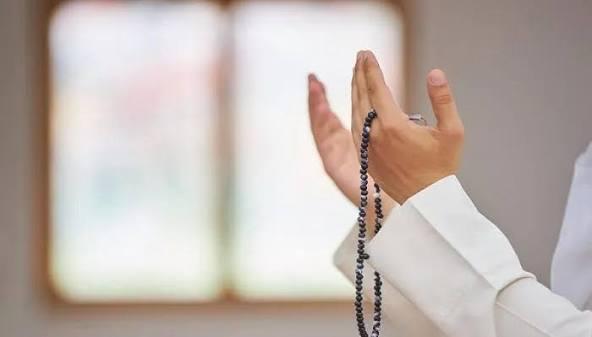

Many Muslims make dua during the last third of the night, seeking Allah's mercy, forgiveness, provision, relief from hardship, and fulfillment of their needs.
The final third of the night is considered a virtuous time for worship, remembrance, repentance, and supplication. A Muslim may ask Allah for whatever is good in this life and the Hereafter while trusting His wisdom and decree.
What Is the Best Time for Dua in the Last Third of the Night?
The night is calculated from sunset until dawn and divided into three equal parts. The final portion is known as the last third of the night.
Muslims are encouraged to take advantage of this time through prayer, remembrance, seeking forgiveness, and supplication.
There is no single mandatory formula for dua during this period. A Muslim may ask Allah for whatever is beneficial and permissible.
Dua for Provision in the Last Third of the Night
Among the supplications that may be made when asking Allah for provision and blessing is:
“O Allah, suffice me with what You have made lawful instead of what You have made unlawful, and make me independent by Your فضل from everyone besides You.”
A person may also say:
“O Allah, provide for me from Your abundant فضل and bless my wealth, family, and work.”
The Quran also records the supplication of Prophet Moses:
“My Lord, indeed I am, for whatever good You would send down to me, in need.” [Quran 28:24]
A Muslim may also say:
“O Allah, open for me the doors of Your provision, mercy, and blessings.”
The important principle is to sincerely ask Allah for what one needs while trusting His wisdom.
Dua at Night for Fulfilling a Need
A Muslim may turn to Allah during the night and ask Him to fulfill a need, relieve distress, and make matters easier.
Among the possible supplications is:
“O Ever-Living, O Sustainer, O Possessor of Majesty and Honor, I ask You during this blessed night to fulfill my need, relieve my distress, and make my affairs easy. O Allah, You know what is hidden and what is apparent from me, so fulfill what is in my heart, provide for me from where I do not expect, open for me the doors of Your mercy, decree goodness for me wherever it may be, turn away every harm from me, and grant me relief from every worry, a way out of every hardship, and well-being from every trial.”
A person may also ask Allah for what they hope to achieve while leaving the final outcome to His wisdom.
Duas for Relief From Worry and Hardship
When facing distress, Muslims are encouraged to turn to Allah through dua, remembrance, and seeking forgiveness.
One supplication is:
“O Allah, I ask You for near relief, beautiful patience, abundant provision, well-being from trials, and the ability to be grateful for Your blessings. I ask You for independence from people. There is no power or strength except through Allah.”
Another well-known supplication for distress is:
“There is no god but Allah, the Magnificent, the Forbearing. There is no god but Allah, Lord of the heavens and the earth and Lord of the Mighty Throne.”
Another supplication is:
“O Allah, Your mercy is what I hope for, so do not leave me to myself even for the blink of an eye. Set right all of my affairs. There is no god but You.”
The supplication of Prophet Yunus is also among the great Quranic supplications:
“There is no god but You; glory be to You. Indeed, I was among the wrongdoers.” [Quran 21:87]
Dua for Relief, Provision and Debt
A Muslim may combine requests for relief, provision, and repayment of debts in supplication.
Among the reported supplications is:
“O Allah, Lord of the heavens, Lord of the earth, and Lord of the Mighty Throne, our Lord and Lord of all things, Splitter of the seed and date stone, Revealer of the Torah, Gospel, and Criterion, I seek refuge in You from the evil of everything whose forelock You hold. O Allah, You are the First, there is nothing before You; You are the Last, there is nothing after You; You are the Manifest, there is nothing above You; and You are the Hidden, there is nothing beneath You. Settle our debts and free us from poverty.”
A person may also say:
“O Allah, suffice me with what You have made lawful instead of what You have made unlawful, and make me independent by Your فضل from everyone besides You.”
The believer should continue making dua without impatience and accept Allah's wisdom in what He chooses.
Is Sending Blessings Upon the Prophet a Means of Relief?
Sending blessings and peace upon Prophet Muhammad, peace and blessings be upon him, is a virtuous act.
A Muslim may increase their prayers upon the Prophet alongside dua, seeking forgiveness, and other acts of worship.
The believer should combine these acts with sincere supplication and trust in Allah.
Seeking Forgiveness for Provision and Relief
Seeking forgiveness is an important form of worship in both times of difficulty and ease.
Allah says:
“Ask forgiveness of your Lord. Indeed, He is ever a Perpetual Forgiver. He will send rain from the sky upon you in continuing showers, and give you increase in wealth and children and provide for you gardens and provide for you rivers.” [Quran 71:10-12]
Allah also says:
“And when My servants ask you concerning Me, indeed I am near. I respond to the invocation of every supplicant when he calls upon Me.” [Quran 2:186]
Etiquette of Making Dua
Sheikh Ibrahim Abdel Salam, a member of Egypt's Dar al-Ifta Fatwa Department, emphasized that dua is a beloved act of worship and that Allah has encouraged His servants to call upon Him.
Important etiquette includes:
- Beginning with praise and glorification of Allah.
- Sending blessings and peace upon the Prophet Muhammad.
- Asking first for forgiveness, well-being, a good ending, and Allah's pleasure, while also asking for worldly needs.
- Showing one's need and dependence upon Allah.
- Submitting completely to Allah's wisdom and decree.
- Avoiding excessive attachment to one specific outcome, since Allah knows what is best for His servants.
- Seeking virtuous times for dua, including the last third of the night.
Is There a Specific Dua That Guarantees Acceptance?
A Muslim should not believe that one particular wording automatically guarantees acceptance. The response to dua belongs to Allah, and it may come by granting what was requested, preventing an equivalent harm, or preserving the reward for the Hereafter.
A Prophetic narration states that when a person makes a dua, Allah gives them what they ask for or averts an equivalent harm, provided that the supplication does not involve sin or cutting family ties.
Therefore, Muslims should make dua sincerely and confidently while avoiding impatience and asking for anything sinful.
Conclusion
The last third of the night is a virtuous time for dua, remembrance, and seeking forgiveness. Muslims may ask Allah during this time for provision, relief, repayment of debts, well-being, and the fulfillment of their needs.
Among the well-known supplications are the dua asking Allah for lawful provision and independence from others, as well as the supplication of Prophet Yunus:
“There is no god but You; glory be to You. Indeed, I was among the wrongdoers.”
A Muslim should make dua sincerely, seek forgiveness, send blessings upon the Prophet, and trust Allah's wisdom in whatever outcome He decrees.
What is a good dua for provision at night?
A well-known supplication is: “O Allah, suffice me with what You have made lawful instead of what You have made unlawful, and make me independent by Your فضل from everyone besides You.”
When does the last third of the night begin?
The night is calculated from sunset until dawn and divided into three equal portions. The final portion is the last third.
What is a good dua for relief from hardship?
The supplication of Prophet Yunus is among the great duas for hardship: “There is no god but You; glory be to You. Indeed, I was among the wrongdoers.”
Is dua in the last third of the night guaranteed to be answered?
The last third is a virtuous time for dua, but it is not correct to claim that a particular wording guarantees an immediate or specific response.
What are the main etiquettes of dua?
They include praising Allah, sending blessings upon the Prophet, showing humility and dependence upon Allah, asking for good, seeking virtuous times, and accepting Allah's wisdom.