
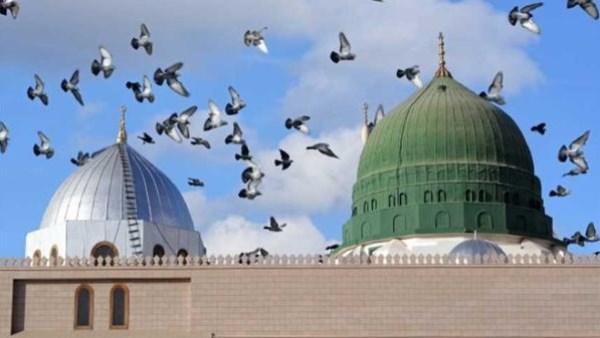

Egypt’s Dar Al-Ifta responded to a question posted on its official Facebook page concerning whether love for the Prophet Muhammad, peace and blessings be upon him, may be expressed through poetry, dancing, singing, and music during Mawlid al-Nabawi, the celebration of the Prophet’s birthday.
Dar Al-Ifta explained that an important distinction must be made between the ruling on celebrating the Prophet’s birthday and the specific methods and behaviors of those taking part in the celebration.
According to the institution, these are two separate matters that should not be confused when considering the religious ruling.
What Is the Ruling on Celebrating Mawlid al-Nabawi?
Dar Al-Ifta Distinguishes Between the Celebration and Its Practices
Dar Al-Ifta stated that celebrating Mawlid al-Nabawi is permissible according to Islamic law, citing evidence from the Quran, Sunnah, and the practice of Muslims throughout history.
However, the manner in which people celebrate and their individual conduct may differ.
The institution explained that practices consistent with Islamic principles are permissible, while practices that contradict Islamic law are not permitted and may be considered prohibited according to the nature of the act.
Do Certain Practices Affect the Ruling on Mawlid?
Dar Al-Ifta emphasized that practices that may violate Islamic law should not automatically be used to judge the entire celebration.
In other words, the ruling concerning a specific prohibited practice is separate from the ruling concerning the principle of commemorating the Prophet’s birth.
Dar Al-Ifta Responds to the Argument That the Companions Did Not Celebrate Mawlid
In another response, Dar Al-Ifta addressed the argument raised by some people: If Muslims today claim to love the Prophet more by celebrating his birthday, why did the Prophet’s Companions not celebrate Mawlid even though they were among those who loved him most?
Loving the Prophet Is an Essential Part of Faith
Dar Al-Ifta explained that loving the Prophet Muhammad, peace and blessings be upon him, is an obligation, and that a believer’s faith is not complete without this love.
The institution also noted that love for the Prophet is an internal feeling that manifests itself through a person’s actions.
People may express this love in different ways, provided that their expressions remain consistent with Islamic law.
According to Dar Al-Ifta, remembering someone who is loved is naturally one of the expressions of love. When the beloved is the Prophet Muhammad, peace and blessings be upon him, remembering him is regarded by the institution as an act of worship for which a person may receive reward.
Is Remembering the Prophet and Rejoicing in Him Supported by the Sunnah?
Dar Al-Ifta cited a narration reported by Al-Tabarani in which the Prophet Muhammad, peace and blessings be upon him, came upon a gathering of his Companions who were sitting together.
When he asked them why they were gathered, they explained that they were remembering and glorifying Allah for guiding them to Islam and blessing them with the Prophet.
The narration states that the Prophet told them that Gabriel, peace be upon him, had informed him that Allah was boasting of them before the angels.
Dar Al-Ifta cited this narration in support of the general principle of remembering the Prophet and expressing joy over him.
Celebrating Mawlid as an Expression of Love
Dar Al-Ifta stated that commemorating the Prophet’s birthday can be viewed as an expression of love for the Prophet in people’s hearts.
The institution considers such a celebration permissible as long as it remains consistent with established Islamic principles and the general objectives of Islamic law.
Does the Companions’ Lack of a Mawlid Celebration Prove It Is Prohibited?
Dar Al-Ifta explained that even if it is assumed that the Companions did not celebrate the Prophet’s birthday in the form known in later periods, this does not necessarily mean that every form of remembering the Prophet or expressing joy over him is prohibited.
The institution argued that treating everything not explicitly practiced by the Companions as categorically prohibited could restrict many beneficial practices that developed among Muslims in later periods.
Accordingly, Dar Al-Ifta maintains that the ruling on Mawlid should be considered in light of Islamic evidence, the nature of the activity, and the manner in which it is practiced, rather than simply whether a particular form of celebration existed during the time of the Companions.
What Is the Islamic Guideline for Mawlid Celebrations?
According to Dar Al-Ifta, the primary guideline is that the practices associated with the celebration should remain consistent with Islamic law and its general principles.
Activities such as remembering Allah, sending blessings upon the Prophet, studying his biography, and reciting permissible religious poetry are regarded by the institution as permissible in principle.
However, practices that violate Islamic law do not become permissible simply because they take place during Mawlid. Their ruling depends on the nature of the specific practice.
What is the ruling on celebrating Mawlid according to Egypt’s Dar Al-Ifta?
Dar Al-Ifta considers celebrating Mawlid al-Nabawi permissible, provided that the practices associated with the celebration comply with Islamic law.
Are all forms of Mawlid celebration permissible?
No. Dar Al-Ifta distinguishes between the principle of celebrating Mawlid and the specific conduct of participants. Practices consistent with Islamic law are permissible, while prohibited practices remain prohibited.
Is loving the Prophet Muhammad obligatory?
Yes. Dar Al-Ifta states that loving the Prophet Muhammad, peace and blessings be upon him, is an essential part of faith and should be reflected in conduct consistent with Islamic teachings.
Does the fact that the Companions did not celebrate Mawlid mean it is prohibited?
According to Dar Al-Ifta, the absence of a specific form of celebration among the Companions does not automatically establish that the practice is absolutely prohibited.
What is the guideline for celebrating Mawlid?
The main guideline is that the celebration should comply with established Islamic principles and avoid practices that contradict Islamic law.




