
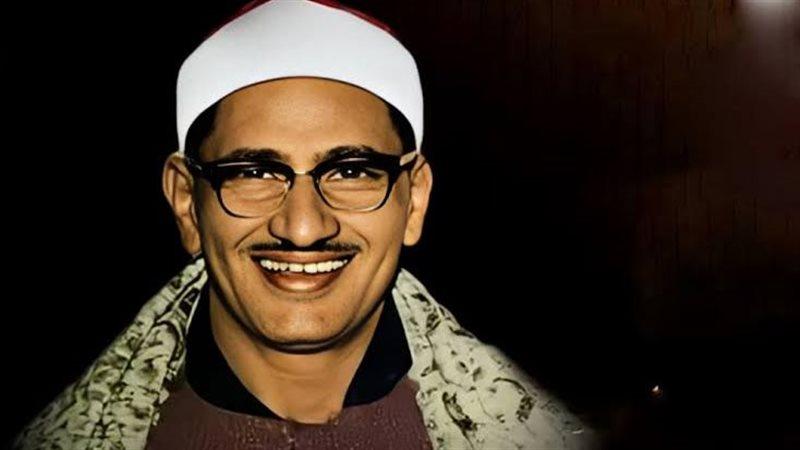

Whenever Qur’anic recitation is mentioned, the name Mohamed Siddiq El Minshawi rises gently among the greatest. He was not only a reciter, but a storyteller of verses, shaping meanings with humility and deep emotional presence.
Born on January 20, 1920, in Al-Munshah, Sohag, El Minshawi grew up in a household devoted to the Qur’an. His father and grandfather were respected reciters, and the family atmosphere shaped his early attachment to memorization and sacred sound.
He completed memorizing the Qur’an at a young age and began accompanying his father and uncle to religious gatherings. One evening, he was given the chance to recite on his own, and from that moment his reputation spread from local villages to national platforms.
In 1953, he was officially approved as a radio reciter, marking the start of his golden era. His recordings became known for calm rhythm, emotional depth, and sincere humility, making listeners feel the verses before understanding them.
El Minshawi earned the title “the weeping, humble voice” for the softness and sincerity in his tone. Scholar Mohamed Metwally Al-Shaarawy once said: Whoever wishes to hear the humility of the Qur’an should listen to El Minshawi.
His journey crossed borders. He recited in Al-Aqsa Mosque, and in mosques across Kuwait, Syria, Libya, Pakistan, and beyond. He was honored with awards and recognition from leaders around the Islamic world for his unique Qur’anic art.
Despite suffering from esophageal illness in his later years, El Minshawi continued reciting until his passing in June 1969 at the age of 49. Yet his voice never left — it still lives in every verse played across homes and mosques.
El Minshawi remains a living echo, where hearts listen before ears do.
👉 For more religious updates and detailed coverage, follow Masr Connect.




