
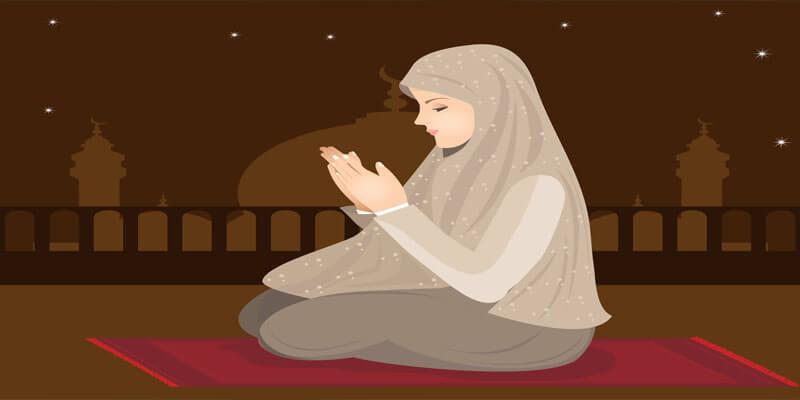

Understanding the virtues of Fajr prayer for women is important because it encourages women to perform this prayer on time. Fajr holds a special status in Islam, as Allah has granted it many unique virtues. Consistently observing it is a sign of strong faith and a close connection with Allah, the Exalted.
Although some women may find it difficult to wake up for Fajr or may oversleep until after sunrise, realizing its great rewards helps motivate them to preserve this prayer. Fajr is witnessed by both the angels of the night and the angels of the day, bringing goodness, blessings, and protection to every Muslim man and woman.
The Virtues of Fajr Prayer for Women in Islam
Many authentic hadiths describe the immense virtue of Fajr prayer. Among them is the saying of the Prophet Muhammad (peace and blessings be upon him):
"Whoever performs the Fajr prayer is under the protection of Allah."
(Narrated by Muslim.)
Being under Allah’s protection means that a believer is under His care, safety, and guardianship, and no one has the right to harm them unjustly.
Scholars have explained that these virtues apply equally to both men and women because the texts regarding the merits of Fajr are general and are not limited to men.
Does a Woman Receive the Reward of Fajr if She Prays at Home?
Islamic scholars have stated that it is generally better for a woman to pray in her home than to go to the mosque. Therefore, a woman who consistently performs Fajr prayer at home receives its reward and virtue, by Allah’s permission.
The Prophet (peace and blessings be upon him) said:
"A woman's prayer in her house is better than her prayer in her courtyard, and her prayer in her private room is better than her prayer in her house."
This hadith highlights the virtue of a woman praying in her home while also confirming that it is permissible for her to attend the mosque under the proper Islamic guidelines.
The Ruling on a Woman Performing Fajr Prayer in the Mosque
Is It Permissible for a Woman to Go to the Mosque for Fajr Prayer?
Yes. A woman may go to the mosque to perform Fajr prayer if she is safe and her going out does not expose her to harm or temptation.
The Prophet (peace and blessings be upon him) said:
"Do not prevent the female servants of Allah from attending the mosques of Allah."
Women during the Prophet’s time attended the congregational prayers, including Fajr prayer, while observing proper Islamic etiquette.
Conditions for a Woman Going to the Mosque for Fajr Prayer
Among the most important guidelines are:
- She should be safe while traveling to and from the mosque.
- She should not wear perfume or adorn herself when going out.
- She should observe proper Islamic dress and modesty.
- Her attendance should not lead to neglecting her family responsibilities or obligations.
If she fears harm or temptation, praying at home is better for her.
The Greatest Virtues of Fajr Prayer
1. Being Under Allah’s Protection
One of the greatest virtues of Fajr prayer is that whoever performs it is under Allah’s protection and care throughout the day.
2. Increased Blessings in Provision
The Prophet (peace and blessings be upon him) supplicated:
"O Allah, bless my nation in its early mornings."
The early morning hours are a blessed time associated with productivity, livelihood, and blessings.
3. Witnessed by the Angels
The angels witness the Fajr prayer and carry the deeds of Allah’s servants, making it one of the most honored times of the day.
4. Great Reward
Consistently performing Fajr prayer on time is a means of earning immense rewards and abundant good deeds from Allah.
5. A Means to Enter Paradise
The Prophet (peace and blessings be upon him) said:
"Whoever performs the two cool prayers will enter Paradise."
The two cool prayers refer to Fajr and Asr.
6. Light on the Day of Judgment
The Prophet (peace and blessings be upon him) gave glad tidings of complete light on the Day of Judgment for those who walk to the mosques in the darkness, including those who attend Fajr prayer.
What Is Fajr Prayer?
Fajr is the first of the five obligatory daily prayers. It consists of two obligatory rak'ahs, preceded by two rak'ahs of the Sunnah prayer, which the Prophet (peace and blessings be upon him) consistently observed and strongly encouraged.
It is called Fajr because it is performed at the break of dawn, when the first light spreads across the horizon.
The Ruling on Fajr Prayer
Fajr prayer is an individual obligation (Fard 'Ayn) upon every sane adult Muslim man and woman.
Allah says:
"Indeed, prayer has been decreed upon the believers at specified times."
(Qur'an 4:103)
The Prophet (peace and blessings be upon him) also said:
"Islam is built upon five pillars,"
and he mentioned establishing the prayer among them.
The Time of Fajr Prayer
The time for Fajr prayer begins with the appearance of the true dawn (Al-Fajr As-Sadiq), when daylight first spreads across the horizon after the darkness of night.
Its time continues until sunrise.
It is recommended to perform Fajr at the beginning of its prescribed time due to its great reward and virtue.
Do the virtues of Fajr prayer differ between men and women?
No. The virtues of Fajr prayer apply equally to both men and women. A woman receives its reward whether she prays at home or in the mosque, provided she follows the Islamic guidelines.
Is it better for a woman to pray at home than in the mosque?
Yes. Islamic teachings indicate that a woman's prayer at home is generally better for her, while it remains permissible for her to attend the mosque if she is safe and observes proper Islamic etiquette.
What does a person gain by consistently performing Fajr prayer?
A believer gains Allah’s protection, abundant rewards, blessings, and spiritual peace. It is also a means of attaining goodness in both this life and the Hereafter.
Is it permissible for a woman to miss Fajr prayer because of sleeping?
It is not permissible to intentionally delay or neglect Fajr prayer until after its prescribed time because of sleep. A Muslim should make every effort to wake up and perform it on time. If someone unintentionally oversleeps, they should pray it as soon as they wake up, based on the established teachings of Islam.




