
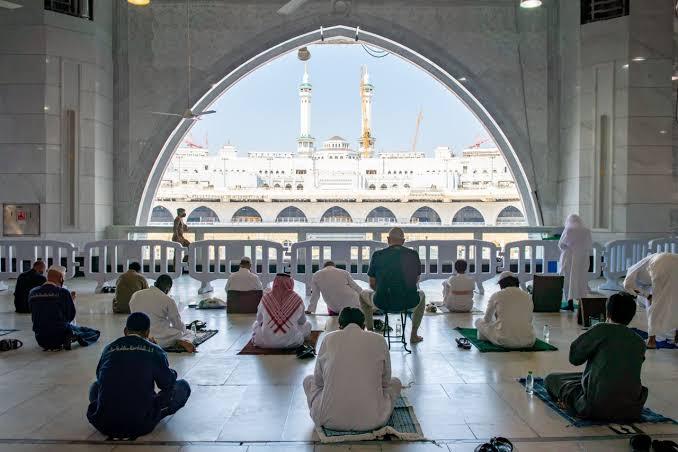

How Did Prophet Muhammad (Peace Be Upon Him) End the Obligatory Prayer?
Many Muslims wonder how Prophet Muhammad (peace be upon him) concluded the obligatory prayer, what remembrances and supplications he regularly recited after saying the Taslim, and whether these supplications should be made silently or aloud. Egypt's Dar Al-Ifta has clarified this issue based on the Holy Quran and the authentic Sunnah.
How Did the Prophet (Peace Be Upon Him) Conclude the Obligatory Prayer?
Dar Al-Ifta explained that the Prophet (peace be upon him) concluded every obligatory prayer by reciting a number of authentic remembrances (dhikr) and supplications after the Taslim. Muslims are encouraged to preserve these Sunnah practices because of their great spiritual rewards. The Fatwa authority also stated that reciting dhikr after prayer may be done either silently or aloud, provided that doing so does not disturb or distract other worshippers.
The Best Remembrances After the Obligatory Prayer
Several authentic supplications and remembrances were reported from the Prophet (peace be upon him) to be recited after every obligatory prayer.
1. Reciting the Three Quls (Al-Mu'awwidhat)
It is recommended to recite: Surah Al-Ikhlas Surah Al-Falaq Surah An-Nas after every obligatory prayer, following the Sunnah of the Prophet (peace be upon him).
2. Reciting Ayat Al-Kursi
Among the greatest remembrances after prayer is the recitation of Ayat Al-Kursi. The Prophet (peace be upon him) said: "Whoever recites Ayat Al-Kursi after every obligatory prayer remains under Allah's protection until the next prayer."
3. Tasbih, Tahmid, and Takbir
After each obligatory prayer, Muslims are encouraged to say: Subhan Allah (Glory be to Allah) – 33 times Alhamdulillah (All praise is due to Allah) – 33 times Allahu Akbar (Allah is the Greatest) – 33 times Then complete one hundred by saying: La ilaha illa Allah wahdahu la sharika lah, lahul-mulk wa lahul-hamd wa huwa 'ala kulli shay'in qadir. (There is no deity worthy of worship except Allah alone, without partner. To Him belongs all sovereignty and all praise, and He has power over all things.) The Prophet (peace be upon him) promised that whoever regularly recites this remembrance will have their sins forgiven, even if they are as numerous as the foam of the sea.
Should Supplication After Prayer Be Silent or Aloud?
Dar Al-Ifta explained that Islamic teachings provide flexibility regarding dhikr and supplication after prayer. A Muslim may remember Allah silently or aloud, as long as reciting aloud does not disturb other worshippers. The institution cited Allah's words: "O you who believe! Remember Allah with much remembrance, and glorify Him morning and evening." (Quran 33:41–42) Since the command to remember Allah is given in general terms, it should not be unnecessarily restricted to only one manner without authentic evidence.
The Ruling on Collective Dhikr in the Mosque
Dar Al-Ifta affirmed that collective remembrance of Allah (collective dhikr) is among the matters in which Islamic law provides flexibility. Its permissibility is supported by the Quran, the Sunnah, and the long-standing practice of Muslims throughout history, provided it remains free from prohibited innovations or practices. Allah says: "And keep yourself patiently with those who call upon their Lord morning and evening, seeking His Face." (Quran 18:28) The Prophet (peace be upon him) also narrated that Allah says: "I am as My servant thinks of Me, and I am with him when he remembers Me. If he remembers Me privately, I remember him privately; and if he remembers Me in an assembly, I remember him in an assembly better than it." This hadith demonstrates the virtue of remembering Allah publicly as well as privately.
The Virtues of Regular Post-Prayer Remembrance
Maintaining the authentic remembrances after the obligatory prayers offers numerous spiritual benefits, including: Forgiveness of sins. Multiplication of good deeds. Protection from Satan. Strengthening one's relationship with Allah. Bringing peace and blessings into daily life. Following the Sunnah of Prophet Muhammad (peace be upon him). For these reasons, Muslims are encouraged to make these remembrances a regular part of their daily worship.




