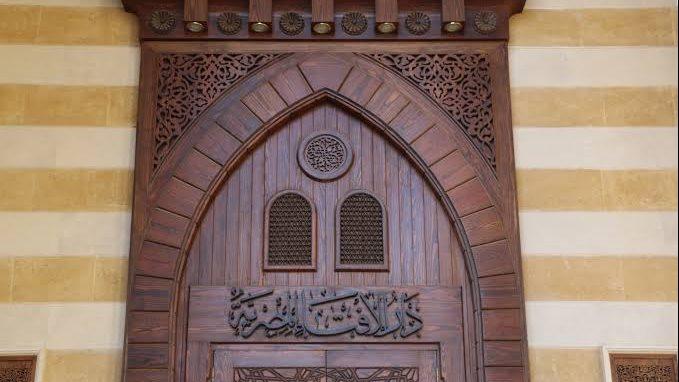

Dr. Mahmoud Shalaby, a Fatwa Secretary at the Egyptian Dar Al-Ifta, explained that the Fear Prayer is not a separate prayer from the obligatory daily prayers. Rather, it is a special manner of performing an obligatory prayer when Muslims face war or severe danger.
The worshippers may be divided into groups. One group performs the prayer with the imam while another remains on guard. The groups then alternate according to the circumstances until the obligatory prayer has been completed.
The obligation to pray remains in place for a Muslim who is legally responsible, even under difficult and dangerous circumstances. The prayer is performed according to the person's ability and the conditions of the situation.
Does Fear Cancel the Obligation to Pray?
Fear and danger do not simply remove the obligation of prayer. Instead, Islamic law provides a special form of prayer that allows worshippers to fulfill the obligation while taking necessary precautions.
The form of the prayer can vary depending on the level of danger and the location of the threat.
Quranic Evidence for the Fear Prayer
The legitimacy of the Fear Prayer is established in the Quran. Allah says:
“And when you are among them and lead them in prayer, let a group of them stand with you and let them keep their arms. Then when they have prostrated, let them be behind you, and let another group that has not prayed come forward and pray with you, taking precautions and keeping their arms...” [Quran 4:102].
The verse demonstrates that prayer remains to be performed even in circumstances of danger. At the same time, it establishes the importance of taking precautions and remaining alert.
The Fear Prayer in the Prophetic Tradition
The Fear Prayer is also established through authentic reports from the Prophet Muhammad, peace and blessings be upon him.
Reports describe the Prophet performing the Fear Prayer with his companions during military expeditions. Different narrations describe different forms of the prayer, reflecting differences in the circumstances surrounding each situation.
Did the Prophet Perform the Fear Prayer?
Yes. Authentic reports establish that the Prophet Muhammad, peace and blessings be upon him, performed the Fear Prayer with his companions on several occasions.
The different descriptions found in the prophetic tradition do not necessarily represent contradictions. Rather, scholars have explained that the prayer had several valid forms, with the appropriate form depending on the circumstances.
Imam Ahmad referred to several established reports concerning the Fear Prayer, while Ibn al-Qayyim explained that its basic forms were multiple and that differences in narrations reflected differences in how it was performed in different situations.
How Is the Fear Prayer Performed?
The specific form of the Fear Prayer varies according to the severity of the danger and the location of the enemy or threat. The circumstances may differ depending on whether the danger is in the direction of the qiblah or elsewhere.
The imam should choose the form that best suits the circumstances while maintaining the requirements of prayer and taking appropriate precautions.
Why Does the Form of the Fear Prayer Vary?
The variation is connected to the circumstances surrounding the worshippers. The danger may be severe, the threat may come from a particular direction, or the situation may require greater protection and vigilance.
For this reason, several forms of the Fear Prayer have been reported from the Prophet, peace and blessings be upon him.
Combining Prayer With Precaution
The Fear Prayer demonstrates the importance of maintaining worship while also taking practical precautions in dangerous circumstances.
Its various forms allow some worshippers to pray while others remain alert and ready to respond to danger, according to the circumstances.
Summary of the Ruling on the Fear Prayer
The Fear Prayer is not an independent prayer. It is a special manner of performing an obligatory prayer when Muslims face fear or serious danger. Its legitimacy is established by the Quran and the Prophetic tradition, and the Prophet Muhammad performed it in different forms according to the circumstances.
Is the Fear Prayer a separate prayer?
No. It is a special form of performing an obligatory prayer during fear or danger.
Does fear cancel the obligation of prayer?
No. A legally responsible Muslim continues to pray according to their ability and circumstances.
Did the Prophet Muhammad perform the Fear Prayer?
Yes. Authentic reports establish that he performed it with his companions on several occasions.
Does the Fear Prayer have only one form?
No. Several forms have been reported, depending on the circumstances and level of danger.
What is the evidence for the Fear Prayer?
Its legitimacy is established by Quran 4:102 and by authentic reports describing how the Prophet performed it.