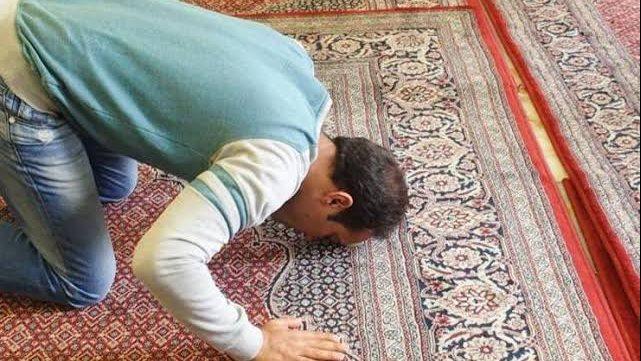

Qiyam al-Layl, or night prayer, is a strongly encouraged voluntary act of worship and one of the practices of the righteous. It was also part of the worship of Prophet Muhammad, peace and blessings be upon him.
Allah says: “O you who wraps himself in clothing, arise to pray the night, except for a little.”
Allah also says: “And during the night, pray with it as an additional worship for you.”
The Quran also praises the servants of the Most Merciful, describing them as those who spend the night prostrating and standing before their Lord.
Night prayer may be performed at the beginning, middle, or end of the night, although the final third is considered the best time for those who are able to wake up.
What Is the Best Time to Pray Qiyam al-Layl?
The time for Qiyam al-Layl begins after Isha prayer and continues until dawn.
A Muslim may pray at the beginning of the night, during its middle, or toward its end. The final third of the night is especially virtuous.
However, anyone who fears that they will not wake up before dawn may pray and perform Witr before going to sleep.
How Many Rakahs Are There in Qiyam al-Layl?
There is no single fixed number of rakahs that must be performed for Qiyam al-Layl.
The Sunnah is to pray two rakahs at a time, followed by salam, and then continue with another two rakahs as desired.
Among the established practices of the Prophet, peace and blessings be upon him, was praying eleven or thirteen rakahs, including Witr.
A Muslim may pray more than this according to their ability, provided the prayer is performed with tranquility and concentration.
How to Pray Qiyam al-Layl Step by Step
The Muslim begins Qiyam al-Layl after Isha prayer by praying two rakahs and ending them with salam.
The person may then pray another two rakahs and continue in the same manner for as long as they wish.
There are no specific Quranic chapters that must be recited in every rakah. The worshipper may recite whatever is easy from the Quran.
The recommended approach is to recite slowly and clearly, with reflection and humility, following Allah’s command:
“And recite the Quran with measured recitation.”
What Should Be Recited During Qiyam al-Layl?
There are no specific surahs that must be recited in each rakah of night prayer.
A Muslim may recite from the beginning, middle, or end of the Quran. They may also organize their reading with the intention of completing the Quran over time.
The important practice is to recite with proper pace, reflection, and humility.
It is also recommended to respond appropriately to the meanings of the verses. When encountering a verse mentioning mercy, the worshipper may ask Allah for His mercy; when encountering a verse of punishment, they may seek Allah’s protection; and when encountering a verse glorifying Allah, they may glorify Him.
What Is Said During Ruku and Sujood in Qiyam al-Layl?
The remembrance said during bowing and prostration in Qiyam al-Layl is the same as the established remembrance in other prayers.
During ruku, the worshipper says:
“Subhana Rabbiyal Adheem” — Glory be to my Lord, the Most Great.
During sujood, the worshipper says:
“Subhana Rabbiyal A'la” — Glory be to my Lord, the Most High.
The worshipper should perform ruku and sujood calmly and avoid rushing through the prayer.
Sujood is also an important opportunity for making dua, allowing the believer to ask Allah for what is beneficial in this life and the Hereafter.
How to Pray Witr After Qiyam al-Layl
The night prayer is concluded with Witr. A Muslim may perform Witr with one rakah, three, five, or more according to what is easy.
The Sunnah is to pray the night prayer two rakahs at a time. When the person fears that dawn is approaching, they may pray one rakah to make the previous prayer odd.
In the Witr prayer, the worshipper recites Al-Fatihah and whatever is easy from the Quran. Qunut supplication is also practiced in Witr.
Among the well-known Qunut supplications is:
“O Allah, guide me among those You have guided, grant me well-being among those You have granted well-being, take care of me among those You have taken care of, bless me in what You have given me, and protect me from the evil of what You have decreed.”
Can Qiyam al-Layl Be More Than 11 Rakahs?
Yes. Night prayer is broad, and there is no single mandatory maximum number of rakahs.
A Muslim may pray according to their ability and concentration while maintaining tranquility and avoiding haste.
The Prophet’s established practice included eleven or thirteen rakahs, including Witr, but praying more than this is permissible.
The Importance of Tranquility and Humility in Qiyam al-Layl
One of the most important aspects of Qiyam al-Layl is avoiding a rushed prayer.
The worshipper should remain calm during recitation, bowing, and prostration and should reflect on standing before Allah.
Humility helps the believer contemplate the Quran and experience the spiritual meaning of night worship.
A person who is able to lengthen the recitation without hardship may do so while maintaining concentration and proper prayer.
When does Qiyam al-Layl begin?
Qiyam al-Layl begins after Isha prayer and continues until dawn. It may be performed at the beginning, middle, or end of the night.
What is the best time for Qiyam al-Layl?
The final third of the night is the best time for those who are able to wake up. Anyone who fears missing it may pray Witr before sleeping.
How many rakahs are in Qiyam al-Layl?
There is no fixed number. The prayer is performed two rakahs at a time. Eleven or thirteen rakahs, including Witr, are among the established practices of the Prophet.
Are there specific surahs for Qiyam al-Layl?
No specific surahs are required for every rakah. The worshipper may recite whatever is easy from the Quran while maintaining proper recitation and reflection.
How is Witr prayed?
The night prayer is performed two rakahs at a time and concluded with Witr. Witr may be one, three, five, or more rakahs according to what is easy.