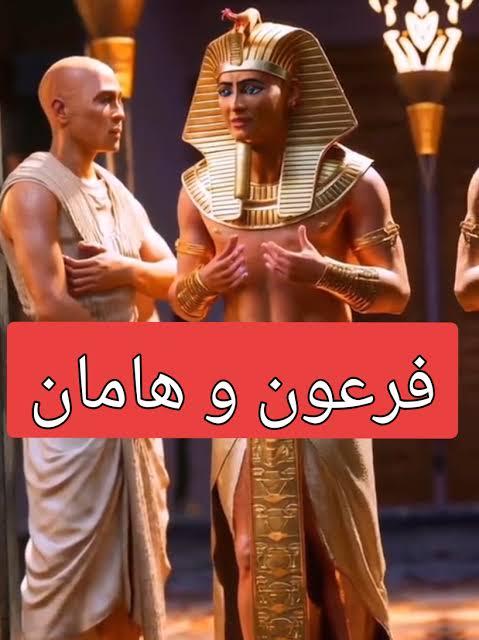

A claim is sometimes raised that Haman, who is mentioned in the Quran, was not associated with Pharaoh at all, but was instead a figure connected to Babylon.
Does the Quran support this claim? What does the Quran actually establish about Haman and his relationship with Pharaoh?
What Does the Quran Say About Haman?
Haman is mentioned several times in the Quran in connection with Pharaoh and the people around him.
Allah says:
“And Pharaoh said, ‘O chiefs, I do not know of any deity for you other than me. So ignite for me, O Haman, a fire over the clay and build for me a lofty tower that perhaps I may look at the God of Moses, although I think he is among the liars.’” [Quran 28:38]
The verse directly places Haman within the story of Pharaoh and Moses. Pharaoh addresses Haman personally and commands him to construct the structure he requested.
Allah also says:
“And Korah, Pharaoh, and Haman. Moses certainly came to them with clear proofs, but they acted arrogantly in the land, and they could not escape Us.” [Quran 29:39]
Another verse states:
“And We established them firmly in the land and showed Pharaoh, Haman, and their armies what they feared from them.” [Quran 28:6]
Does the Quran Explicitly Call Haman Pharaoh’s Minister?
An important distinction should be made here.
The Quran does not explicitly use the word “minister” when describing Haman. Therefore, it is more precise to distinguish between what the Quran states directly and descriptions found in later works of Quranic commentary and historical literature.
What the Quran clearly establishes is that Haman was a prominent figure associated with Pharaoh, that Pharaoh addressed him directly, and that Pharaoh ordered him to undertake an important construction project.
The description of Haman as Pharaoh’s minister became common in traditional commentary and historical writing as a way of describing his position and closeness to Pharaoh.
Was Haman a Babylonian Minister?
The Quran does not identify the Haman mentioned in the story of Moses as a Babylonian official.
Instead, the Quran repeatedly places Haman within the narrative of Moses and Pharaoh, mentioning him alongside Pharaoh and their forces.
Therefore, the existence of another historical figure with a similar name would not, by itself, establish that the two individuals were the same person.
Similar names alone are not sufficient evidence for identifying historical personalities across different places and periods.
Is “Pharaoh” a Personal Name?
Another important point concerns the word Pharaoh.
In the Quranic account of Moses, Pharaoh functions as the title of the ruler confronting Moses rather than necessarily being his personal name.
Allah says:
“And Moses said, ‘O Pharaoh, indeed I am a messenger from the Lord of the worlds.’” [Quran 7:104]
Thus, the Quran refers to the ruler by his title, just as rulers in other historical settings have sometimes been identified by titles rather than personal names.
Does the Story Depend on Identifying Haman Historically?
No. The religious claim established by the Quran does not depend on discovering an independent historical document for every individual mentioned in the Quran.
Historical research can examine possible identities and compare ancient evidence, but historical hypotheses should be distinguished from what the religious text explicitly states.
The Quran clearly presents Haman as a figure connected with Pharaoh during the story of Moses. It does not present him as a Babylonian minister.
The Key Response to the Haman Claim
The claim that the Haman mentioned in the Quran was actually a Babylonian minister cannot be established simply through similarity of names or by referring to a different historical context.
The Quran explicitly places Haman in the story of Moses and Pharaoh. Pharaoh addresses him directly and orders him to construct a lofty structure.
For accuracy, however, it is preferable to say that Haman was one of Pharaoh’s prominent associates and officials in the Quranic narrative, rather than claiming that the Quran itself explicitly uses the word “minister” for him.
Who was Haman in the Quran?
Haman was a prominent figure associated with Pharaoh in the Quranic account of Moses.
Does the Quran explicitly call Haman Pharaoh’s minister?
No. The Quran does not use the specific word “minister,” although it clearly presents Haman as a prominent figure close to Pharaoh.
Was Haman a minister in Babylon?
The Quran does not describe Haman as a Babylonian minister. It places him within the story of Moses and Pharaoh.
Where is Haman mentioned in the Quran?
Haman is mentioned in Surahs Al-Qasas, Al-Ankabut, and Ghafir in connection with Pharaoh and Moses.
Does similarity of names prove two historical figures were the same?
No. Similarity of names alone is not enough to establish that two historical figures were identical.