
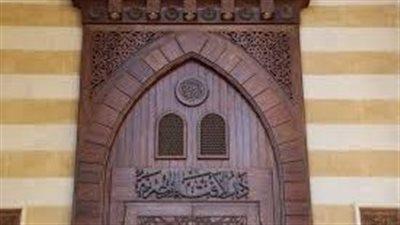

With the arrival of Rajab, many believers seek closeness to God through fasting, yet doubts often surface regarding its legitimacy. Egypt’s Dar Al-Ifta addressed these concerns clearly and decisively.
Dar Al-Ifta stated that claiming fasting in Rajab is religiously incorrect is unfounded. Although some hadiths about fasting in Rajab are considered weak, they are acceptable in matters of virtuous deeds, according to the majority of Islamic scholars.
The institution emphasized that fasting in Rajab falls under the broader category of voluntary fasting, which Islam encourages without assigning obligation or fixed rituals.
Dar Al-Ifta further encouraged Muslims to observe such virtuous acts whenever possible, even if only once in a lifetime, citing Imam Al-Nawawi’s guidance and the Prophet Muhammad’s saying:
"If I command you to do something, do of it as much as you are able."
Thus, fasting in Rajab is not an innovation, but a legitimate voluntary act that nurtures faith and spiritual discipline.




