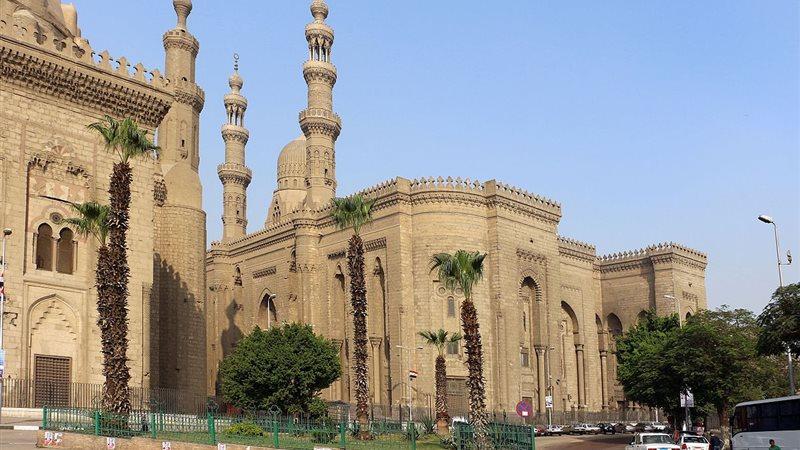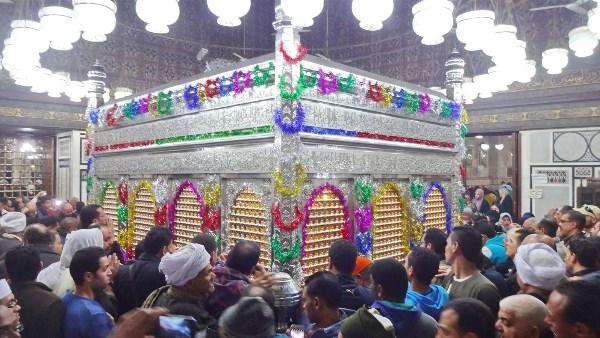

Imam Al-Hussein, may Allah be pleased with him, holds a special place in the hearts of Egyptians as the grandson of Prophet Muhammad, peace and blessings be upon him, and the son of Fatimah Al-Zahra and Ali ibn Abi Talib.
During the Mawlid season, the Al-Hussein district in Cairo takes on a distinctive atmosphere. Visitors arrive from different parts of Egypt, while gatherings of religious remembrance and devotional chanting are held alongside traditional hospitality and charitable services.
When Is Imam Al-Hussein’s Mawlid Celebrated in Egypt?
Egypt is known for two annual occasions associated with Imam Al-Hussein.
The First Celebration in Sha’ban
The first celebration is associated with the birth of Imam Al-Hussein, who was born on the third day of Sha’ban in the fourth year after the Hijrah in Medina.
He was later martyred at Karbala on the tenth day of Muharram in 61 AH.
The Second Celebration in Rabi’ Al-Thani
The other celebration is traditionally associated in Egypt with the arrival of Al-Hussein’s sacred head in Cairo after its reported transfer from Ashkelon.
According to the historical tradition associated with the Egyptian celebration, the transfer took place during the Fatimid era in 548 AH.
How Did Imam Al-Hussein’s Sacred Head Reach Egypt?
The story of the sacred head’s arrival in Egypt is connected with a long historical narrative that begins after Imam Al-Hussein’s martyrdom at Karbala.
According to the traditional account, the sacred head was moved between several locations before eventually reaching Ashkelon in Palestine, where it was believed to have remained for centuries.
As the Crusader campaigns intensified in the region, concerns arose over the safety of the burial site, leading to efforts to transfer the sacred head to Egypt.
The Journey From Ashkelon to Cairo
The traditional account states that the Fatimid vizier Tala’i ibn Ruzzik sought to bring the sacred head to Egypt out of concern that Ashkelon could fall into Crusader hands.
Following negotiations, the sacred head was transferred to Cairo in 548 AH and received in a grand procession.
Historical accounts associated with the tradition state that Caliph Al-Fa’iz bi-Nasr Allah took part in receiving it, while large numbers of people joined the procession toward Cairo.
Where Was Imam Al-Hussein’s Sacred Head Buried?
The early stage of the sacred head’s journey in Cairo became associated with the Mosque of Tala’i before the burial place was eventually connected with the location known today as Al-Hussein Mosque.
The arrival was remembered as an important event, and its anniversary became associated with the annual Egyptian celebration of Imam Al-Hussein.
Today, Al-Hussein Mosque stands in the historic district of Cairo that bears his name and remains a destination for visitors and those who hold the Prophet’s family in special reverence.
The Story of the Blood Attributed to Imam Al-Hussein
Some popular accounts tell of traces of blood attributed to Imam Al-Hussein at a location associated with the burial place of his sacred head.
According to the story, traces of blood were discovered when the burial site in Ashkelon was opened, despite the passage of many years since his death.
This account remains part of the popular narratives surrounding the shrine and should be understood as a traditional story rather than presented as an independently established historical fact.
Why Do Egyptians Celebrate Imam Al-Hussein’s Mawlid?
The celebration reflects an important aspect of Egyptian devotion and affection toward the family of Prophet Muhammad, peace and blessings be upon him.
The festivities include gatherings of religious remembrance, devotional chanting, food and drink distribution, and large gatherings of visitors around the mosque.
The celebrations reach their peak during the closing night, when religious chanters and members of Sufi orders participate in commemorating the occasion.
Imam Al-Hussein’s Place in Egyptian Culture
Imam Al-Hussein’s name remains deeply connected to affection and reverence for the Prophet’s family in Egyptian popular culture.
The Al-Hussein district continues to have both religious and cultural significance, particularly during celebrations associated with Imam Al-Hussein.
The traditional story of the sacred head’s arrival in Cairo remains one of the most prominent narratives connected with the district, while the Mawlid itself continues to represent an important part of Egypt’s religious and popular heritage.
When was Imam Al-Hussein born?
Imam Al-Hussein was born on the third day of Sha’ban in 4 AH in Medina.
When was Imam Al-Hussein martyred?
He was martyred at Karbala on the tenth day of Muharram in 61 AH.
When did Imam Al-Hussein’s sacred head arrive in Egypt?
According to the traditional historical account, it arrived in Egypt in 548 AH during the Fatimid era.
Why do Egyptians celebrate Imam Al-Hussein’s Mawlid?
The celebration reflects Egyptians’ love and reverence for Imam Al-Hussein and the family of Prophet Muhammad, while one of the annual occasions is traditionally linked to the arrival of the sacred head in Cairo.
Where is Al-Hussein Mosque located?
Al-Hussein Mosque is located in the historic Al-Hussein district of Cairo and is one of the area’s most prominent religious and heritage landmarks.