
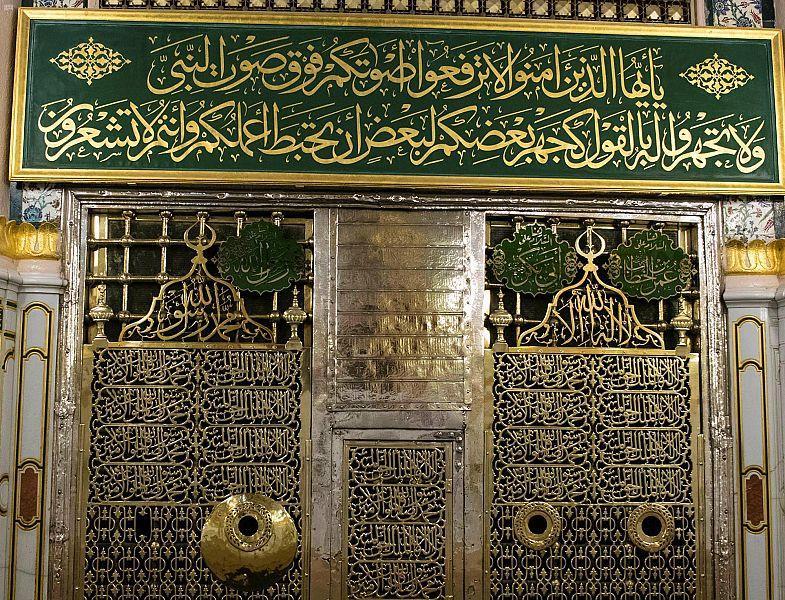

The Al-Azhar Global Fatwa Center highlighted the exceptional modesty and noble character of Prophet Muhammad ﷺ, describing him as among the most modest of people and one who avoided looking at people’s private parts.
He was neither vulgar nor obscene, nor did he raise his voice in the marketplaces. When circumstances required him to mention something unpleasant, he would use indirect and dignified expressions rather than embarrassing people.
In discussions about the status of Prophet Muhammad ﷺ after his death, an important question is often raised:
Is the Prophet ﷺ alive in his grave?
Is Prophet Muhammad ﷺ Alive in His Grave?
Dr. Ali Gomaa, a member of the Council of Senior Scholars at Al-Azhar, explained that the answer requires distinguishing between worldly life and the special life of the prophets after death.
If the question means that Prophet Muhammad ﷺ did not leave worldly life and was not taken by Allah, that understanding is incorrect. The Quran clearly establishes that human beings die.
Allah says:
“We did not grant immortality to any human before you. So, if you die, will they live forever?”
Allah also says:
“Indeed, you will die, and indeed, they will die.”
Therefore, Prophet Muhammad ﷺ passed away from worldly life. At the same time, Islamic texts describe a special life of the prophets after death.
What Is the Prophet’s ﷺ Life After Death?
Ali Gomaa explained that Prophet Muhammad ﷺ has another form of life: the life of the prophets after death.
This is distinct from ordinary worldly human life and from the ordinary condition of people after death.
Among the narrations cited in this context is:
“My life is good for you: you speak and matters occur for you. And my death is good for you: your deeds are presented to me; when I see good, I praise Allah, and when I see evil, I seek Allah’s forgiveness for you.”
Another narration states:
“There is no one who sends peace upon me except that Allah returns my soul to me so that I may return his greeting.”
This narration is understood as indicating the Prophet’s ﷺ response to those who send blessings and peace upon him.
Are the Prophets Alive in Their Graves?
There are narrations concerning the special life of the prophets in their graves.
Among them is the narration concerning Prophet Moses عليه السلام. The Prophet Muhammad ﷺ reported that during the Night Journey, he passed by Moses and saw him standing and praying in his grave.
Another narration states:
“The prophets are alive in their graves, praying.”
These narrations address the special condition of the prophets after death and their life in the Barzakh.
The Prophets’ Life Is Not Like Ordinary Worldly Life
The life of the prophets after death belongs to the unseen world.
It should therefore not be compared directly with ordinary human life in this world.
Prophet Muhammad ﷺ passed away from worldly life, while Islamic texts also establish a special life for the prophets in their graves.
Are the Bodies of the Prophets Preserved?
A narration attributed to the Prophet ﷺ states:
“Allah has forbidden the earth from consuming the bodies of the prophets.”
This narration indicates the special status of the prophets and the preservation of their bodies from being consumed by the earth.
Does the Prophet ﷺ Return Greetings?
A prophetic narration states:
“There is no one who sends peace upon me except that Allah returns my soul to me so that I may return his greeting.”
Based on this narration, the Prophet ﷺ returns the greeting of those who send peace upon him.
The details of life in the Barzakh, however, belong to the unseen and should be understood within the limits of the transmitted Islamic texts.
Did Prophet Muhammad ﷺ Leave Worldly Life?
Yes. Prophet Muhammad ﷺ passed away and left worldly life, and this is established by the Quran.
Affirming his death does not contradict the narrations concerning the life of the prophets in their graves.
The distinction is that his worldly life ended, while the texts describe a special Barzakh life for the prophets after death.
The Prophet’s ﷺ Status After His Departure From This World
Love and reverence for Prophet Muhammad ﷺ remain central to Muslim faith and practice.
Muslims are encouraged to send blessings and peace upon him, study his biography and character, and follow his Sunnah.
The Al-Azhar Global Fatwa Center also highlighted his exceptional modesty and noble character, demonstrating another aspect of the Prophet’s ﷺ exemplary conduct.
His guidance teaches Muslims to avoid vulgarity, maintain modesty, treat others with dignity, and cultivate noble character.
Conclusion
Prophet Muhammad ﷺ passed away and left worldly life, as established by the Quran.
At the same time, Islamic texts describe a special life of the prophets in their graves, which is a Barzakh life and is not identical to ordinary worldly existence.
The narrations also state that the Prophet ﷺ responds to those who send peace upon him and that Allah has forbidden the earth from consuming the bodies of the prophets.
Is Prophet Muhammad ﷺ alive in his grave?
Islamic narrations establish a special life for the prophets in their graves. This is a Barzakh life distinct from worldly life.
Did Prophet Muhammad ﷺ die?
Yes. Prophet Muhammad ﷺ passed away from worldly life, as established by the Quran.
Does the Prophet ﷺ return greetings?
A narration states that when someone sends peace upon him, Allah returns his soul to him so that he can return the greeting.
Are the bodies of the prophets consumed by the earth?
A prophetic narration states that Allah has forbidden the earth from consuming the bodies of the prophets.
Is the Prophet’s ﷺ life after death the same as worldly life?
No. The life of the prophets after death is a special Barzakh life and should not be equated with ordinary worldly existence.




