
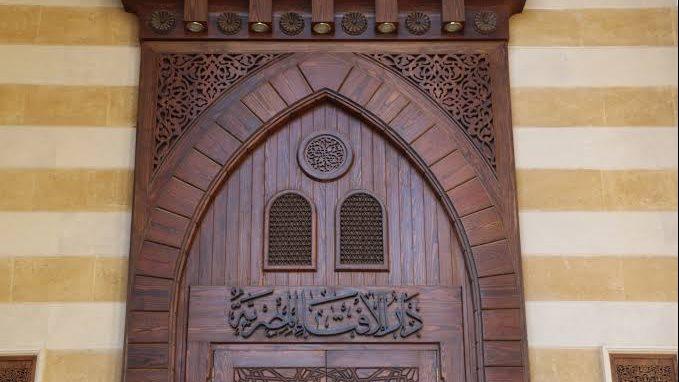

Many Muslims ask: Is shaking hands after prayer a bid'ah (religious innovation)? This question often arises because of differing opinions on the practice. Egypt's Dar Al-Ifta has clarified that shaking hands after prayer is not a bid'ah in itself. Rather, it is a permissible and recommended act rooted in the Sunnah, provided that it is not believed to be an obligatory part of the prayer or a specific Sunnah that must be performed after every prayer.
The Legitimacy of Shaking Hands in Islam
Dar Al-Ifta explained that shaking hands is a recommended Sunnah supported by authentic Islamic teachings because it strengthens brotherhood, spreads love, and removes resentment among Muslims.
The institution cited the hadith narrated by Al-Bara' ibn 'Azib (may Allah be pleased with him) in which the Prophet Muhammad (peace and blessings be upon him) said:
"Whenever two Muslims meet and shake hands, they are forgiven before they part."
This hadith highlights the virtue of greeting fellow Muslims with a handshake and the spiritual reward associated with it.
Is Shaking Hands After Prayer Considered a Bid'ah?
According to Dar Al-Ifta, shaking hands after prayer falls under the general recommendation of shaking hands between Muslims. Therefore, it is not considered a religious innovation as long as it is practiced as a gesture of goodwill and affection, rather than being viewed as a specific act of worship exclusively prescribed after prayer.
Consequently, declaring that shaking hands after prayer is categorically a bid'ah is inconsistent with the opinion of the majority of Islamic scholars, who regard the practice as permissible.
Prophetic Evidence Supporting Shaking Hands
The Hadith of Hudhayfah ibn Al-Yaman
Dar Al-Ifta also referenced the Prophet's saying:
"When a believer meets another believer, greets him with peace, and shakes his hand, their sins fall away just as the leaves fall from a tree."
This narration demonstrates the immense virtue of shaking hands and its role in fostering unity and forgiveness among believers.
The Narration in Imam Malik's Al-Muwatta
The Prophet (peace be upon him) is also reported to have said:
"Shake hands, for it removes resentment. Exchange gifts, and you will love one another, causing hostility to disappear."
This hadith emphasizes the social and spiritual benefits of shaking hands in strengthening relationships within the Muslim community.
The Opinion of the Majority of Scholars
Dar Al-Ifta affirmed that the overwhelming majority of classical and contemporary scholars consider shaking hands to be a recommended practice based on the authentic traditions of the Prophet Muhammad (peace be upon him).
Accordingly, shaking hands after prayer remains permissible and commendable when it serves as an expression of friendship and brotherhood without the belief that it is a prescribed ritual specifically attached to the prayer itself.
When Is Shaking Hands After Prayer Permissible?
As a Gesture of Brotherhood
It is permissible when intended to strengthen love and solidarity among Muslims.
As a Social Custom
It is allowed when practiced as a positive cultural habit rather than a religious obligation.
Without Considering It Mandatory
No one should be criticized for leaving the practice, nor should it be regarded as an essential Sunnah following every prayer.
Conclusion
Egypt's Dar Al-Ifta concluded that shaking hands after prayer is not a bid'ah. Instead, it is a recommended and permissible act supported by Prophetic traditions and endorsed by the majority of Islamic scholars, provided that it is not believed to be a required ritual specifically associated with the prayer.
Is shaking hands after prayer considered a bid'ah?
No. According to Egypt's Dar Al-Ifta, it is permissible and recommended as a gesture of goodwill, provided it is not regarded as a prescribed ritual after prayer.
What is the Islamic ruling on shaking hands between Muslims?
Shaking hands is a recommended Sunnah supported by authentic hadiths that mention its spiritual rewards and its role in strengthening brotherhood.
Do the majority of scholars permit shaking hands after prayer?
Yes. The majority of Islamic scholars consider it permissible as long as it is not believed to be a mandatory act connected specifically to the prayer.
Are there authentic hadiths encouraging Muslims to shake hands?
Yes. Several authentic narrations highlight the virtues of shaking hands, including forgiveness of sins and fostering love and unity among believers.
When would shaking hands after prayer become problematic?
It becomes problematic only if someone believes it is a compulsory or specific Sunnah that must be performed after every prayer, rather than a general recommended practice.




