
Sheikh Khaled El Gendy explained that Al-Khidr was known among Islamic scholars as the “Man of Divine Decree,” referring to the different forms of divine decree reflected in his story with Prophet Moses.
He explained that understanding these meanings can help people deal with difficult events whose wisdom may not be immediately apparent and strengthen their trust in God’s wisdom and planning.
What Types of Divine Decree Did Khaled El Gendy Discuss?
El Gendy described three different forms of divine decree that may appear in a person’s life.
A Decree Whose Wisdom Becomes Clear Later
The first type is a decree whose reasons and wisdom become clear during a person’s lifetime.
A person may experience hardship or loss and initially consider it harmful, only to discover years later that it contained hidden mercy or benefit.
When the wisdom becomes clear, the person may realize that what appeared to be harmful actually carried a form of goodness that was not visible at the time.
A Decree Whose Wisdom Remains Unknown
The second type is a decree whose wisdom a person may never understand during their lifetime.
A person may experience a loss or hardship without knowing whether it was a punishment, a test, purification, or protection from something more serious.
The complete reality and wisdom of such events remain within God’s knowledge.
The Decree of Protection
The third type was described by El Gendy as the “decree of protection,” in which a danger or disaster is diverted from a person without them ever realizing that it was approaching.
A person may unknowingly be protected from a serious danger, making this one of the profound forms of divine mercy.
How Are These Types Reflected in the Story of Al-Khidr and Moses?
El Gendy connected these meanings to the story of Al-Khidr and Prophet Moses.
The damage done to the ship appeared harmful at first, but its wisdom became clear when it was explained that the ship was being protected from a ruler who was seizing sound vessels by force.
The killing of the boy was an event whose wisdom was not immediately understood by Moses, but Al-Khidr later explained the reason behind it.
As for the wall, it represented protection of the property of two orphans. The wall was repaired so their treasure would remain protected until they reached maturity, without the children knowing what had been done for their benefit.
Does Prayer Prevent or Change Divine Decree?
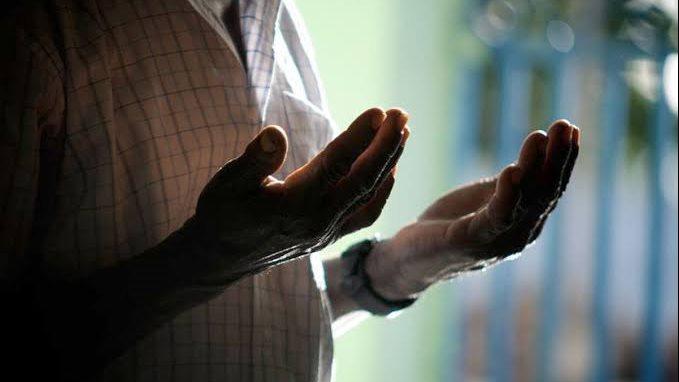
Khaled El Gendy also discussed the relationship between prayer and divine decree, emphasizing that supplication is among the important means through which hardship may be removed.
He cited the prophetic saying: “Nothing repels divine decree except supplication,” explaining that supplication and decree may be understood as forces that meet and that prayer can be a reason for hardship to be lifted.
He stressed that this does not contradict God’s eternal knowledge, which does not change, while distinguishing between an irrevocable decree and matters connected to causes through which circumstances may change.
Can Divine Decree Change Through Prayer and Action?
El Gendy emphasized that belief in divine decree should not lead a person to stop making efforts or taking practical precautions.
He referred to the Quranic verse: “God erases and confirms what He wills, and with Him is the Mother of the Book,” stressing the importance of prayer, work, and taking appropriate means.
He also referred to the decision of Umar ibn Al-Khattab to return his army during the plague in Syria, saying: “We flee from one decree of God to another decree of God.”
The statement reflects the importance of taking precautions rather than relying on fate as an excuse for inaction.
Laylat Al-Qadr and Supplication
Sheikh Khaled El Gendy also highlighted the significance of Laylat Al-Qadr and the importance of increasing worship and supplication during the blessed night.
Among the well-known supplications is: “O Allah, You are Pardoning and Generous, You love to pardon, so pardon me.”
He emphasized that sincere supplication can be a reason for a person’s circumstances to improve by God’s permission.
Khaled El Gendy Explains the Conditions of Sincere Repentance
In another part of his remarks, El Gendy stressed that genuine repentance is not merely a statement, but must be reflected through sincere change in behavior.
He explained that repeatedly making the same mistake after repeated warnings may indicate disregard for consequences, emphasizing the importance of clear boundaries and commitments in different relationships.
What Are the Conditions of Genuine Repentance?
Khaled El Gendy identified three fundamental conditions for sincere repentance:
- Regret for the sin: Genuine remorse over what was committed.
- Abandoning the sin: Immediately stopping the sinful act.
- A sincere determination not to return: A genuine commitment to avoid returning to the wrongdoing.
He noted that claiming repentance while retaining the means that facilitate a return to sin may raise questions about the sincerity of that repentance.
He also cited the Quranic command: “Repent to God with sincere repentance.”
What Can We Learn From the Story of Al-Khidr and Moses?
The story of Al-Khidr and Moses contains important lessons about patience and trusting God’s wisdom, particularly when people encounter events they cannot immediately understand.
It also highlights the importance of respecting agreements, boundaries, and commitments in human relationships.
Ultimately, people cannot comprehend every aspect of divine decree. Some forms of goodness may remain hidden from them, making patience, prayer, sincere effort, and taking appropriate precautions important principles for dealing with life’s uncertainties.
What are the three types of divine decree discussed by Khaled El Gendy?
He described a decree whose wisdom becomes clear later, a decree whose wisdom remains unknown, and a decree of protection in which harm is diverted without the person realizing it.
Can prayer change divine decree?
El Gendy explained that supplication is among the means through which God may remove hardship, while God’s eternal knowledge remains unchanged.
What are the conditions of sincere repentance?
They are genuine regret, abandoning the sin, and sincerely resolving not to return to it.
What does “We flee from one decree of God to another” mean?
It emphasizes taking practical precautions and avoiding harm rather than using belief in divine decree as a reason for inaction.
What is the connection between Al-Khidr’s story and divine decree?
The events involving Al-Khidr and Moses illustrate different ways in which divine wisdom and decree may appear, including circumstances whose reasons are not immediately apparent.