
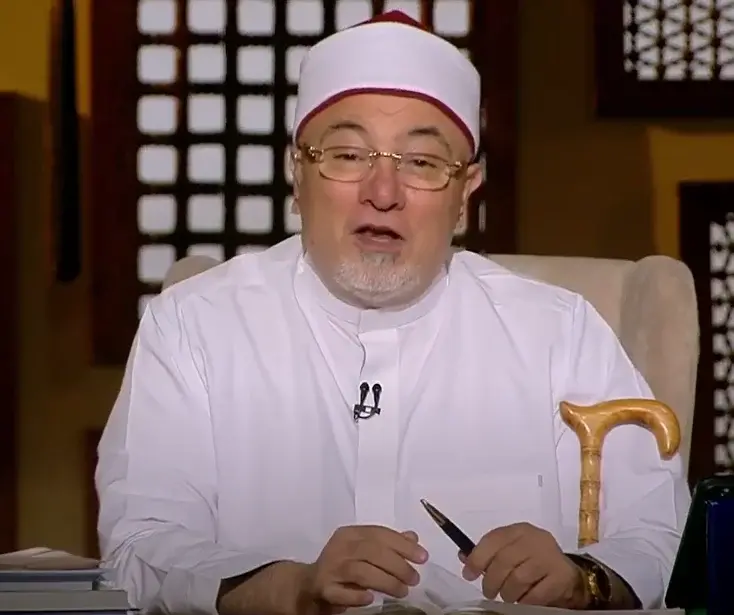

Khaled El Gendy, a member of Egypt’s Supreme Council for Islamic Affairs, stated that argumentation is not inherently negative, emphasizing that understanding its meaning within Islamic teachings reveals its true role in seeking truth.
He referred to the Quranic verse describing humans as “most argumentative,” explaining that while people are naturally inclined to debate, such discussions can take two distinct forms: one that seeks truth and another that aims to support falsehood or personal ego.
El Gendy highlighted that the Quran does not reject argument entirely, but rather guides it, as seen in the verse: “And argue with them in the best manner,” indicating that respectful and well-intentioned dialogue can be a powerful tool for persuasion and understanding.
He stressed that constructive argument is defined by its purpose—seeking truth rather than winning a debate—pointing out that the Prophet ﷺ acknowledged the argument of the woman in Surah Al-Mujadila because it was rooted in a genuine pursuit of justice.
On the other hand, he warned against destructive argument, especially when it involves denying obvious facts or established truths, noting that such discussions undermine meaningful dialogue and lead nowhere.
El Gendy also outlined two essential conditions for healthy debate: respectful language and integrity in conveying information. Without these, he said, discussions lose credibility and turn into fruitless disputes.
He concluded by affirming that when debate is guided by ethics and aimed at uncovering truth, it becomes a form of supporting truth itself and contributes to greater awareness and understanding within society.
For more details and the latest updates, follow Egypt Connect




