
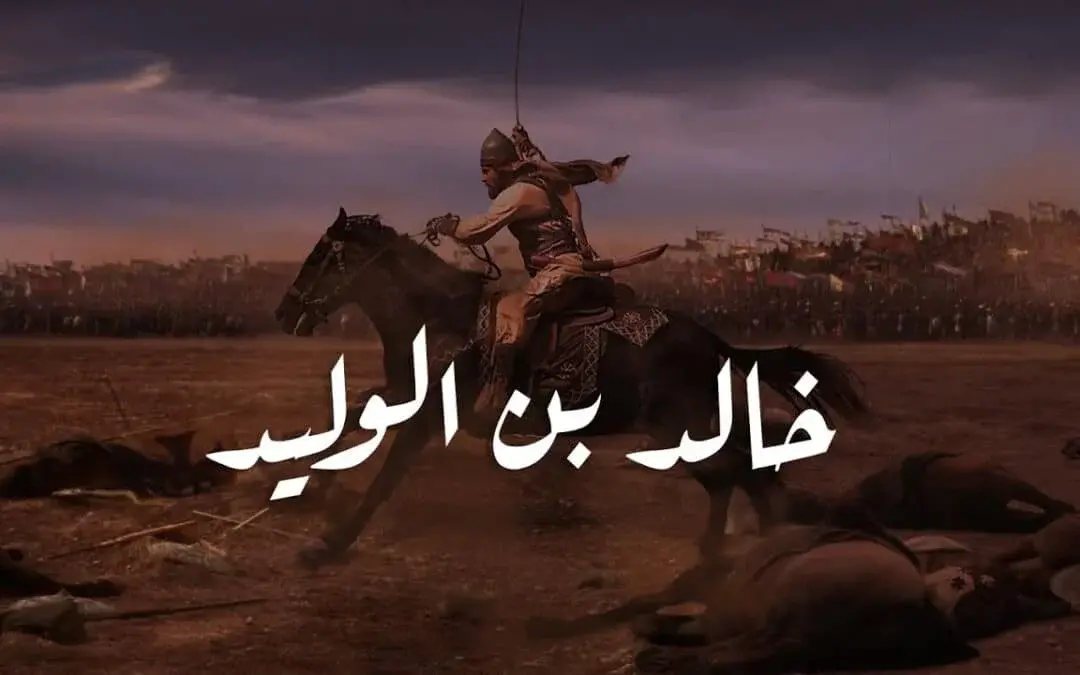

Khalid ibn al-Walid, may Allah be pleased with him, was one of the most prominent military leaders among the Companions of Prophet Muhammad, peace and blessings be upon him.
He became known as the Sword of Allah, a title associated with his courage and leadership in major battles during the early Islamic period.
Khalid was from the Quraysh tribe, specifically the Banu Makhzum, and accepted Islam in Safar of the eighth year after the Hijrah.
Who Was Khalid ibn al-Walid?
His full name was Abu Sulayman Khalid ibn al-Walid ibn al-Mughirah al-Makhzumi al-Qurashi.
He was a prominent Companion, military commander, and the nephew of Maymunah, one of the wives of the Prophet.
After accepting Islam, Khalid became one of the leading commanders in the Muslim armies and participated in major campaigns during the time of the Prophet and the first caliphs.
Why Was Khalid Called the Sword of Allah?
Khalid became famous by the title Saif Allah, meaning the Sword of Allah.
Reports describe the Prophet as referring to Khalid as one of the swords of Allah, a title that became closely associated with him because of his military leadership and courage.
Khalid ibn al-Walid at the Battle of Mu'tah
The Battle of Mu'tah was one of the most important events in Khalid's military career.
After the three commanders appointed by the Prophet—Zayd ibn Harithah, Ja'far ibn Abi Talib, and Abdullah ibn Rawahah—were killed, Khalid took command of the army and carried the banner.
He reorganized the forces and managed the withdrawal of the army, and the event became closely connected with the Prophet's description of him as a Sword of Allah.
Khalid and the Ridda Wars
Khalid played a major role in the campaigns against the groups that rebelled after the death of the Prophet.
During the caliphate of Abu Bakr al-Siddiq, Khalid was appointed to command Muslim forces and participated in the campaign against Musaylimah and his followers at al-Yamamah.
He later took part in the campaigns in Iraq and Syria and became one of the leading commanders of the period.
Khalid's Courage in Battle
Khalid was known for his extensive experience in warfare.
A report attributed to him states that during Mu'tah nine swords broke in his hand, leaving him with a Yemeni blade.
Other reports describe his strong attachment to military service and his preference for nights spent on campaign, waiting for the morning to confront the enemy.
Accounts also emphasize the many wounds he sustained during his military career.
Khalid ibn al-Walid's Narrations from the Prophet
Although Khalid was best known as a military commander, he also transmitted reports from the Prophet Muhammad.
Among those who narrated from him were Abdullah ibn Abbas, Qays ibn Abi Hazim, al-Miqdam ibn Ma'di Karib, Jubayr ibn Nufayr, and Shaqiq ibn Salamah, among others.
The source material notes that two of his hadith reports are found in the two major canonical collections, while other reports are preserved in additional hadith compilations.
The Hadith About the Lizard
Among Khalid's narrations is the account of eating a desert lizard.
Khalid entered upon his maternal aunt Maymunah while the Prophet was with her. A roasted lizard had been brought and was offered to the Prophet.
The Prophet did not eat it. When Khalid asked whether it was prohibited, the Prophet explained that it was not forbidden, but that it was not a customary food among his people and he personally did not desire it.
The narration illustrates the distinction between something being religiously prohibited and simply being a food that a person does not prefer.
Khalid and the Incident of Banu Jadhimah
The life of Khalid also includes incidents involving disagreement and judgment in the context of military campaigns.
One of the most notable was the incident involving Banu Jadhimah. The Prophet had sent Khalid to them, but events unfolded in a way that led the Prophet to publicly dissociate himself from what Khalid had done.
The source material also records the view that Khalid had acted according to his own judgment in the incident and that the Prophet did not require him to pay blood compensation.
The episode is therefore part of the historical record of Khalid's career alongside his military achievements.
Why Was Khalid Removed From Command?
When Umar ibn al-Khattab became caliph, he removed Khalid from command in Syria and appointed Abu Ubaydah ibn al-Jarrah in his place.
The reports cited in the source material give several details concerning the decision, including issues related to financial grants and administration.
The removal did not necessarily reflect a denial of Khalid's military abilities. Reports also record Umar's continued respect and affection for him.
One of the concerns attributed to Umar was ensuring that Muslims understood that victory comes from Allah rather than depending on a particular commander.
Khalid's Dedication to Military Service
Reports describe Khalid as maintaining horses and weapons for service and defense.
At the end of his life, he instructed that his horse and weapons be used in the cause of Allah, reflecting the central place that military service had held throughout his life.
The Death of Khalid ibn al-Walid
Khalid ibn al-Walid died in Homs in 21 AH after a life marked by military campaigns and major events in early Islamic history.
Accounts describe his body as bearing numerous wounds from swords, spears, and arrows accumulated during his years of warfare.
Despite his extensive participation in battles, Khalid died in his bed rather than on the battlefield.
Khalid's Words Near the End of His Life
Among the statements attributed to Khalid near his death is his reflection that he had sought death in battle but was ultimately destined to die in his bed.
He described a night spent on guard, waiting for morning and preparing to confront the enemy, as among the deeds he valued most after affirming the oneness of Allah.
These reports portray his deep attachment to military service and his readiness to sacrifice himself for what he believed was the cause of Islam.
Khalid ibn al-Walid's Place in Islamic History
The life of Khalid ibn al-Walid represents an important part of the military history of the early Muslim community.
He commanded forces during the Prophet's lifetime, participated in the Ridda wars, and took part in the campaigns in Iraq and Syria.
His legacy also includes his transmission of Prophetic reports and a historical record containing both celebrated military achievements and incidents involving human judgment and disagreement.
Why was Khalid ibn al-Walid called the Sword of Allah?
He became known as the Sword of Allah through descriptions attributed to the Prophet, and the title became associated with his courage and military leadership.
What did Khalid do at the Battle of Mu'tah?
After the three appointed commanders were killed, Khalid took command, carried the banner, reorganized the army, and led the forces through the difficult situation.
Did Khalid ibn al-Walid narrate hadith?
Yes. Khalid narrated a number of reports from the Prophet, including the well-known account concerning the desert lizard.
Why did Umar remove Khalid from command?
Umar removed Khalid from military command in Syria, with reports citing administrative and financial considerations while also recording Umar's continued respect for him.
When did Khalid ibn al-Walid die?
Khalid died in Homs in 21 AH after a life marked by military campaigns and service during the early Islamic period.




