
Egypt's sky is set to witness a partial lunar eclipse in the early hours of Friday, August 28, 2026, coinciding with the full moon of Rabi’ al-Awwal 1448 AH.
The astronomical event is also associated in Islamic tradition with the lunar eclipse prayer, during which Muslims are encouraged to turn to prayer, supplication, remembrance of Allah, repentance, and charity.
When Will the Lunar Eclipse Be Visible in Egypt?
The partial lunar eclipse will reach its maximum observable stage from Egypt at 6:29 a.m., coinciding with sunrise.
Because the Sun will rise at that time, observers in Egypt will not be able to see all stages of the eclipse until its astronomical conclusion.
The partial eclipse is expected to continue until approximately 8:52 a.m., while all astronomical stages of the eclipse will end at 10:02 a.m.
What Causes a Lunar Eclipse?
A lunar eclipse occurs when the Earth passes between the Sun and the Moon, causing the Moon to move through Earth's shadow. During a partial lunar eclipse, only part of the Moon enters the darkest portion of the Earth's shadow.
From an Islamic perspective, the Sun and Moon are among Allah's signs.
The Prophet Muhammad ﷺ said:
“The Sun and the Moon do not eclipse because of the death or life of anyone, but they are two signs among the signs of Allah.”
Modern astronomy can explain and predict the physical causes and timing of eclipses. This scientific understanding does not conflict with Islamic belief in Allah's power and creation.
How to Perform the Lunar Eclipse Prayer
The lunar eclipse prayer is a Prophetic practice performed when a lunar eclipse occurs.
People are called to the prayer with the announcement:
“As-salatu jami‘ah” — “The prayer is gathering.”
There is no regular adhan for the eclipse prayer because the adhan is associated with the obligatory daily prayers.
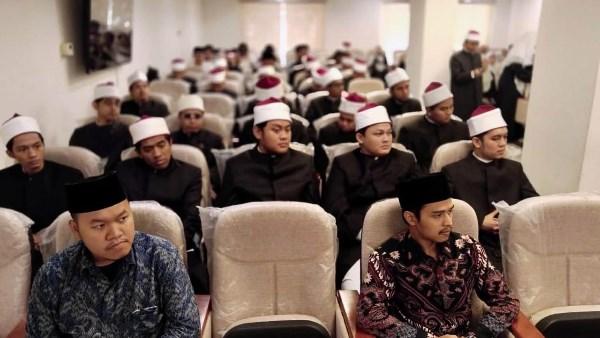
The prayer consists of two rak‘ahs, and performing it in congregation is considered recommended according to some schools of Islamic jurisprudence, while it may also be performed individually.
Steps of the Lunar Eclipse Prayer
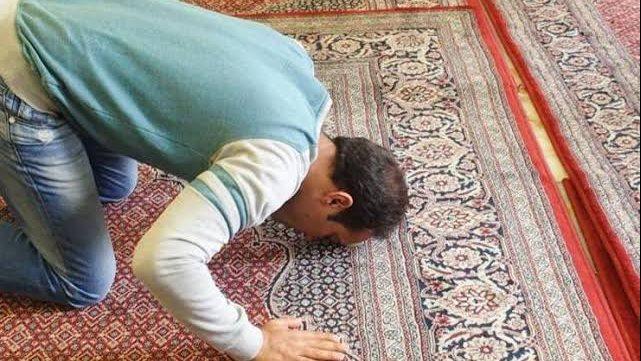
The distinctive feature of the eclipse prayer is that each rak‘ah includes two standings, two recitations, two bows, and two prostrations.
The prayer is performed as follows:
- The worshipper begins with the opening takbir.
- Al-Fatihah and additional Quranic verses are recited, with a prolonged recitation.
- The worshipper performs a prolonged bow.
- After rising from the first bow, Al-Fatihah and additional Quranic verses are recited again. The second recitation is shorter than the first.
- A second bow is performed, shorter than the first.
- The worshipper rises and performs two prostrations.
- The second rak‘ah is performed in the same manner, but it is shorter than the first.
- After the final prostrations, the worshipper sits for the tashahhud and concludes the prayer with salam.
When Is the Lunar Eclipse Prayer Performed?
The time for the lunar eclipse prayer begins when the eclipse starts and continues until the eclipse ends.
Because the prayer is connected to a specific astronomical event, its time ends when the eclipse has completely passed.
Therefore, Muslims are encouraged to pray during the eclipse and to increase their remembrance of Allah, supplication, repentance, and charitable acts.
Should the Imam Recite Aloud During the Lunar Eclipse Prayer?
According to the majority of Islamic scholars, the imam recites the Quran aloud during the lunar eclipse prayer, as it is considered a nighttime prayer.
This differs from the solar eclipse prayer, in which recitation is performed quietly according to the majority position.
Can the Lunar Eclipse Prayer Be Performed in Congregation?
Islamic scholars have differed regarding congregational prayer for a lunar eclipse.
The Shafi‘i and Hanbali schools permit performing the lunar eclipse prayer in congregation, while the Hanafi and Maliki schools, according to their well-known positions, do not consider congregation prescribed for the lunar eclipse prayer.
In either case, the prayer begins with the occurrence of the eclipse and ends when it clears.
The call for the prayer is “As-salatu jami‘ah”, rather than the regular adhan.
Why Is the Lunar Eclipse Prayer Performed?
The lunar eclipse prayer is prescribed because an eclipse is one of Allah's signs that reminds people of His greatness and power.
The Prophet ﷺ instructed Muslims to turn to prayer when they witnessed such an event.
He said:
“When you see that, hasten to prayer.”
The Prophetic guidance emphasizes worship, reflection, remembrance, supplication, and charity rather than superstitious explanations.
Is There a Specific Supplication for the Lunar Eclipse Prayer?
There is no specific supplication established from the Prophet ﷺ with a fixed wording exclusively for the lunar eclipse prayer.
However, Muslims are encouraged to make abundant supplication, seek forgiveness, remember Allah, repent, and give charity during an eclipse.
A Muslim may say:
“O Allah, forgive our sins, have mercy upon us, guide us to Your straight path, accept our repentance, and rectify our hearts and deeds.”
They may also say:
“O Allah, we seek Your forgiveness and repent to You. Forgive us and have mercy upon us. Guide us among those whom You have guided, grant us well-being among those whom You have granted well-being, and take care of us among those whom You have taken care of.”
Another appropriate supplication is:
“O Allah, relieve us of the worries of this world and the Hereafter, protect us from trials, and grant us Your mercy, forgiveness, and pleasure.”
Muslims may also increase their remembrance of Allah and send blessings upon Prophet Muhammad ﷺ.
What Should Muslims Do During a Lunar Eclipse?
When a lunar eclipse occurs, Muslims are encouraged to:
- Perform the lunar eclipse prayer.
- Make abundant supplication.
- Seek Allah's forgiveness.
- Remember Allah.
- Repent from sins.
- Give charity.
- Reflect upon Allah's greatness and power.
The Prophetic guidance teaches that astronomical events should remind people of their Creator rather than become a source of superstition or unfounded beliefs.
Lunar Eclipse: A Sign That Inspires Reflection
A lunar eclipse is a remarkable astronomical event that demonstrates the precision of the celestial system while also providing an opportunity for reflection upon the greatness of Allah.
Although modern science can accurately calculate the timing and stages of an eclipse, the spiritual meaning of the event remains significant for Muslims.
The Prophetic tradition encourages believers to respond to an eclipse with prayer, supplication, remembrance, repentance, and charity, keeping their hearts connected to Allah.
When will the lunar eclipse occur in Egypt?
The eclipse will reach its maximum observable stage from Egypt at 6:29 a.m. on Friday, August 28, 2026, around sunrise.
When will the partial lunar eclipse end?
The partial eclipse is expected to continue until approximately 8:52 a.m., while all astronomical stages end at 10:02 a.m.
How many rak‘ahs are in the lunar eclipse prayer?
The lunar eclipse prayer consists of two rak‘ahs, with two standings, two recitations, two bows, and two prostrations in each rak‘ah.
Is there a specific supplication for the eclipse prayer?
No specific fixed supplication has been established exclusively for the eclipse prayer. Muslims may make any appropriate supplication and increase remembrance and seeking forgiveness.
Can the lunar eclipse prayer be performed in congregation?
The Shafi‘i and Hanbali schools permit congregational prayer for a lunar eclipse, while the Hanafi and Maliki schools do not consider congregation prescribed for it according to their well-known positions.