
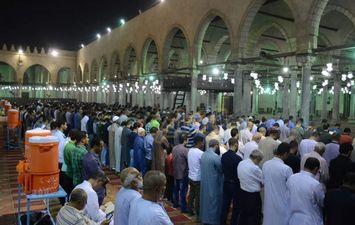

With the final days of Ramadan approaching, believers across the world increase their acts of worship, seeking spiritual closeness and hoping to experience the immense blessings promised in the last ten nights of the holy month. Among the most cherished forms of worship during this time is the Tahajjud prayer.
Tahajjud is a special form of night prayer performed after sleeping for a short period and waking up during the later hours of the night. This distinguishes it from other voluntary prayers that are usually offered immediately after obligatory prayers.
The Quran encourages believers to rise at night for worship, highlighting the spiritual reward associated with devotion during the quiet hours before dawn. In practice, Tahajjud is performed in sets of two rak‘ahs, similar to other voluntary prayers, and it is commonly concluded with the Witr prayer.
Many scholars suggest that the best time to perform Tahajjud is during the final portion of the night just before dawn. At that moment, the atmosphere is calm and reflective, allowing worshippers to focus deeply on prayer, supplication, and recitation.
The number of rak‘ahs in Tahajjud can vary depending on a person’s ability. Some choose to pray four or six rak‘ahs, while others extend their prayer to eight or more, often prolonging the recitation and moments of prostration in pursuit of spiritual reflection.
When performed in mosques as a congregation, moderation is often encouraged in the length and number of rak‘ahs to make it easier for worshippers to attend regularly. However, individuals praying at home may extend their prayers and supplications according to their personal devotion.
The significance of Tahajjud becomes even greater during the final ten nights of Ramadan. These nights hold the possibility of Laylat al-Qadr, a night described in the Quran as better than a thousand months. Scholars explain that the phrase symbolizes an extraordinary level of blessing and reward, meaning that sincere worship during this single night may carry the value of decades of devotion.
Because of this immense spiritual promise, Muslims dedicate these nights to prayer, remembrance, and reflection, hoping to witness the blessings of this extraordinary night.
For more details and the latest news, follow Misr Connect




