
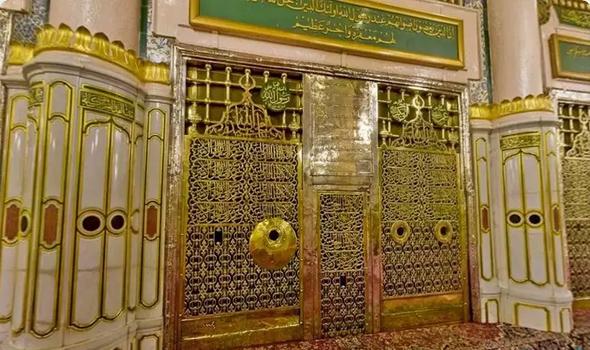

Visiting the Prophet’s Grave During Menstruation.. Former Grand Mufti Explains
Dr. Shawki Ibrahim Allam, former Grand Mufti of Egypt, explained the Islamic ruling on a menstruating woman visiting the grave of Prophet Muhammad, peace and blessings be upon him and his family, outlining several possibilities while emphasizing the relevant religious guidelines for entering Al-Masjid an-Nabawi.
He explained that a woman may wait for her menstrual bleeding to stop, or take medication to prevent bleeding after consulting a medical professional, then perform ghusl and visit the Prophet’s grave and offer her greetings.
Can a Menstruating Woman Visit the Prophet’s Grave?
Shawki Allam stated that if the bleeding does not stop and the travel date is approaching, there is no prohibition on a menstruating woman visiting the Prophet’s grave and offering her greetings, provided that she is certain that the mosque will not be contaminated.
He explained that visiting the Prophet is considered one of the highly recommended acts of worship, while pilgrims should also observe the relevant rules governing entry into Al-Masjid an-Nabawi.
Can a Menstruating Woman Enter Al-Masjid an-Nabawi?
Allam explained that entering Al-Masjid an-Nabawi for the purpose of visiting and greeting the Prophet is subject to a detailed scholarly discussion.
The majority of Islamic jurists hold that a menstruating woman should not remain inside a mosque. However, they permit her to pass through it if she is certain that it will not be contaminated. Scholars also recognize an allowance for passing through a mosque when there is a genuine need or necessity.
Can a Menstruating Woman Pass Through a Mosque?
Allam noted that a number of scholars permit a menstruating woman to pass through a mosque if she can ensure that it will not be contaminated. This view has been preferred by many jurists, while some scholars prohibit it altogether.
He explained that the position followed by the majority permits passing through the mosque while taking precautions to prevent any contamination.
Visiting the Prophet’s Grave When There Is a Need
The former Grand Mufti explained that some jurists have stated that the case of a menstruating woman performing an excused circumambulation may be treated similarly to permitted passage through a mosque. Based on this reasoning, visiting the Prophet’s grave may have an even stronger basis for permissibility in such circumstances.
This remains subject to avoiding any contamination and preserving the sanctity of Al-Masjid an-Nabawi.
Can a Menstruating Woman Follow the Ruling That Intermittent Purity Is Valid?
Shawki Allam explained that a menstruating woman may also follow the juristic opinion that considers a period of dryness occurring during menstruation to constitute ritual purity. This is reported as a position in the Maliki and Hanbali schools and also as one opinion within the Shafi'i school.
Under this view, she may perform ghusl and then visit the Prophet and offer her greetings.
Guidelines for Visiting the Prophet’s Grave During Menstruation
The issue involves several religious considerations, including:
- Waiting for the menstrual bleeding to stop when possible.
- Consulting a medical professional before taking medication to delay or prevent menstrual bleeding.
- Performing ghusl after establishing ritual purity.
- If bleeding continues, observing the scholarly position permitting passage when necessary, provided the mosque remains protected from contamination.
- Preserving the cleanliness and sanctity of Al-Masjid an-Nabawi.
The Significance of Visiting the Prophet
Shawki Allam emphasized that visiting the Prophet is among the recommended acts that Muslims seek to perform because of its religious significance and great virtue, while observing the relevant Islamic guidelines.
Visiting Al-Masjid an-Nabawi and offering greetings to the Prophet is an important part of many Muslims’ journeys for Hajj and Umrah, with the applicable rules of purification and mosque entry observed according to each individual circumstance.
Conclusion
According to Dr. Shawki Allam, a menstruating woman may visit the Prophet’s grave if she can ensure that the mosque will not be contaminated, while acknowledging the scholarly details concerning entry into Al-Masjid an-Nabawi. She may also wait until menstruation ends and perform ghusl, or follow a recognized juristic opinion regarding intermittent purity, while observing the relevant religious guidelines and preserving the sanctity of the mosque.
FAQ: Frequently Asked Questions
Can a menstruating woman visit the Prophet’s grave?
Shawki Allam explained that there is no prohibition on the visit when necessary if she can ensure that the mosque will not be contaminated, while observing the scholarly discussion on mosque entry.
Can a menstruating woman enter Al-Masjid an-Nabawi?
The majority of jurists do not permit her to remain inside the mosque, but they permit passage when necessary if contamination can be avoided.
Can she wait until her period ends before visiting?
Yes. She may wait until the bleeding stops, perform ghusl, and then make the visit.
Can medication be taken to prevent menstrual bleeding?
It may be taken after consulting a medical professional and confirming that the medication is medically appropriate.
What is the most important condition for visiting during menstruation?
One of the most important conditions is ensuring that the mosque is not contaminated and preserving its sanctity.




