Muslims across Egypt and the Islamic world are awaiting the date of Prophet Muhammad’s Birthday 2026, which falls during the Islamic month of Rabi’ al-Awwal.
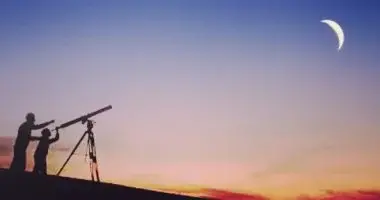
The final date depends on the official determination of the beginning of Rabi’ al-Awwal after the crescent is observed, while astronomical calculations provide an expected date.
When Is Prophet Muhammad’s Birthday in 2026?
According to astronomical calculations, the first day of Rabi’ al-Awwal 1448 AH is expected to fall on Friday, August 14, 2026.
Accordingly, 12 Rabi’ al-Awwal is expected to fall on Tuesday, August 25, 2026, which is the expected astronomical date of Prophet Muhammad’s Birthday.
The final official date remains subject to the announcement of the competent authorities following the observation of the new crescent.
When Does Rabi’ al-Awwal 1448 Begin?
The National Research Institute of Astronomy and Geophysics provided astronomical details concerning the birth of the crescent of Rabi’ al-Awwal 1448 AH.
Dr. Mohamed Somida, Head of the Solar Department at the institute, stated that the new crescent will be born immediately after conjunction at 8:38 p.m. Cairo time on Wednesday, August 12, 2026, corresponding to 29 Safar 1448 AH.
He explained that the new crescent will not be visible above the horizon at sunset on the observation day in Cairo and in most Arab and Islamic capitals because the conjunction occurs after sunset.
Crescent Sunset Timing
The old lunar crescent is expected to set before sunset on Wednesday, August 12, 2026.
In Mecca, it will set approximately five minutes before sunset, while in Cairo it will set around three minutes before sunset.
The timing differs from one city to another. In several Arab and Islamic capitals, the crescent will set between one and nine minutes before sunset, while in Algeria and Tunisia it is expected to set around sunset.
In Marrakesh and Fez, it is expected to set about one minute after sunset, while in Dakar and Nouakchott it may remain visible for approximately two minutes after sunset.
Astronomical Date of Prophet Muhammad’s Birthday
Astronomical calculations indicate that Thursday, August 13, 2026, will complete Safar 1448 AH, making Friday, August 14, the expected first day of Rabi’ al-Awwal.
Based on this calculation, Prophet Muhammad’s Birthday, corresponding to 12 Rabi’ al-Awwal, is expected to fall on Tuesday, August 25, 2026.
Prophet Muhammad’s Birthday Public Holiday in Egypt 2026
The Egyptian government is expected to issue an official decision determining the date of the 2026 Prophet Muhammad’s Birthday public holiday according to the applicable procedures.
The holiday generally applies to employees of ministries, government agencies, public authorities and local administration units, subject to the official Cabinet decision.
For private-sector employees, the Ministry of Labour determines the applicable rules under the Labour Law and regulations governing official holidays.
What Is the Islamic Ruling on Celebrating Prophet Muhammad’s Birthday?
According to Egypt’s Dar Al-Ifta, celebrating Prophet Muhammad’s Birthday is permissible when the celebration consists of lawful acts of worship and remembrance, such as reciting the Quran, sending blessings upon the Prophet, studying his biography and remembering his teachings and character.
The celebration should remain free from prohibited practices and should serve as an opportunity to remember the Prophet’s life and emulate his noble character.
Is It Permissible to Celebrate Prophet Muhammad’s Birthday?
According to statements attributed to Egypt’s Dar Al-Ifta and Al-Azhar’s Global Center for Electronic Fatwa, celebrating the Prophet’s Birthday can be permissible when it follows Islamic guidelines.
Such occasions may include reciting the Prophet’s biography, sending blessings upon him, giving charity, feeding others and expressing joy, provided that these activities remain within the boundaries of Islamic law.
Al-Azhar’s View on Celebrating the Prophet’s Birthday
Al-Azhar’s Global Center for Electronic Fatwa has described celebrating the Prophet’s Birthday as a recommended practice according to the scholarly view that permits it, considering it an expression of reverence and love for Prophet Muhammad.
The center cited the Prophet’s statement when he was asked about fasting on Monday: “That is the day on which I was born.” The hadith is reported by Muslim.
The center also noted that the Quran associates the birth of prophets with meanings of peace and blessing, citing verses from Surah Maryam and Surah Ibrahim.
According to this view, a permissible celebration can include studying the Prophet’s biography, sending blessings upon him, giving charity, feeding people and expressing joy, provided that all such practices remain consistent with Islamic teachings.