
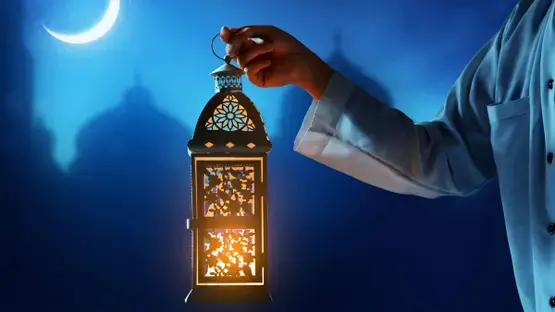

The Egyptian Fatwa Authority, in coordination with the National Institute of Astronomy, will sight the crescent of Ramadan 1447 AH (2026 AD) tomorrow evening, Tuesday. Preliminary astronomical calculations suggest that the crescent will be born immediately after conjunction, making it visible in Cairo and Mecca for 33–37 minutes after sunset, while in some capitals of Arab and Islamic countries, it may remain visible for up to 44 minutes.
According to these calculations, Wednesday, February 18, 2026, will complete the month of Sha’ban, and Thursday, February 19, 2026, will mark the astronomical start of Ramadan. The holy month is expected to complete 30 days, making Friday, March 20, the last day, and Saturday, March 21, 2026, the first day of Eid al-Fitr.
Daily fasting hours will gradually increase from approximately 12 hours at the beginning to about 13 hours by the end of the month, depending on geographic location and latitude within Egypt.
To spiritually prepare for Ramadan, religious scholars recommend several practical steps:
-
Training for fasting by observing some days of Sha’ban.
-
Consistent Quran recitation for reflection and remembrance of God.
-
Social solidarity through charity and acts of kindness, supporting families in need.
-
Engaging in night prayers to accustom oneself to standing in worship during Taraweeh and Tahajjud.
The Islamic world follows the lunar calendar for religious observances. Ramadan is the ninth month of the Hijri year, preceded by Sha’ban and followed by Shawwal, which brings the joy of Eid. The Egyptian Fatwa Authority remains the official reference for announcing crescent sightings, in accordance with the Prophetic guidance: "Fast upon sighting it and break your fast upon sighting it."
For more details and latest news, follow Masr Connect




