
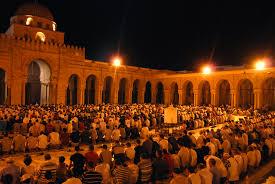

The Egyptian Dar Al-Ifta stated that reciting Surah Al-Ikhlas (Qul Huwa Allahu Ahad) and sending blessings on the Prophet ﷺ during breaks between Tarawih units are recommended acts and not innovations. The Prophet’s ﷺ guidance about individual recitation does not forbid organized group recitation or collective dhikr, provided it does not disturb other worshippers.
Regarding Tarawih and Tahajjud, Dr. Magdy Ashour, former advisor to the Grand Mufti, explained that Tarawih is a special night prayer during Ramadan, while Tahajjud or night prayer can be offered anytime. Tarawih does not replace Tahajjud; if one can pray both, it is better, but if not, one can combine them early in the night.
The number of Tarawih units is not fixed. During Caliph Umar’s time, they were performed in 23 units, while the Prophet ﷺ prayed 11 or 13 units, emphasizing the virtue of night prayers and Ramadan prayers as in his saying: “Whoever prays during Ramadan with faith and seeking reward will have his previous sins forgiven.”
For more details and latest news, follow Misr Connect




