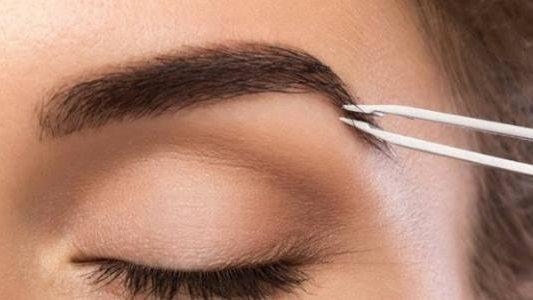

Many women ask about the Islamic ruling on eyebrow grooming, especially when their eyebrows appear unusually thick, uneven, or unattractive, in light of the prophetic hadith: “Allah has cursed those women who pluck the eyebrows and those who have them plucked.”
Egypt’s Dar al-Ifta explained that scholars have differed over whether the prohibition applies to every form of eyebrow grooming. Jurists also differed regarding the precise meaning of namṣ and the circumstances connected to the prohibition.
What Does Namṣ Mean in the Hadith?
Abdullah ibn Mas‘ud, may Allah be pleased with him, reported that the Prophet Muhammad, peace and blessings be upon him, said:
“Allah has cursed those who tattoo and those who have themselves tattooed, those who pluck facial hair and those who have it plucked, and those who create spaces between their teeth for beauty, changing the creation of Allah.”
The scholars differed over the precise meaning of namṣ. Some understood it specifically as removing eyebrow hair, while others gave the term a broader meaning involving facial hair.
They also discussed the reason and circumstances behind the prohibition.
Scholarly Views on Eyebrow Grooming
The Hanafi View
Hanafi jurists understood the prohibition in certain contexts, including situations where eyebrow removal is intended as beautification for unrelated men.
Under this interpretation, the purpose and circumstances of the act are relevant rather than treating every form of hair removal identically.
The Maliki View
Maliki scholars connected the prohibition with meanings such as deception and a particular form of altering Allah’s creation.
When those meanings are absent, the reason for applying the prohibition may likewise be absent.
Some Maliki jurists also discussed the case of a woman who is prohibited from beautification for a religious reason, such as a widow observing the prescribed mourning period.
The Shafi‘i View
Shafi‘i jurists also considered the role of genuine need. They allowed hair removal in certain circumstances involving treatment, a physical defect, disfigurement, or another recognized need.
Accordingly, removing hair may fall under a necessary, needed, or beneficial measure depending on the circumstances.
The Hanbali View
Some Hanbali scholars interpreted the prohibition as referring specifically to plucking, rather than simply removing hair by every possible method.
Based on this interpretation, a distinction may be made between plucking and other forms of hair removal.
There is also scholarly disagreement over whether namṣ specifically refers to eyebrows or includes facial hair more generally.
When Is Eyebrow Grooming Permitted?
According to the view presented by Dar al-Ifta, a genuine need can affect the ruling.
For example, if a woman’s eyebrows have an unusually abnormal or unattractive appearance that can reasonably be considered a physical defect, grooming may fall under the removal of a defect rather than ordinary beautification.
This may include excessive or unusually prominent hair that significantly affects the appearance of the eyebrows.
Is Eyebrow Grooming Permitted When There Is a Need?
According to this juristic approach, when a legitimate need exists, the ruling of dislike may no longer apply.
A recognized legal principle states that dislike can be lifted by even a lesser degree of need. In this context, an act that may ordinarily be considered disliked can become permissible when there is a valid reason for doing it.
The purpose in such a case is not simply additional beautification but addressing a physical defect or an unusual appearance.
Is the Prohibition of Namṣ Absolute?
The scholars did not unanimously agree that the hadith prohibits every form of eyebrow grooming without distinction.
They differed over the meaning of namṣ, the underlying reason for the prohibition, and the circumstances in which the ruling applies.
Therefore, the ruling on eyebrow grooming can differ according to the purpose, method, circumstances, and whether a genuine need exists.
Conclusion on Eyebrow Grooming
The differences among Islamic jurists show that eyebrow grooming cannot necessarily be treated as one identical case in every circumstance.
When grooming is intended to remove a noticeable defect, disfigurement, or another recognized need, some jurists have permitted it in specific circumstances. Other forms of grooming remain subject to scholarly disagreement depending on the meaning of namṣ and the reason understood from the prophetic prohibition.
Is eyebrow grooming forbidden in Islam?
The ruling differs among scholars because they have different interpretations of namṣ and the circumstances connected to the prohibition. Some forms are permitted when a valid need exists.
Can eyebrow hair be removed because of a physical defect?
Yes. Scholars have discussed permission to remove hair when there is a defect, disfigurement, or another legitimate need, depending on the circumstances.
Does namṣ refer only to plucking eyebrow hair?
Scholars differed. Some restricted the meaning to eyebrow hair, while others understood it more broadly as removing facial hair.
Does the method of hair removal affect the ruling?
Yes. Some jurists distinguished between plucking and removing hair through other methods, which can lead to different rulings.
Can a genuine need change the ruling on eyebrow grooming?
According to the view presented by Dar al-Ifta, a recognized need such as removing a defect or disfigurement can remove the ruling of dislike in certain cases.