
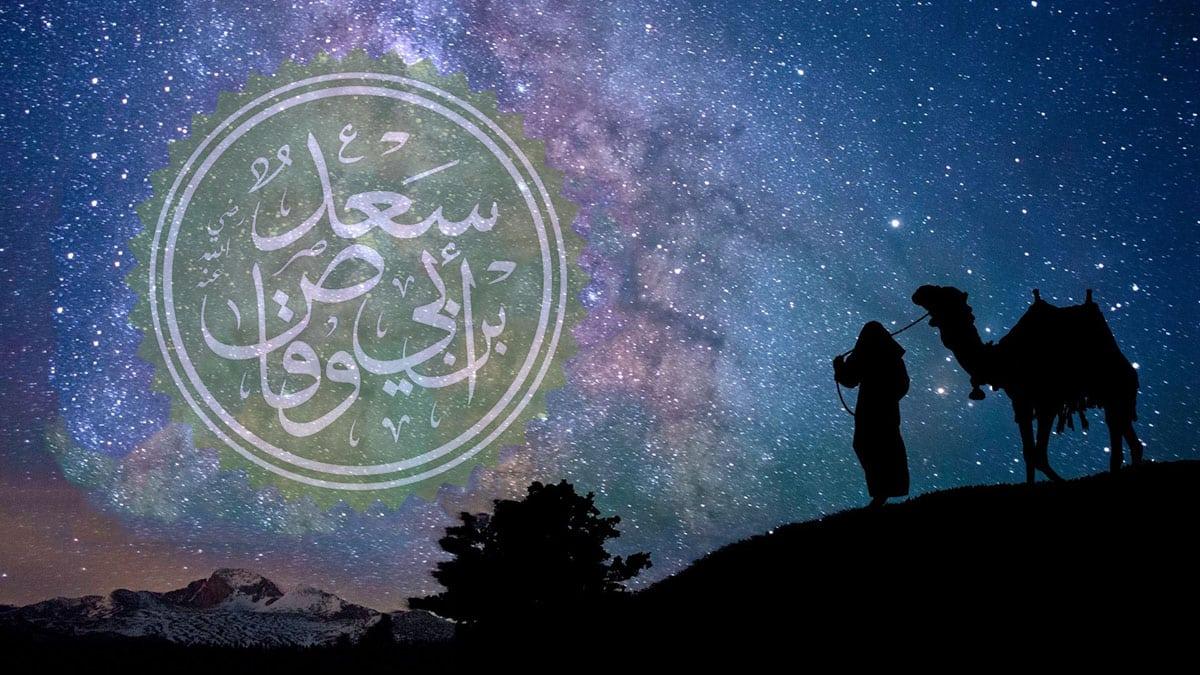

Saad ibn Abi Waqqas, may Allah be pleased with him, was one of the prominent companions of the Prophet Muhammad ﷺ. He was one of the ten companions promised Paradise, among the earliest Muslims, a participant in the battles of Badr and Uhud, and one of the six companions appointed to the council of consultation.
According to the source, his name was Malik ibn Uhayb ibn Abd Manaf ibn Zuhrah ibn Kilab ibn Murrah ibn Ka'b ibn Lu'ayy, and he was known as Abu Ishaq al-Qurashi al-Zuhri al-Makki.
Who Was Saad ibn Abi Waqqas?
Saad ibn Abi Waqqas was a Qurashi and Zuhri companion from Mecca who embraced Islam at an early age.
The source states that he became Muslim at the age of seventeen and was among the earliest people to accept Islam.
He held a special position with the Prophet ﷺ. Among the most famous statements the Prophet made to him was during the Battle of Uhud:
“Shoot, may my father and mother be sacrificed for you.”
Saad ibn Abi Waqqas Among the Companions
Saad held a distinguished position among the early Muslims. The source identifies him as:
- One of the ten companions promised Paradise.
- One of the earliest Muslims.
- A participant in the Battle of Badr.
- A participant in Hudaybiyyah.
- One of the six members of the consultation council.
- A narrator of prophetic hadith.
The source also states that Saad narrated a substantial number of hadiths. Fifteen of his narrations appear in both Sahih al-Bukhari and Sahih Muslim, while Bukhari independently recorded five and Muslim eighteen.
Saad ibn Abi Waqqas and the Supplication of Dhul-Nun
One of the notable narrations attributed to Saad concerns the supplication of Prophet Yunus, known as Dhul-Nun.
The source records the supplication:
“There is no deity except You; glory be to You. Indeed, I was among the wrongdoers.”
The source also relates that the Prophet ﷺ highlighted the virtue of this supplication and that a Muslim who calls upon Allah with it receives an answer.
Saad ibn Abi Waqqas at Badr
Saad ibn Abi Waqqas participated in the Battle of Badr and was among the early Muslims who took part in defending the Muslim community.
The source also mentions his brother Umayr ibn Abi Waqqas, who was initially considered too young to participate in Badr. After he cried, the Prophet ﷺ allowed him to take part.
Saad himself recalled that he participated in Badr at such a young age that he had not yet grown a single facial hair that he could wipe with his hand.
The First Muslim to Shoot an Arrow
Saad ibn Abi Waqqas became particularly associated with archery.
According to the source, he was the first Muslim to shoot an arrow at the polytheists, and another narration describes him as the first person to shoot an arrow in the cause of Allah.
His skill with the bow became one of the defining characteristics of his military role during the early Islamic period.
Saad ibn Abi Waqqas at the Battle of Uhud
Saad's role at the Battle of Uhud was among his most famous moments with the Prophet ﷺ.
The source relates that the Prophet ﷺ handed him arrows and encouraged him by saying:
“Shoot, may my father and mother be sacrificed for you.”
The Prophet continued to support and encourage Saad during the battle, including handing him an arrow without a blade.
Why Did the Prophet Say “Shoot, May My Father and Mother Be Sacrificed for You”?
The source records that the Prophet ﷺ used this expression while encouraging Saad to shoot during the Battle of Uhud.
It became one of the most famous indications of Saad's distinguished status and his skill as an archer.
Saad ibn Abi Waqqas Guarding the Prophet
Another account highlights Saad's courage and concern for the Prophet ﷺ.
According to a narration attributed to Aisha, the Prophet ﷺ was unable to sleep one night and said:
“I wish that a righteous man among my companions would guard me tonight.”
The companions then heard the sound of weapons. When the Prophet ﷺ asked who was there, Saad ibn Abi Waqqas answered:
“It is me, Messenger of Allah. I came to guard you.”
The Prophet ﷺ then rested and slept peacefully.
Saad ibn Abi Waqqas and Archery
Archery was not merely a skill associated with Saad; it was one of the defining features of his participation in the early battles of Islam.
The source describes him as an excellent archer and records several occasions when the Prophet ﷺ encouraged him during battle.
Descriptions of Saad ibn Abi Waqqas
The source contains different descriptions of Saad's physical appearance.
Some reports describe him as short, broad-built, strong, and having thick fingers, while another description presents him as tall, with curly hair, a hairy body, dark complexion, and a broad nose.
These accounts reflect differences among the narrators in describing his physical features.
The Death of Saad ibn Abi Waqqas
According to the source, Saad ibn Abi Waqqas died at al-Aqiq, at his residence approximately seven miles from Medina.
His body was then carried to Medina. The source gives the year of his death as 55 AH.
His death marked the end of the life of one of the prominent companions who had witnessed the earliest stages of Islam and participated in several major events of the prophetic era.
Key Moments in Saad ibn Abi Waqqas' Life
The main points highlighted in the source include:
- His acceptance of Islam at a young age.
- His position among the earliest Muslims.
- His participation in Badr and Hudaybiyyah.
- His reputation as an archer and his description as the first Muslim to shoot an arrow in the cause of Allah.
- His prominent role at Uhud.
- The Prophet's statement to him: “Shoot, may my father and mother be sacrificed for you.”
- His narration of numerous prophetic traditions.
- His position among the six members of the consultation council.
Who was Saad ibn Abi Waqqas?
He was a prominent companion of the Prophet Muhammad ﷺ, one of the ten companions promised Paradise, and one of the earliest Muslims.
Did Saad ibn Abi Waqqas participate in Badr?
Yes. The source states that he participated in the Battle of Badr.
What did the Prophet say to Saad at Uhud?
The Prophet ﷺ said: “Shoot, may my father and mother be sacrificed for you.”
Was Saad the first Muslim to shoot an arrow?
The source states that Saad was the first Muslim to shoot an arrow at the polytheists and identifies him as the first to shoot an arrow in the cause of Allah.
When did Saad ibn Abi Waqqas die?
According to the source, he died at al-Aqiq and was carried to Medina. The source gives his death as occurring in 55 AH.




