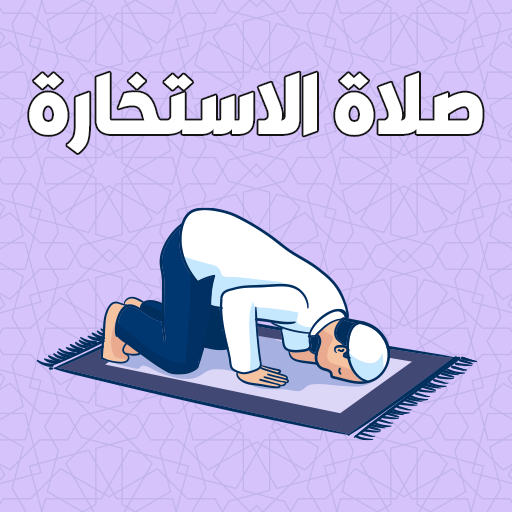

Salat al-Istikhara is a Prophetic practice through which a Muslim asks Allah to choose what is good when considering a permissible matter whose outcome is unknown.
Istikhara is based on entrusting the matter to Allah while also considering the circumstances, taking appropriate means and accepting what Allah decrees.
What Does Istikhara Mean?
The Arabic term Istikhara refers to seeking what is good or asking Allah to choose what is best.
In Islamic practice, it means asking Allah to choose what is good in a matter whose outcome a person does not know.
The Prophet Muhammad ﷺ taught his Companions the Istikhara supplication and encouraged them to pray two non-obligatory rakahs before making the supplication when facing an important matter.
How Do You Pray Salat al-Istikhara?
Salat al-Istikhara consists of two non-obligatory rakahs, followed by the Istikhara dua.
The two rakahs may be performed specifically for Istikhara, and according to the scholarly discussion cited in the source material, Istikhara may also be incorporated into certain voluntary prayers.
What Should Be Recited During Istikhara?
Some classical works mention particular Quranic verses that may be recited after Al-Fatihah during the two rakahs, including verses from Surah Al-Qasas in the first rakah and a verse from Surah Al-Ahzab in the second.
However, the essential practice is praying two non-obligatory rakahs and then making the Prophetic Istikhara supplication.
What Is the Istikhara Dua?
The Prophetic Istikhara supplication is:
“O Allah, I seek Your guidance by Your knowledge, and I seek strength by Your power. I ask You from Your great bounty, for You are capable while I am not, You know while I do not know, and You are the Knower of the unseen. O Allah, if You know that this matter — and the person mentions their need — is good for me in my religion, my livelihood and the outcome of my affairs, then decree it for me, make it easy for me, and bless it for me. And if You know that this matter is bad for me in my religion, my livelihood and the outcome of my affairs, then turn it away from me and turn me away from it, and decree for me whatever is good wherever it may be, then make me content with it.”
The person mentions the specific matter when reaching the phrase referring to “this matter.”
When Should Salat al-Istikhara Be Prayed?
Istikhara is performed when a Muslim is considering an important permissible matter whose outcome is unknown and wishes to ask Allah to choose what is good.
It is not performed to decide whether to fulfill an established obligation or commit an established prohibition. Rather, it applies to permissible matters in which a person has a genuine choice, including situations where there are several lawful options.
Are the Two Rakahs Performed Separately?
A Muslim may perform two separate rakahs specifically for Istikhara. According to the scholarly discussion, Istikhara may also be incorporated into certain voluntary prayers.
The essential point is that the prayer is non-obligatory and is followed by the Istikhara supplication.
Do You Have to See a Dream After Istikhara?
No, seeing a dream is not required after Salat al-Istikhara.
Istikhara does not depend on receiving a dream or vision. After performing Istikhara, a Muslim proceeds while taking appropriate practical steps rather than making a dream a condition for proceeding or withdrawing.
The purpose is to ask Allah to decree what is good and then be content with His decree.
Can Salat al-Istikhara Be Repeated?
Istikhara may be repeated when needed, particularly if the matter remains uncertain.
After performing Istikhara, the Muslim continues to rely on Allah, takes the appropriate means and accepts what Allah decrees.
What Matters Should Not Be Subject to Istikhara?
Istikhara does not apply to every matter. It concerns matters in which a person has a choice.
Examples include:
- Obligatory matters: Istikhara is not used to decide whether to perform an established obligation.
- Prohibited matters: Istikhara is not used to decide whether to commit a prohibition.
- Disliked matters: It is not intended as a means of choosing a disliked action.
- Permissible matters: This is where Istikhara is commonly applicable when a person is uncertain about the choice.
- Choosing between recommended options: Istikhara may be used when deciding between permissible or recommended alternatives.
What Is the Wisdom Behind Istikhara?
Salat al-Istikhara reflects a Muslim’s dependence upon Allah and recognition that Allah’s knowledge and power are greater than those of human beings.
The supplication includes the words expressing that Allah has power while the person does not, and that Allah knows while the person does not know.
Istikhara therefore combines worship, supplication and reliance upon Allah while still allowing for careful consideration and taking appropriate practical means.
What is Salat al-Istikhara?
It is a Prophetic practice in which a Muslim asks Allah to choose what is good in an important permissible matter whose outcome is unknown.
How many rakahs are in Salat al-Istikhara?
It consists of two non-obligatory rakahs followed by the Istikhara supplication.
When is the Istikhara dua recited?
It is commonly recited after completing the prayer, and the cited scholarly discussion also mentions making the supplication during prayer.
Do you have to see a dream after Istikhara?
No. A dream is not a requirement after performing Istikhara.
Can Istikhara be repeated?
Yes. It may be repeated when needed, while continuing to take appropriate means and accepting Allah’s decree.