
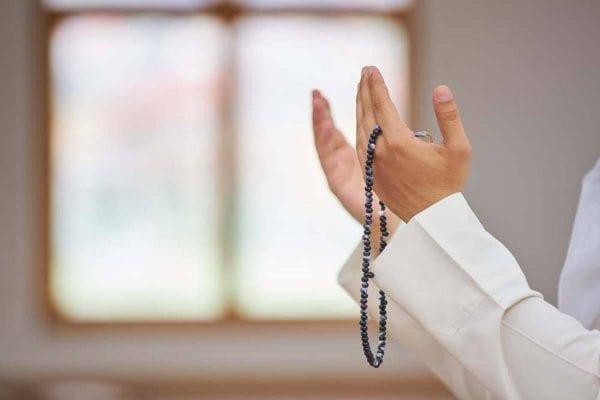

Many Muslims wonder: Is sending blessings upon the Prophet Muhammad, peace and blessings be upon him, better than seeking forgiveness? Can frequently reciting Salawat replace Istighfar, or does each remembrance have its own virtue and appropriate place?
In principle, both Salawat and Istighfar are among the virtuous forms of remembrance, and each has its own established benefits. There is no general evidence establishing that one is always superior to the other in every situation.
Is Salawat Better Than Istighfar?
There is no definitive Islamic text establishing that sending blessings upon the Prophet is absolutely better than seeking forgiveness, or that Istighfar is always superior to Salawat.
Each form of dhikr has its own meaning and virtue. Istighfar involves asking Allah for forgiveness, while Salawat is an act of honoring and invoking blessings upon the Prophet Muhammad, peace and blessings be upon him.
Therefore, Muslims are encouraged to maintain both rather than abandoning one in favor of the other.
I Prefer Salawat to Istighfar—Am I Sinful?
No. A Muslim is not sinful for preferring to frequently send blessings upon the Prophet Muhammad, peace and blessings be upon him, rather than frequently reciting Istighfar, provided that they fulfill their religious obligations and do not believe that Salawat eliminates the need for all other forms of remembrance.
A well-known hadith reports that Ubayy ibn Ka'b, may Allah be pleased with him, asked the Prophet how much of his supplication he should dedicate to sending blessings upon him. The Prophet replied, “As much as you wish, and if you increase it, that is better for you.”
Ubayy eventually asked whether he should dedicate all of his supplication to Salawat, and the Prophet told him that doing so would be sufficient for his worries and that his sins would be forgiven.
This demonstrates the great virtue of frequently sending blessings upon the Prophet.
What Is the Virtue of Salawat During Worry and Distress?
Sending blessings upon the Prophet is a virtuous act that Muslims may increase during times of sadness, worry, and distress.
The hadith of Ubayy ibn Ka'b indicates that increasing Salawat can be a means of having one's concerns taken care of and sins forgiven.
A Muslim may therefore increase Salawat while also turning sincerely to Allah through supplication.
One simple formula is:
“O Allah, send Your blessings and peace upon our Prophet Muhammad.”
What Is the Virtue of Istighfar?
Istighfar, or seeking Allah's forgiveness, is one of the greatest forms of remembrance. The Quran repeatedly encourages believers to seek forgiveness, and the Prophet Muhammad, peace and blessings be upon him, regularly sought Allah's forgiveness and repented to Him.
The Prophet said that he sought Allah's forgiveness and repented to Him more than seventy times a day.
One of the greatest formulas of Istighfar is Sayyid al-Istighfar:
“O Allah, You are my Lord. There is no god except You. You created me and I am Your servant. I uphold Your covenant and promise as best I can. I seek refuge in You from the evil of what I have done. I acknowledge Your blessings upon me, and I acknowledge my sin. So forgive me, for none forgives sins except You.”
This supplication has a special virtue when recited with sincere conviction in the morning or evening.
Which Is Better for Relieving Distress: Istighfar or Salawat?
It is not correct to declare one of them absolutely superior for every situation without specific evidence.
Salawat, Istighfar, supplication, and prayer are all righteous acts that a Muslim may turn to during times of worry and distress.
Among the supplications reported for hardship is:
“O Allah, I hope for Your mercy. Do not leave me to myself even for the blink of an eye. Set right all of my affairs. There is no god except You.”
A Muslim may also frequently say:
“There is no power and no strength except through Allah.”
These forms of remembrance express reliance upon Allah, seeking His mercy, and asking for His help.
Is It Better to Combine Salawat and Istighfar?
Yes. A Muslim can combine sending blessings upon the Prophet and seeking Allah's forgiveness as part of a daily routine.
The virtue of one should not become a reason to abandon the other. Each has its own significance and established place in Islamic worship.
A Muslim can therefore increase Salawat, seek forgiveness, and make personal supplications for the good of this life and the Hereafter.
When Should You Increase Istighfar?
Istighfar is permissible and recommended at all times. Muslims are encouraged to seek Allah's forgiveness frequently.
One particularly virtuous time is before dawn, as Allah praises those who seek forgiveness during the pre-dawn hours.
Istighfar is also part of the remembrance performed after obligatory prayers, when the worshipper says “Astaghfirullah” three times after completing the prayer.
When Should You Increase Salawat?
Sending blessings upon the Prophet Muhammad, peace and blessings be upon him, is recommended in many situations.
It is particularly emphasized in certain established contexts, including when the Prophet is mentioned, during the Tashahhud, and on Friday and its preceding night.
A Muslim may also increase Salawat during times of worry and distress while continuing to make sincere supplication to Allah.
Best Dhikr and Duas for Distress
When experiencing worry or distress, a Muslim can combine remembrance and supplication, including:
- Seeking Allah's forgiveness through Istighfar.
- Sending blessings upon the Prophet Muhammad, peace and blessings be upon him.
- Saying: “There is no power and no strength except through Allah.”
- Reciting: “O Allah, I hope for Your mercy. Do not leave me to myself even for the blink of an eye. Set right all of my affairs. There is no god except You.”
- Making sincere supplication for whatever good the person needs.
Conclusion
Neither Salawat nor Istighfar can be declared absolutely superior to the other in every situation. Each has its own virtue, and the best approach is to maintain both rather than abandoning one.
During times of worry and distress, Muslims can combine Salawat, Istighfar, supplication, and other established forms of remembrance.
Among the beneficial forms of remembrance are “There is no power and no strength except through Allah” and the supplication asking Allah for His mercy and for the correction of one's affairs.
Is Salawat better than Istighfar?
There is no general evidence establishing one as absolutely better than the other. Each has its own virtue and appropriate contexts.
Am I sinful if I prefer Salawat to Istighfar?
No. A Muslim is not sinful for frequently reciting Salawat, provided they fulfill their obligations and do not abandon other required acts of worship.
Does Salawat help relieve worry?
A hadith concerning Ubayy ibn Ka'b indicates that increasing Salawat can be a means of having one's concerns taken care of and sins forgiven.
What is the best dhikr for distress?
Istighfar, Salawat, supplication, and saying “There is no power and no strength except through Allah” are among the beneficial forms of remembrance.
Can I combine Salawat and Istighfar?
Yes. Muslims can regularly combine both forms of remembrance and benefit from the virtues associated with each.




