
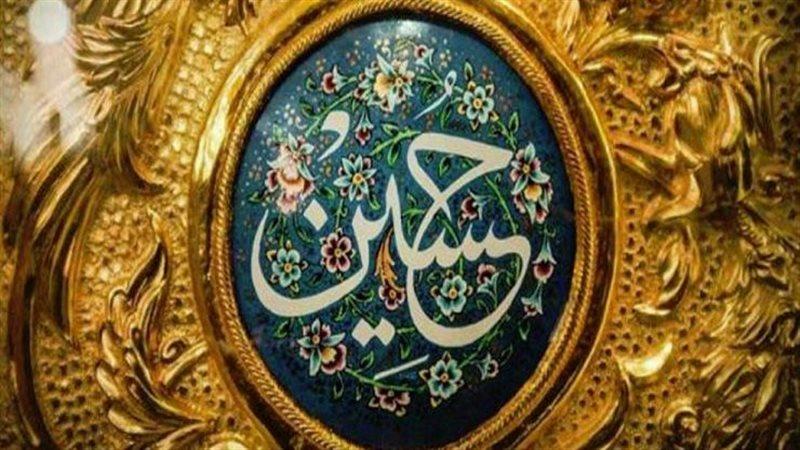

Egypt’s Dar al-Ifta explained that saying “Sayyiduna al-Husayn” is permissible and does not conflict with the Prophetic statement, “Al-Sayyid is Allah.”
The explanation emphasizes that the Arabic word Sayyid has several meanings depending on its context. It can refer to a master, leader, noble person, virtuous person, generous person, or someone who holds a respected position among his people.
Accordingly, calling Imam al-Husayn “Sayyiduna” is an expression of respect, honor, and recognition of his distinguished status as one of the Prophet Muhammad’s ﷺ beloved grandsons and members of his household.
Who Was Imam al-Husayn?
Imam al-Husayn was Abu Abdullah al-Husayn ibn Ali ibn Abi Talib ibn Abd al-Muttalib ibn Hashim. He was the grandson of the Prophet Muhammad ﷺ and one of the Prophet’s beloved family members.
He was born in 3 AH and was martyred in 61 AH.
The Prophet ﷺ expressed his deep love for al-Hasan and al-Husayn. Abu Ayyub al-Ansari reported that he saw them with the Messenger of Allah ﷺ, who described them as his fragrant blossoms from this world.
What Does the Word “Sayyid” Mean?
The Arabic word Sayyid has a broad range of meanings. Depending on context, it may refer to a master, owner, noble person, virtuous individual, generous person, leader, chief, or someone distinguished among his people.
In religious and social usage, the word can therefore describe a person whose virtue, knowledge, character, lineage, leadership, or other qualities give him an honored position.
Imam al-Nawawi explained that Sayyid may be used for a person who surpasses his people in status, as well as for a leader, virtuous person, generous person, master, or husband.
Can the Title “Sayyid” Be Used for Human Beings?
Yes. Islamic texts establish that the title may be used for human beings when its intended meaning is appropriate.
The Prophet Muhammad ﷺ himself said: “I am the master of the children of Adam.” Another narration states: “I am the master of people.”
The Qur’an also describes Prophet Yahya as “a master” in the verse:
“Indeed, Allah gives you good tidings of Yahya, confirming a word from Allah, and noble, chaste, and a prophet from among the righteous.” [Qur’an 3:39]
The Sunnah likewise contains examples of the Prophet ﷺ referring to other people as masters. He said regarding Sa‘d ibn Mu‘adh: “Rise for your master.”
These examples demonstrate that the word Sayyid is not exclusively restricted to Allah in every linguistic and contextual use.
Why Is It Permissible to Say “Sayyiduna al-Husayn”?
The title is especially appropriate for Imam al-Husayn because his status and virtue are explicitly established in Prophetic teachings.
The Prophet ﷺ said:
“Al-Hasan and al-Husayn are the masters of the young people of Paradise.”
This narration directly establishes the description of al-Husayn as a Sayyid.
The Prophet ﷺ also said about al-Hasan: “Indeed, this son of mine is a master.”
Therefore, describing al-Husayn as “Sayyiduna al-Husayn” is an expression of honor and recognition of his distinguished status.
What Does “Al-Sayyid Is Allah” Mean?
The statement “Al-Sayyid is Allah” must be understood within its context.
A delegation from Banu Amir addressed the Prophet ﷺ by saying, “You are our master,” and he responded: “Al-Sayyid is Allah, Blessed and Exalted.”
The meaning is that Allah alone possesses absolute and unrestricted mastery. He is the Creator, Owner, and ultimate Sovereign over all creation, while all created beings are His servants.
This does not mean that the word Sayyid cannot be used for people in its other established meanings, such as noble, virtuous, honored, or leader.
The Difference Between Divine and Human Sayyid
Allah’s mastery is absolute and perfect. It belongs to Him by virtue of His creation, ownership, sovereignty, and lordship over everything.
Human “sayyidhood,” by contrast, is relative and limited. It refers to qualities such as honor, virtue, leadership, nobility, or respected status.
There is therefore no contradiction between saying “Al-Sayyid is Allah” and saying “Sayyiduna al-Husayn.” The two expressions refer to entirely different meanings according to their context.
Final Ruling on Saying “Sayyiduna al-Husayn”
The ruling presented by Dar al-Ifta is that saying “Sayyiduna al-Husayn” is permissible and is an expression of respect and proper etiquette toward the Prophet’s household.
The hadith “Al-Sayyid is Allah” does not prohibit the use of Sayyid for human beings. Rather, it establishes that absolute and unrestricted mastery belongs to Allah alone.
Using the title for al-Husayn refers to his honor, virtue, and distinguished status and does not imply divine lordship or absolute sovereignty.
Is it permissible to say “Sayyiduna al-Husayn”?
Yes. It is permissible as an expression of respect, honor, and recognition of his distinguished status.
Did the Prophet ﷺ describe al-Husayn as a Sayyid?
Yes. The Prophet ﷺ said that al-Hasan and al-Husayn are the masters of the young people of Paradise.
What does “Al-Sayyid is Allah” mean?
It means that Allah possesses absolute and unrestricted mastery, ownership, and sovereignty over His creation.
Can “Sayyid” be used for people?
Yes. Islamic texts use the term for the Prophet ﷺ and other virtuous people, and the Qur’an describes Yahya as a Sayyid.
Is saying “Sayyiduna Ahl al-Bayt” permissible?
Yes. It can be used to express their honor, virtue, and respected status without attributing divine or absolute sovereignty to them.




