
The story of Prophet Saleh, peace be upon him, and the people of Thamud is one of the Quranic accounts that illustrates the recurring struggle between truth and falsehood.
It presents the call of a prophet to worship Allah alone, the signs given to his people, their rejection and defiance, and ultimately the destruction of those who persisted in denial and the salvation of those who believed.
The story of Thamud appears in several chapters of the Quran, including Al-A'raf, Hud, Al-Hijr, Ash-Shu'ara, An-Naml, Fussilat, Al-Qamar, Al-Haqqah, and Ash-Shams, as well as other passages that refer to Thamud and their fate.
Who Were the People of Thamud?
Allah sent Prophet Saleh to the people of Thamud, and Saleh himself was one of their people. They knew his background and recognized him among them.
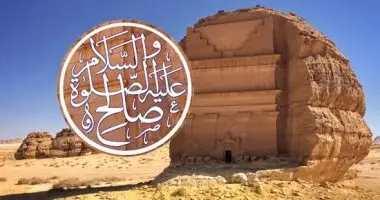
Thamud had considerable strength and signs of civilization. They built palaces in the plains and carved homes into the mountains, enjoying numerous blessings from Allah.
Yet their material prosperity did not lead them to gratitude and worship. Instead, they rejected the oneness of Allah and worshipped false deities that possessed no power to benefit or harm them.
Prophet Saleh came to call them back to the worship of Allah alone and to abandon their false beliefs.
Prophet Saleh's Call to Worship Allah Alone
The central message of Prophet Saleh was the same fundamental message brought by the prophets: worship Allah alone.
The Quran records his words:
{O my people, worship Allah; you have no deity other than Him.}
His call was not limited to abandoning idols. He also urged his people to seek forgiveness, repent, and return to Allah.
Saleh reminded them that Allah had created them, settled them in the land, and granted them strength, security, and prosperity.
The Miracle of the She-Camel
The people of Saleh demanded a sign proving the truth of his prophethood. Allah then gave them the she-camel as a clear sign.
The Quran states:
{There has come to you clear evidence from your Lord. This is the she-camel of Allah, a sign for you.}
The Quran also says:
{And We gave Thamud the she-camel as a visible sign.}
Saleh instructed his people to respect the appointed arrangement concerning the animal and warned them not to harm it.
The command was clear: they were not to mistreat the she-camel or prevent it from receiving its share of water.
What Do We Know About the Origin of the She-Camel?
Some interpretations contain additional stories concerning how the she-camel appeared, including claims about its emergence from a rock or a particular part of the land.
However, such details are not established by the Quran itself. Therefore, they should not be presented as certain facts without reliable evidence.
What is firmly established is that the Quran describes the she-camel as a sign from Allah and as a clear proof given to Thamud.
That is sufficient to understand its role as a miracle connected with the mission of Prophet Saleh.
The Blessings Given to Thamud
Saleh did not merely call his people to monotheism. He also reminded them of the blessings Allah had granted them.
The Quran says:
{And remember when He made you successors after the people of Aad and settled you in the land, taking for yourselves palaces from its plains and carving homes into the mountains.}
Thamud possessed remarkable abilities in construction and mountain carving.
The Quran also records:
{He brought you forth from the earth and settled you in it.}
These verses remind us that strength, civilization, and material achievement are not ends in themselves. They should lead people to recognize the blessings of their Creator and respond with gratitude and obedience.
How Did Thamud Respond to Prophet Saleh?
Many of the people of Thamud refused to accept Saleh's message. Their response involved doubt, arrogance, and attachment to the practices of their ancestors.
They said:
{O Saleh, you were among us one in whom hope was placed before this. Do you forbid us from worshipping what our fathers worshipped?}
Rather than considering the evidence presented by their prophet, they relied on inherited beliefs and rejected his call.
Even after the sign was given to them, they continued in their rejection.
The Killing of the She-Camel
The defiance of Thamud reached its climax when they killed the she-camel, violating the command of their prophet.
The Quran says:
{So they hamstrung the she-camel and defied the command of their Lord.}
Their action represented a decisive rejection of the sign that had been given to them.
After this, the punishment that Saleh had warned them about came upon them.
The Quran describes their punishment using several expressions, including the blast, the earthquake, the thunderous strike, and the overwhelming calamity. These descriptions point to the severity of the punishment that overtook them.
The Salvation of Saleh and the Believers
While those who rejected the message were destroyed, Allah saved Prophet Saleh and those who believed with him.
The Quran says:
{So when Our command came, We saved Saleh and those who believed with him by mercy from Us and from the disgrace of that day.}
It also states:
{And We saved those who believed and were mindful of Allah.}
The contrast is clear: faith and righteousness were associated with salvation, while persistent rejection and wrongdoing led to destruction.
Lessons from the Story of Prophet Saleh
Patience in Calling People to the Truth
The story demonstrates that a messenger may face rejection, ridicule, and stubborn resistance, yet this does not justify abandoning the responsibility of conveying the message.
Prophet Saleh continued to call his people to faith, reminding them of Allah's blessings and warning them of the consequences of rejection.
Blessings Require Gratitude
Thamud possessed strength, security, and impressive architecture, but they failed to respond to these blessings with proper gratitude.
The story reminds believers that blessings should be accompanied by thankfulness and obedience rather than arrogance and denial.
Material Strength Does Not Guarantee Safety
Thamud demonstrated considerable engineering and construction abilities, carving homes into mountains and building substantial structures.
Yet their material strength could not protect them from the punishment that came after their persistent rejection.
The story therefore emphasizes the limits of worldly power.
The Importance of Evidence and Wise Dialogue
Prophet Saleh addressed his people through reminders, arguments, warnings, and appeals to their recognition of Allah's blessings.
His approach demonstrates the importance of presenting clear reasoning when calling people toward truth.
Learning from Earlier Nations
The Quran repeatedly invites people to reflect upon the fate of previous nations.
The story of Thamud is presented as an example from which later generations can learn about the consequences of injustice, arrogance, and rejection.
Faith as a Path to Salvation
The story concludes with a clear contrast between the fate of the believers and that of those who rejected the message.
Allah saved Saleh and those who believed and remained mindful of Him, while those who persisted in denial were destroyed.
What Does the Quran Tell Us About the She-Camel?
The Quran establishes that the she-camel was a sign from Allah given to Thamud and that they were commanded not to harm it.
Beyond these established details, numerous additional stories have circulated concerning its creation and appearance.
Such details should not be treated as certain unless supported by reliable evidence.
The safest approach is to remain with what the Quran explicitly establishes, because the central purpose of the story is not to provide every physical detail about the she-camel, but to highlight the response of Thamud to the divine sign and the consequences of their rejection.
What Is the Main Lesson of Prophet Saleh's Story?
One of the central lessons is that people should not become arrogant because of wealth, strength, civilization, or material achievements.
The story also emphasizes that blessings require gratitude and that inherited customs should not replace consideration of truth and evidence.
Most importantly, the account presents faith, righteousness, and obedience as the path followed by those whom Allah saved, while persistent denial and wrongdoing led Thamud to destruction.
Who was Prophet Saleh?
Prophet Saleh was a messenger sent by Allah to the people of Thamud, calling them to worship Allah alone and abandon polytheism.
What was the miracle of Prophet Saleh?
The she-camel was a sign from Allah given to Thamud as evidence connected with Saleh's prophethood.
What did Thamud do to the she-camel?
They killed the she-camel despite the command given to them by their prophet.
How were the people of Thamud punished?
The Quran describes their punishment with expressions including the blast, earthquake, thunderous strike, and overwhelming calamity.
Who was saved from the punishment of Thamud?
Allah saved Prophet Saleh and those who believed with him and remained mindful of Him.