
Great events are sometimes preceded by signs and remarkable occurrences that announce the approach of something extraordinary. Humanity witnessed no event greater than the birth of Prophet Muhammad ﷺ, through whom Allah brought mercy, guidance, and goodness to mankind.
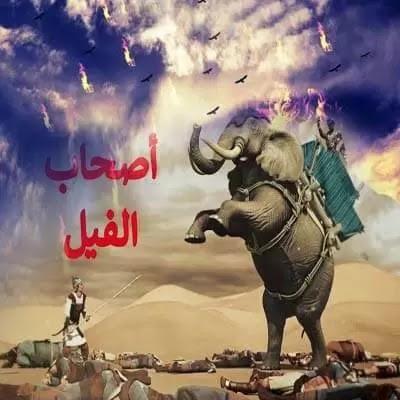
Among the most significant events associated with the period before his blessed birth was the Year of the Elephant, remembered for Abraha’s attempt to destroy the Kaaba in Makkah.
The event ended not with the destruction of the Sacred House, but with a remarkable manifestation of Allah’s power and protection.
What Was the Year of the Elephant?
The Year of the Elephant received its name because Abraha, the ruler of Yemen under the Abyssinian kingdom, marched toward Makkah with a large army that included elephants.
His intention was to destroy the Kaaba and divert the Arabs from visiting it.
The Quran preserved this extraordinary event in Surah Al-Fil:
“Have you not seen how your Lord dealt with the companions of the elephant? Did He not make their plan go astray? And He sent against them flocks of birds, striking them with stones of baked clay, and made them like eaten straw.”
— Quran 105:1–5
The incident became one of the most famous historical events associated with Makkah before the rise of Islam.
Abraha’s Plan to Destroy the Kaaba
Abraha noticed that Arabs traveled to Makkah during the pilgrimage season and wished to redirect them toward a magnificent church he had built in Sana'a.
After the church was desecrated, Abraha became determined to destroy the Kaaba.
He marched toward Makkah with his army and elephants. Among them was a particularly large elephant traditionally known as Mahmud.
Several Arab leaders attempted to stop him along the way, but Abraha's forces defeated them and continued toward Makkah.
Abdul-Muttalib and Abraha
When Abraha reached the area near Makkah, his soldiers seized livestock belonging to the people of the city, including two hundred camels belonging to Abdul-Muttalib ibn Hashim, the grandfather of Prophet Muhammad ﷺ.
Abdul-Muttalib went to meet Abraha.
According to the traditional account, Abraha was impressed by his dignity and asked why he had come.
Abdul-Muttalib requested the return of his camels.
Abraha reportedly expressed surprise that he was concerned about his livestock rather than the Kaaba.
Abdul-Muttalib answered with the famous statement:
“I am the lord of the camels, and the House has a Lord who will protect it.”
He then returned to Makkah and instructed the people to move away from the city and seek refuge in the surrounding mountains.
The Elephant Refuses to Move Toward the Kaaba
Abraha prepared his army to enter Makkah.
When the elephant was directed toward the Kaaba, however, it refused to move.
It moved when turned toward other directions, but when it was directed toward the Sacred House, it stopped and knelt.
The army could not force it to advance toward the Kaaba.
This became one of the remarkable elements of the story of the Year of the Elephant.
Birds From the Sky.. Between Heaven and Earth
Allah then sent flocks of birds, known in the Quran as Ababil, against Abraha’s army.
They struck the army with stones of baked clay, as described in Surah Al-Fil.
The campaign collapsed, and the Kaaba was protected.
Thus, in the imagery of this historic event, protection came between heaven and earth: an army stood on the ground, while the divine punishment came from above.
The Quran preserved the event forever in one of its shortest yet most powerful chapters.
What Happened to Abraha and His Army?
Traditional accounts of the event state that Abraha suffered a severe illness on his return journey.
His army became scattered, and his physical condition deteriorated until he reached Yemen in a state of extreme weakness, where he eventually died.
The expedition that had begun with the intention of destroying the Sacred House ended in complete failure.
The Prophet ﷺ Referred to the Event
The Prophet Muhammad ﷺ referred to the incident of the Elephant in an authentic hadith narrated by Al-Bukhari.
When his camel stopped on the way to Hudaybiyyah, some people urged it to move. The Prophet ﷺ explained:
“Al-Qaswa has not refused to move, nor is that her nature, but she has been restrained by the One who restrained the elephant.”
The statement refers to the divine intervention that stopped Abraha's elephant from advancing toward the Kaaba.
Why Is the Year of the Elephant Connected to the Prophet’s Birth?
According to the most widely cited historical accounts, Prophet Muhammad ﷺ was born in the Year of the Elephant.
For this reason, a number of scholars regarded the event as one of the remarkable signs preceding the Prophet’s mission.
The Kaaba was protected in the very period associated with the birth of the final Prophet, creating a profound historical connection between the preservation of the Sacred House and the arrival of the Messenger who would later restore the worship of Allah alone.
The Birth of Prophet Muhammad ﷺ After the Year of the Elephant
The widely accepted historical tradition states that Prophet Muhammad ﷺ was born in Makkah in the Year of the Elephant.
Scholars and historians differed over the exact date of his birth, although it is established that he was born on a Monday.
Abu Qatadah رضي الله عنه reported that the Prophet ﷺ was asked about fasting on Monday, and he said:
“That is the day on which I was born, and the day on which I was sent, or revelation was sent down to me.”
Historians have differed over the exact day of Rabi' al-Awwal in which he was born, with the twelfth day being one of the most commonly cited dates.
The Kaaba.. The House Allah Protected
The story of the Companions of the Elephant highlights the special status of the Kaaba.
Allah says:
“Indeed, the first House established for mankind was that at Bakkah—blessed and a guidance for the worlds.”
— Quran 3:96
Abraha sought to destroy the Sacred House, but Allah protected it and demonstrated His power.
The event therefore remained an important part of the historical setting that preceded the beginning of the Prophet’s mission.
The Year of the Elephant.. When the Signs Came Before the Birth
The Year of the Elephant was more than a failed military campaign.
It became an enduring story of divine power, the protection of the Kaaba, and one of the most important events associated with Makkah before the birth of Prophet Muhammad ﷺ.
According to the most famous historical accounts, the Prophet was born in that same year, marking the beginning of a new chapter in human history.
It remains a story between heaven and earth: the Sacred House on the earth, the birds in the sky, and a divine decree that preserved the Kaaba before the birth of the Messenger who would carry the final message to humanity.
Why was it called the Year of the Elephant?
It was named after Abraha’s military campaign against Makkah, during which his army used elephants in its attempt to destroy the Kaaba.
What happened to Abraha’s army?
According to the Quran, Allah sent flocks of birds against them, striking them with stones of baked clay.
Was Prophet Muhammad ﷺ born in the Year of the Elephant?
Yes. This is the most widely cited position in the traditional accounts of the Prophet’s biography.
Was the Prophet ﷺ born on a Monday?
Yes. This is established by the authentic hadith of Abu Qatadah رضي الله عنه.
What is the main lesson of the story?
Among its central lessons is that Allah protected the Sacred House and demonstrated His power, while the event became part of the remarkable historical setting preceding the Prophet’s birth.