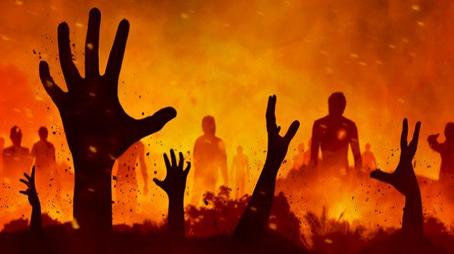

Many people ask: Who will enter Hell, and does everyone who enters the Fire remain there forever?
Islamic teachings distinguish between different categories of people and their ultimate fate. Those who die upon disbelief, shirk, or major hypocrisy are described as facing eternal punishment, while sinful believers who die upon monotheism are not considered equivalent to disbelievers and do not remain in Hell forever.
Judging specific individuals is a separate matter, because Allah alone knows the final state and circumstances of His servants.
Disbelievers and Those Who Commit Shirk
One of the greatest causes of entering Hell is disbelief in Allah and associating partners with Him.
Faith is founded upon worshiping Allah alone and believing in Him, His messengers, His revealed books, and the matters He has commanded believers to accept.
Islamic teachings describe severe punishment for those who die upon disbelief without repentance and state that they remain in the Fire.
Major Hypocrisy
Those who outwardly display Islam while inwardly concealing disbelief are described as facing an especially severe punishment.
The Quran describes the hypocrites of major hypocrisy as being in the lowest level of the Fire, emphasizing the grave danger of concealing disbelief behind an outward appearance of faith.
This demonstrates that merely displaying Islam outwardly does not replace genuine faith in the heart.
Sinful Muslims and People of Monotheism
A Muslim who dies believing in Allah alone but has committed sins is not treated in the same way as someone who dies upon disbelief.
A person who dies upon monotheism without repenting from certain sins remains under Allah’s will. Allah may forgive the person, or He may punish them according to their sins. Ultimately, a person who dies upon true monotheism does not remain in Hell forever.
Therefore, a Muslim should never despair because of past sins. Instead, they should turn back to Allah through sincere repentance and righteous action.
Does Everyone Who Enters Hell Remain There Forever?
No. Islamic teachings distinguish between the eternal punishment of those who die upon disbelief and the temporary punishment that may apply to some sinful believers.
Those who die upon disbelief, shirk, or major hypocrisy are described as remaining in the Fire eternally.
As for a believer who dies upon Islam and monotheism while carrying major sins without repentance, that person remains under Allah’s will. Allah may forgive them or punish them for a period before granting them salvation from the Fire.
Repentance Before Death
Allah has opened the door of repentance to His servants, so a person should never assume that returning to Allah is impossible.
When a Muslim commits a sin, they should repent sincerely, regret the wrongdoing, abandon the sin, and resolve not to return to it.
Sincere repentance is among the greatest means of salvation, which is why a believer should not deliberately postpone repentance.
How Can a Muslim Be Saved from Hell?
Protection from the Fire begins with sincere faith in Allah and monotheism, fulfilling obligatory acts, avoiding prohibited actions, repenting from sins, and increasing righteous deeds.
Important practices include:
- Worshiping Allah alone with sincerity.
- Performing the obligatory prayers.
- Fasting Ramadan.
- Paying zakat when it is due.
- Performing Hajj when able.
- Avoiding major sins and prohibited actions.
- Returning people’s rights and correcting wrongs.
- Frequently repenting and seeking forgiveness.
- Treating others with kindness and good character.
A believer should also ask Allah for mercy, forgiveness, steadfastness, and a good ending.
Fear of Hell and Hope in Allah’s Mercy
A believer should live between fear and hope: fearing the consequences of sin while maintaining hope in Allah’s mercy.
Fear should encourage obedience and discourage sin; it should not lead to despair.
Likewise, hope in Allah’s mercy should encourage righteous action rather than become an excuse for continuing to sin.
Maintaining this balance is an important part of a believer’s spiritual life.
Conclusion
Those who die upon disbelief, shirk, or major hypocrisy are described as facing eternal punishment in Hell.
As for sinful Muslims who die upon monotheism, they are not treated like disbelievers. They remain under Allah’s will: He may forgive them, or He may punish them according to their sins, but they do not remain in Hell eternally.
The Muslim should therefore strive for salvation by maintaining faith, fulfilling obligations, avoiding sins, sincerely repenting, and combining fear of Allah’s punishment with hope in His mercy.
Who remains in Hell forever according to Islam?
Those who die upon disbelief, shirk, or major hypocrisy without repentance are described as remaining in Hell eternally.
Does a sinful Muslim remain in Hell forever?
No. A believer who dies upon genuine monotheism does not remain in Hell eternally, although they may be punished according to Allah’s will.
Can Allah forgive major sins?
Yes. Sincere repentance is a major means of forgiveness, and a believer should never despair of Allah’s mercy.
Is everyone who enters Hell a disbeliever?
No. Some sinful believers may enter Hell because of their sins, but they do not remain there eternally.
How can I protect myself from Hell?
Maintain sincere faith in Allah, fulfill obligatory worship, avoid sins, repent regularly, seek forgiveness, and perform righteous deeds.