
The refereeing debate has returned to the spotlight following comparisons between the penalty awarded to Moroccan player Achraf Bencharki during an Al Ahly match and a similar incident in a Saudi league game, where the referee made a different decision. ⚽🔥
The comparison sparked widespread discussion about the criteria referees use when deciding whether contact inside the penalty area should result in a penalty, particularly because some incidents may appear similar at first glance while a closer analysis reveals important differences in the nature of each challenge.
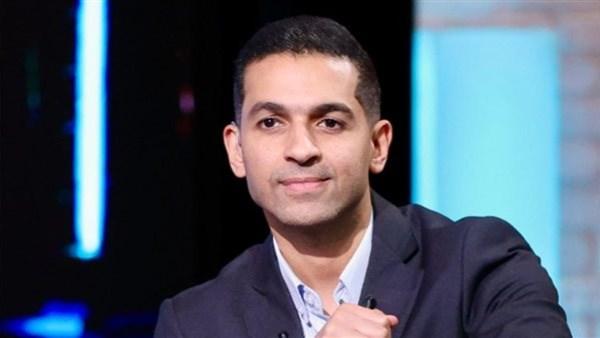
Media personality Hany Hethout revealed details of his conversation with former refereeing committee chairman Essam Abdel-Fattah regarding the two incidents, stressing that comparing them is not technically accurate because the circumstances surrounding each challenge were different.
The Saudi League Incident Sparked the Comparison
The debate began with a refereeing incident during a Saudi league match when an Al-Ittihad player went down inside the opponent’s penalty area following contact with a defender.
Despite the player falling inside the box, the referee allowed play to continue without awarding a penalty. The incident was later analyzed, with the explanation that the contact did not reach the level or nature required for a penalty.
The incident became the main reason for comparisons with Achraf Bencharki’s situation, particularly across social media, where some supporters believed the two contacts looked similar.
However, technical refereeing analysis depends on the details of every incident rather than simply the final outcome or the way a player falls. 📢
Essam Abdel-Fattah Explains the Difference
According to Hany Hethout, Essam Abdel-Fattah explained that the two incidents were clearly different from a technical perspective.
He pointed out that the Saudi incident involved two players competing for the ball in the air, meaning that the contact occurred during a natural attempt by both players to reach the ball.
In such situations, not every contact inside the penalty area is considered a foul. The referee must assess the intensity and nature of the challenge and determine whether it went beyond what is normally permitted when players compete for possession.
For that reason, Abdel-Fattah believed that the contact in the Saudi incident did not justify awarding a penalty.
Why Was Achraf Bencharki’s Case Different?
The Achraf Bencharki incident, however, was different according to Essam Abdel-Fattah’s assessment because the Moroccan player was not involved in the same type of direct aerial competition with his opponent.
He explained that Bencharki was moving toward the ball, while the opposing player was not in a position that would make the contact a natural competition for possession.
This creates the key distinction in the interpretation of the decision. The opponent’s action became closer to obstructing a player attempting to reach the ball rather than simply making contact with someone competing for the same ball.
Bencharki Being in the Air Was Important
One of the details emphasized by Essam Abdel-Fattah was that Achraf Bencharki was airborne when the contact occurred.
This makes the assessment of the challenge more sensitive because a player who is jumping or moving through the air is more vulnerable to contact from an opponent and may lose the ability to continue his movement normally.
According to this interpretation, the contact on Bencharki was not merely incidental. Instead, it affected his movement and prevented him from reaching the ball, supporting the decision to award a penalty.
Not Every Push Is a Penalty
The incident highlights one of the most common sources of debate in football: the belief that any contact inside the penalty area should automatically result in a penalty.
In reality, a referee must assess the intensity of the contact, the players’ movements, the position of the ball, whether both players were competing for possession and the effect of the challenge before making a decision.
This is why one push inside a penalty area may not be considered an offense while another push in exactly the same area can justify a penalty.
Viewing Angle Alone Is Not Always Enough
Video replays from different angles can play an important role in evaluating refereeing incidents because a scene that looks simple from one angle may reveal additional details when viewed from the side or in slow motion.
For that reason, comparisons between incidents should be made only after examining all the relevant details rather than relying on a single image or short video clip.
In Bencharki’s case, the player’s position at the moment of contact, his direction of movement and the opponent’s relationship to the ball were important elements in interpreting the refereeing decision. ⭐
Refereeing Controversy Continues
Penalty decisions remain among the most debated moments in football because they often occur during decisive situations that can change the outcome of a match.
Even with the introduction of VAR, controversy has not disappeared. Instead, discussions have become more detailed, focusing increasingly on how the laws should be interpreted and applied.
This case demonstrates that referees do not simply consider where the contact occurred. They also consider its nature, context and impact.
How Should Similar Incidents Be Judged?
The correct question is not simply: “Did a push happen in both incidents?” The more accurate question is: Was the push a foul under the circumstances of each individual incident?
That is the key distinction explained by Essam Abdel-Fattah between the Saudi league incident and Bencharki’s case.
In the first situation, both players were competing for the ball, while in the second, Bencharki was in a different position, with the contact occurring while he was airborne and without a natural challenge for possession from the defender.
✨ The difference between the two incidents shows that similar-looking contact does not necessarily require the same refereeing decision, because the precise details of the challenge determine whether the incident should be a penalty or normal contact.
📢 Do you agree with Essam Abdel-Fattah’s explanation of the difference between Achraf Bencharki’s penalty and the Saudi league incident? Share your opinion on the refereeing decision. ⚽🔥