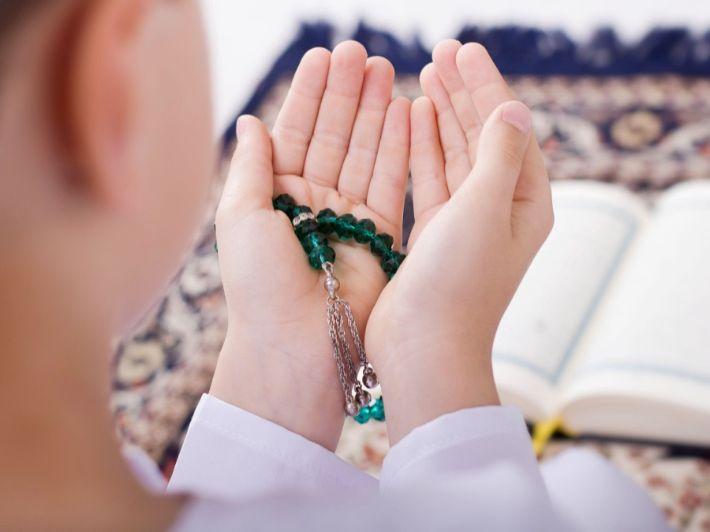

Several authentic forms of remembrance have been reported from the Prophet Muhammad ﷺ after the obligatory prayers.
Among them is saying:
“There is no deity but Allah alone, with no partner. To Him belongs the dominion and all praise, and He is over all things capable.”
It is also authentically reported that the Prophet ﷺ would say after prayer:
“There is no deity but Allah alone, with no partner. To Him belongs the dominion and all praise, and He is over all things capable. O Allah, none can withhold what You give, and none can give what You withhold...”
Another longer form of this dhikr is also authentically reported from the Prophet ﷺ and includes praising Allah, affirming sincere worship, and declaring that there is no deity but Him.
Is the Declaration of Faith Said Ten Times After Fajr and Maghrib?
Yes. A narration reports a special virtue for saying:
“There is no deity but Allah alone, with no partner. To Him belongs the dominion and all praise, and He is over all things capable.”
ten times after the Fajr prayer and likewise in the evening.
Another narration from Abu Ayyub Al-Ansari رضي الله عنه mentions saying it ten times after the morning prayer and after Maghrib, with a significant reward and protection from Satan.
Some hadith scholars graded this report authentic or good. Therefore, there is a basis in the Sunnah for saying this dhikr ten times after Fajr and Maghrib.
The general practice of saying this dhikr after obligatory prayers is also authentically established without restricting it to ten repetitions.
Should Al-Ikhlas and the Mu'awwidhat Be Recited After Every Prayer?
Yes. Uqbah ibn Amir رضي الله عنه reported that the Prophet ﷺ instructed him to recite the Mu'awwidhat after every prayer.
This refers to Surah Al-Ikhlas, Surah Al-Falaq, and Surah An-Nas.
It is also authentically reported that these three surahs are recited three times in the morning and evening as part of the morning and evening adhkar.
Thus, there is a distinction between their recitation after prayer and their repeated recitation as part of the morning and evening remembrance.
Should They Be Recited Three Times After Every Prayer?
The Sunnah establishes reciting Al-Ikhlas and the Mu'awwidhat after every prayer, but the specific instruction to recite them three times applies to the morning and evening adhkar.
Therefore, these two practices should not be confused. The hadith concerning after-prayer recitation does not specify three repetitions.
Is “Rabbi Qini Adhabaka” to Be Repeated Seven Times?
The Prophet ﷺ is authentically reported to have said:
“My Lord, protect me from Your punishment on the Day You resurrect or gather Your servants.”
This was heard by Al-Bara' ibn Azib رضي الله عنه.
However, there is no established evidence in the cited narration that the Prophet ﷺ repeated this supplication seven times after Fajr or Maghrib.
Therefore, specifying seven repetitions for this particular supplication after these two prayers is not established by the reported Sunnah.
What Supplication Was Reported Seven Times After Maghrib and Fajr?
A narration mentions saying:
“O Allah, protect me from the Fire”
seven times after Maghrib and seven times after Fajr, with a special virtue if the person died afterward.
However, this narration has been graded weak, so it should not be presented as an established Sunnah of the Prophet ﷺ.
It is important to distinguish this narration from the supplication:
“My Lord, protect me from Your punishment on the Day You resurrect Your servants.”
The first narration specifies seven repetitions, while the second does not establish seven repetitions.
Summary
The rulings can be summarized as follows:
- Saying the declaration of faith after every prayer: authentically established.
- Saying “There is no deity but Allah alone...” ten times after Fajr and Maghrib: reported with a narration graded authentic or good by some hadith scholars.
- Reciting Al-Ikhlas and the Mu'awwidhat after every prayer: authentically established.
- Reciting them three times after Fajr and Maghrib: established as part of the morning and evening adhkar, not specifically as a threefold post-prayer practice.
- “My Lord, protect me from Your punishment...” is authentically reported, but repeating it seven times is not established.
- “O Allah, protect me from the Fire” seven times after Fajr and Maghrib: reported in a weak hadith and therefore should not be described as a confirmed Sunnah.
The safest approach is to follow the forms of remembrance established from the Prophet ﷺ and avoid assigning a specific number or time to a dhikr without evidence.
Is saying the declaration of faith after prayer a Sunnah?
Yes. Several authentic narrations establish this remembrance after the obligatory prayers.
Must the declaration of faith be said ten times after Fajr and Maghrib?
No. It is not obligatory. A narration reports a special virtue for saying it ten times at these times.
Is reciting the Mu'awwidhat after prayer established?
Yes. The Prophet ﷺ instructed that they be recited after every prayer.
Must Al-Ikhlas and the Mu'awwidhat be recited three times after every prayer?
No. Three repetitions are established for the morning and evening adhkar, while the post-prayer narration does not specify that number.
Should “My Lord, protect me from Your punishment” be repeated seven times?
There is no established evidence that this particular supplication should be repeated seven times after Fajr and Maghrib.