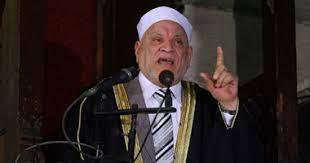

Wednesday, October 7 marks the first anniversary of the death of Dr. Ahmed Omar Hashem, former President of Al-Azhar University and a member of the Council of Senior Scholars.
He passed away on October 7, 2025, at the age of 84, leaving behind a long career that extended across education, university teaching, academic research, writing, religious guidance, and service to the Prophetic Sunnah.
For more than eight decades, Ahmed Omar Hashem remained closely associated with Al-Azhar and the field of Hadith. His work included books, academic research, lectures, and participation in religious and scholarly events in Egypt and abroad.
From Beni Amer in Sharqia to Al-Azhar
Ahmed Omar Hashem was born on February 6, 1941, in Beni Amer village in Zagazig, Sharqia Governorate.
He grew up in an environment connected with scholarship and Sufi traditions before beginning the educational journey that eventually led him to Al-Azhar.
He specialized in Hadith and its sciences and later continued his academic career at the university, eventually becoming a professor in the field.
A Lifelong Connection to Hadith
Hadith was more than an academic specialization for Ahmed Omar Hashem. It became one of the central pillars of his scholarly work.
Throughout his career, he combined teaching, research, writing, and religious outreach, with particular attention to the Prophetic Sunnah and the Prophet’s biography.
His activities also extended beyond university work through participation in scholarly and religious gatherings inside and outside Egypt.
Ahmed Omar Hashem and the Presidency of Al-Azhar University
Ahmed Omar Hashem progressed through various academic positions before becoming President of Al-Azhar University.
The position reflected his standing as a scholar who combined academic leadership with a strong presence in Islamic scholarship and religious discourse.
He was also a member of the Islamic Research Academy and the Council of Senior Scholars at Al-Azhar, with his name particularly associated with Hadith and the sciences of the Sunnah.
The late scholar was described as one of the prominent Hadith scholars of his generation, with contributions to the study of the Prophetic Sunnah and the enrichment of Islamic scholarship through books and research.
Awards and Recognition
In 1992, Ahmed Omar Hashem received the State Appreciation Award in Social Sciences and was also awarded the Order of Science and Arts, First Class.
In 2022, he was honored in recognition of his long scholarly and religious career and his contributions to Islamic sciences.
He also participated in numerous international conferences and scholarly gatherings throughout his career, maintaining a prominent presence in institutions and forums connected with Al-Azhar and Islamic thought.
Ahmed Omar Hashem’s Most Notable Books
Ahmed Omar Hashem left behind a substantial body of written work addressing Hadith, the Prophetic biography, and Islamic thought.
Among his notable works are:
- The Prophetic Sunnah and Its Sciences
- From the Guidance of the Prophetic Sunnah
- In the Shadows of Prophetic Guidance
- Islam and Character Building
- In the Gardens of the Prophetic Biography
- The Soul in the Holy Quran
He also contributed to the preparation of a contemporary Hadith encyclopedia as part of a scholarly project aimed at organizing Prophetic traditions according to subjects and legal dimensions.
His work reflected an effort to present the Sunnah in an organized form that could benefit researchers, students of Islamic sciences, and readers interested in Islamic studies.
A Lasting Presence Through Lectures and Religious Lessons
Ahmed Omar Hashem’s contribution extended beyond books and academic research.
For many years, he remained active through lectures, religious lessons, and scholarly gatherings, where he discussed the Prophetic Sunnah, the Prophet’s biography, Islamic thought, and various religious issues.
His public presence allowed him to combine his academic role with direct engagement with students of knowledge and the wider public.
The Death of Ahmed Omar Hashem at 84
On the early morning of Tuesday, October 7, 2025, Ahmed Omar Hashem passed away at the age of 84 after a long career devoted to scholarship, Al-Azhar, and religious service.
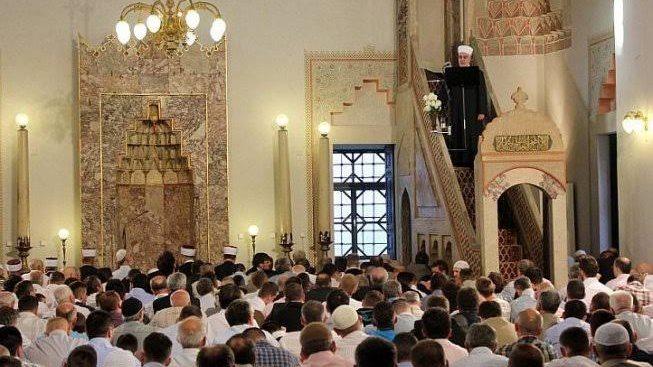
Funeral prayers were held at Al-Azhar Mosque in the presence of Grand Imam Ahmed El-Tayeb, Sheikh of Al-Azhar, along with senior Al-Azhar officials, scholars, and other figures.
His body was then taken to his hometown of Beni Amer in Zagazig, Sharqia Governorate, where he was laid to rest.
One Year Later: The Legacy of Ahmed Omar Hashem
On the first anniversary of his death, the life of Ahmed Omar Hashem is remembered as the journey of an Al-Azhar scholar whose story began in Beni Amer village and eventually led him to prominent positions within Al-Azhar.
He became a professor of Hadith, President of Al-Azhar University, and a member of the Council of Senior Scholars, leaving behind an extensive scholarly and religious legacy.
His books, research, lectures, and contributions to Hadith and the Prophetic biography continue to represent an important part of his intellectual legacy.
One year after his passing, Ahmed Omar Hashem’s name remains associated with the study of the Prophetic Sunnah, Al-Azhar scholarship, and a long career dedicated to knowledge, teaching, and religious guidance.
When did Ahmed Omar Hashem die?
Ahmed Omar Hashem died on October 7, 2025, at the age of 84.
Where was Ahmed Omar Hashem born?
He was born on February 6, 1941, in Beni Amer village in Zagazig, Sharqia Governorate.
What were Ahmed Omar Hashem’s most important positions?
He served as President of Al-Azhar University and was a member of the Council of Senior Scholars and the Islamic Research Academy.
What was Ahmed Omar Hashem’s main field of scholarship?
His work focused particularly on Hadith, the sciences of the Prophetic Sunnah, the Prophet’s biography, and Islamic thought.
What are some of Ahmed Omar Hashem’s notable books?
His notable works include The Prophetic Sunnah and Its Sciences, From the Guidance of the Prophetic Sunnah, In the Shadows of Prophetic Guidance, and In the Gardens of the Prophetic Biography.