Al-Azhar Refutes Claims Linking Prophet Muhammad to Arianism
Al-Azhar responds to claims that Prophet Muhammad ﷺ followed Arianism before his prophethood, explaining the historical timeline, lack of evidence, and meaning of “the Ariysiyyin.”


Al-Azhar Al-Sharif continues its awareness campaign aimed at addressing misconceptions, correcting inaccurate interpretations, and responding to claims raised about Islam and the life of Prophet Muhammad, peace and blessings be upon him.
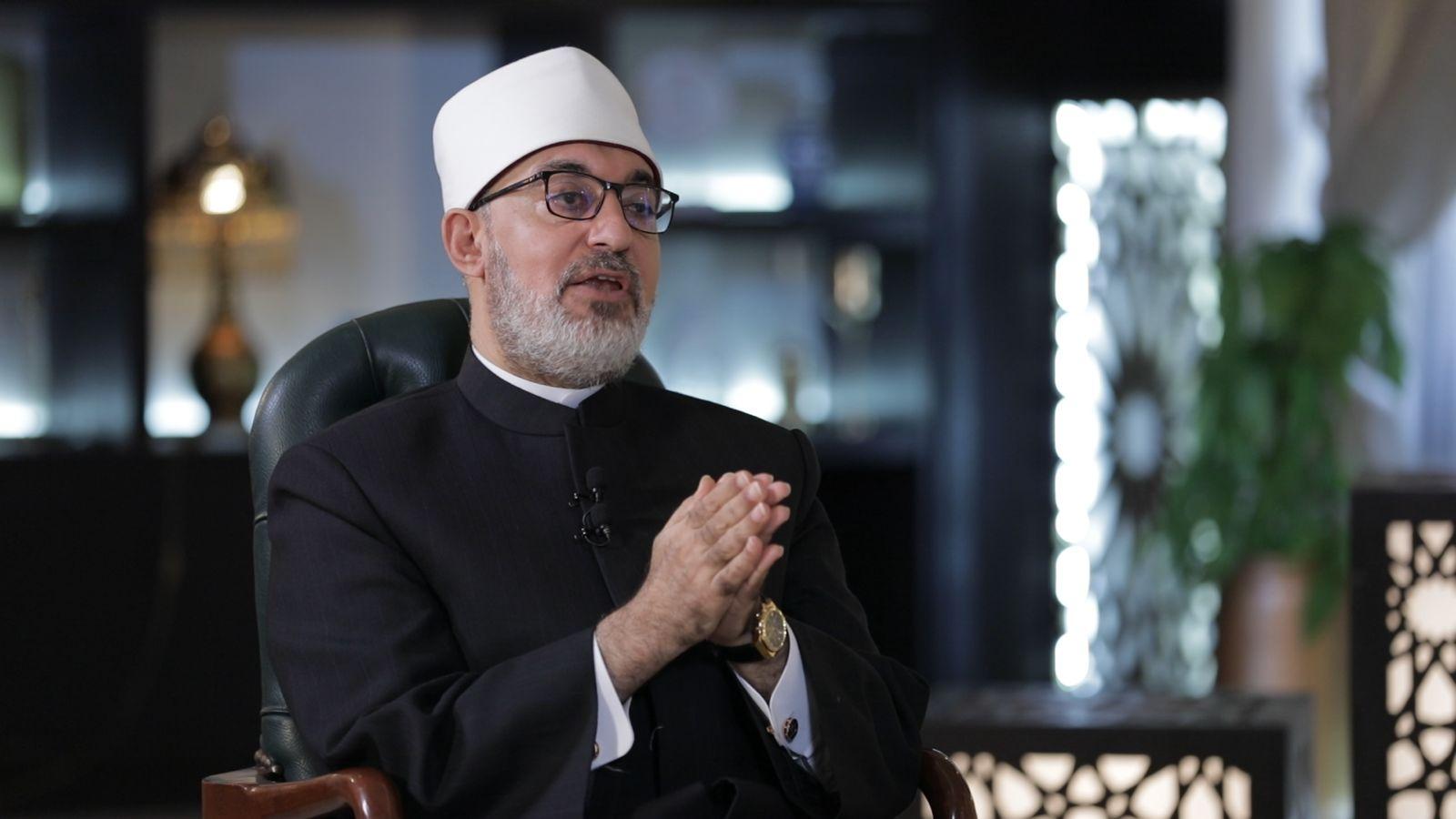
As part of this effort, Dr. Muath Shalaby, a member of Al-Azhar’s Global Center for Electronic Fatwa, refuted claims that Prophet Muhammad ﷺ followed Arianism before his prophethood and later abandoned it to establish Islam.
He emphasized that this claim is not supported by direct historical evidence or contemporary documentation proving that the Prophet ﷺ belonged to or followed Arianism.
Was Prophet Muhammad ﷺ a Follower of Arianism Before Prophethood?
Dr. Muath Shalaby explained that there is no reliable historical evidence establishing that Prophet Muhammad ﷺ belonged to Arianism or was directly influenced by its teachings before the beginning of his prophetic mission.
The claim, according to Al-Azhar’s explanation, lacks a documented historical connection between the Prophet ﷺ and the Arian movement.
The Historical Gap Between Arius and Prophet Muhammad ﷺ
Arius lived in the late third and early fourth centuries AD and died around 336 AD, while Prophet Muhammad ﷺ was born approximately three centuries later.
Al-Azhar considers this significant chronological gap, combined with the absence of direct historical evidence, an important factor when evaluating claims of a historical connection between the two.
Was There Arian Influence in the Environment Where the Prophet ﷺ Grew Up?
Dr. Muath Shalaby pointed out that there is no established historical evidence demonstrating an Arian influence in the environment in which Prophet Muhammad ﷺ grew up in Mecca.
He also noted that Christian and Jewish sources relatively close to the emergence of Islam did not attribute any connection between the Prophet ﷺ and Arianism.
Why Did the Prophet’s Contemporary Opponents Not Accuse Him of Arianism?
Al-Azhar highlighted an important historical point: the opponents of Prophet Muhammad ﷺ made numerous accusations against his message and sought to challenge his prophethood in different ways.
However, they did not accuse him of being influenced by Arius or belonging to the Arian movement.
According to the Al-Azhar presentation, this absence is relevant when assessing the historical credibility of the claim.
Does Similarity Between Islamic and Arian Ideas Prove Historical Influence?
Al-Azhar stresses that similarity between ideas does not by itself establish historical influence.
Some comparisons point to the rejection of the divinity of Jesus, peace be upon him, and an emphasis on the oneness of God. However, agreement on certain concepts does not demonstrate that Islam was historically derived from Arianism or that the Prophet ﷺ received his teachings from Arius.
The Prophets’ Shared Call to Monotheism
Islam teaches that all prophets called people to worship one God.
Therefore, similarities between Islamic teachings and certain positions attributed to Arius do not independently establish a historical relationship. Establishing influence requires evidence of transmission, contact, or a documented historical connection.
What Does “The Ariysiyyin” Mean in the Prophet’s Letter to Heraclius?
One argument sometimes used to support the claim refers to the Prophet’s letter to Heraclius, which included the statement:
“If you turn away, then upon you is the sin of the Ariysiyyin.”
Al-Azhar explained that this expression should not automatically be interpreted as referring to followers of Arius.
According to the interpretation favored by many classical scholars, including Imam al-Nawawi and Ibn Hajar al-Asqalani, the term refers to farmers or common people rather than followers of Arius.
Is the Word “Ariysiyyin” Derived From the Name Arius?
According to the explanation presented by Al-Azhar, the term Ariysiyyin has a Syriac and Aramaic linguistic origin and is not connected to the name Arius.
Therefore, using the expression in the Prophet’s letter to Heraclius as evidence of a connection between Islam and Arianism does not establish the claimed historical relationship.
Was Arius the Founder of an Independent Religion?
Dr. Muath Shalaby explained that Arius did not establish an independent religious law or a complete religious system separate from Christianity.
Rather, Arius was associated with a theological position within the Christian framework, particularly regarding the nature of Christ and his relationship to God.
The Difference Between Arian Theology and Islam
Arianism represented a theological controversy within Christianity, whereas Islam introduced a comprehensive religious system encompassing creed, worship, ethics, social dealings, family life, and relations among communities and nations.
For this reason, similarities concerning certain theological questions are insufficient to demonstrate that Islam originated from Arianism.
Why Does Al-Azhar Reject the Claim That Prophet Muhammad ﷺ Was Influenced by Arianism?
According to Al-Azhar’s explanation, the claim lacks a solid historical foundation for several reasons, including the substantial chronological gap between Arius and Prophet Muhammad ﷺ and the absence of direct evidence connecting the two.
There is also no contemporary source establishing that the Prophet ﷺ belonged to the Arian movement or adopted its teachings.
The Difference Between Similarity and Historical Influence
The distinction between similarity and historical influence is central to evaluating such claims.
A resemblance between two ideas does not demonstrate that one was borrowed from the other. Historical influence requires reliable evidence showing how, when, and through what form an idea was transmitted.
Al-Azhar Calls for Evidence-Based Analysis of Historical Claims
Al-Azhar emphasizes the importance of examining religious and intellectual history through reliable sources, historical context, and linguistic analysis rather than relying solely on general similarities.
Regarding the claim that Prophet Muhammad ﷺ was influenced by Arianism, Al-Azhar's position is that the available historical evidence does not establish such a connection.
The distinction between a theological resemblance and a documented historical relationship remains essential when evaluating claims about the origins and development of religious ideas.
Was Prophet Muhammad ﷺ a follower of Arianism before prophethood?
According to Al-Azhar, there is no direct historical evidence or contemporary documentation proving that Prophet Muhammad ﷺ belonged to or followed Arianism.
Who was Arius?
Arius was a Christian theologian who lived in the late third and early fourth centuries AD and died around 336 AD. His views became associated with a major theological controversy within Christianity.
Were the “Ariysiyyin” mentioned in the Prophet’s letter followers of Arius?
According to the interpretation favored by scholars such as Imam al-Nawawi and Ibn Hajar, the term refers to farmers or common people rather than followers of Arius.
Does similarity between Islam and Arianism prove historical influence?
No. Similarity alone does not establish historical influence. A historical connection requires reliable evidence of transmission or contact.
What is the main difference between Arianism and Islam?
Arianism was a theological position within Christianity, while Islam brought a comprehensive system encompassing faith, worship, ethics, laws, and social relations.

Learn the dua for protection when leaving the house, the supplications for relying on Allah, seeking protection from harm, and the authentic remembrance recited before going out.
Egypt’s Grand Mufti Dr. Nazir Ayyad explains that having children in Islam is not about numbers alone, but about preserving lineage, raising children properly, and building society.
Egypt’s Dar Al-Ifta explains the Islamic ruling on horse, mule, donkey, and camel races, including the conditions that make competitions permissible and the prohibition of gambling.

Was the Quran compiled during the lifetime of Prophet Muhammad ﷺ or under Caliph Uthman? Learn the three stages of Quran preservation, collection, and standardization.
