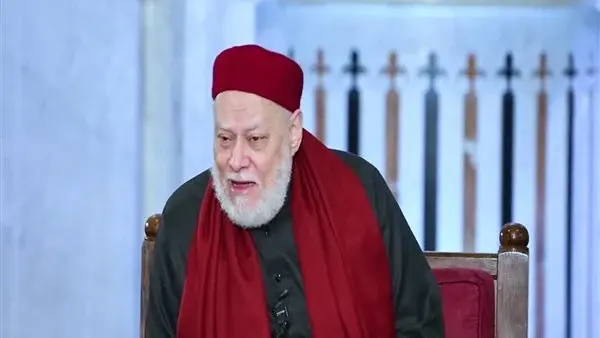

Dr. Ali Gomaa, a member of Al-Azhar’s Council of Senior Scholars, said that the Holy Quran was revealed in the Arabic language and has retained its original language throughout the centuries.
He explained that the Arabic text remains the primary reference whenever the meanings of the Quran are translated into other languages.
Gomaa noted that translations of Quranic passages date back to the early Islamic period, including passages that appeared in the Prophet Muhammad’s ﷺ letters to kings and rulers, where verses were translated into the languages of those receiving the messages.
Quranic Meanings Have Been Translated Into More Than 130 Languages
Ali Gomaa stated that the meanings of the Quran have been translated into more than 130 languages in modern times.
He explained that some languages have had only one translation, while others have witnessed numerous translations. English, for example, has seen a particularly large number of translations.
According to Gomaa, however, the original Arabic Quran remains the reference in all cases, particularly when translations differ in wording, interpretation, or accuracy.
Why Quran Translations Can Differ
Gomaa explained that a translation may reflect the translator’s interpretation, religious school, or particular perspective. Some translations may also be explanatory rather than strictly focused on conveying the wording and structure of the original Arabic.
He added that the quality of translations can vary. Some may have weak or fragmented wording, while others may use sophisticated and eloquent language. Despite these differences, the Arabic original remains available as the reference for resolving disagreements over meaning.
The Role of Transmission in Preserving the Quran
Ali Gomaa emphasized that the Quran was transmitted through connected and numerous chains of transmission, reaching the level of widespread transmission known in Islamic scholarship as tawatur.
He referred to Ibn al-Jazari’s “Al-Nashr fi al-Qira’at al-Ashr”, which contains numerous chains connecting the scholarly tradition of his era to the ten recognized Quranic reciters.
Gomaa explained that these reciters were not isolated individuals transmitting the Quran independently. Each was associated with a major center of Quranic learning and a well-established recitation tradition.
The Ten Quranic Reciters
He noted that Ibn Kathir was associated with Mecca, Nafi and Abu Ja‘far with Medina, while Asim, Al-Kisai and Hamza were associated with Kufa.
Abu Amr ibn Al-Ala and Yaqub were associated with Basra, Ibn Amir with the Levant, and Khalaf with Baghdad.
Gomaa stressed that these reciters transmitted one Quran. Differences among recognized recitation traditions do not mean that there are multiple Qurans; rather, they represent established modes of recitation transmitted through scholarly learning and chains of narration.
Precise Standards for Preserving the Quran
Gomaa also highlighted the detailed methods developed by Muslim scholars to preserve the Quran through both written transmission and direct oral learning.
He explained that preservation was not limited to the words themselves. Scholars paid attention to pronunciation, vocalization, grammatical markings, movements, and the precise manner of recitation.
This scholarly effort contributed to the development of Quranic recitation sciences and Tajweed, which focus on accurately preserving and performing the established methods of Quranic recitation.
One Quran Despite Different Recitation Traditions
Ali Gomaa stated that the Quran has remained preserved and widely transmitted among Muslims despite historical instances of incorrect recitation and attempts to alter its text.
He emphasized that these incidents did not result in competing versions of the Quran or leave Muslims choosing between fundamentally different texts.
The Quran continues to be recited across the Muslim world, from Tangier to Jakarta and from Ghana to Ferghana, within a shared textual tradition.
Preserving the Quran Across Generations
Gomaa explained that the Quran has faced debate, criticism, and challenges throughout history, but these did not alter the Quranic text that has been transmitted and recited by generations of Muslims.
He attributed this preservation, according to his remarks, ultimately to divine protection rather than to human power alone, citing the Quranic verse: “Indeed, We have sent down the Reminder, and surely We will guard it.”
Has the Quran been translated into other languages?
Yes. The meanings of the Quran have been translated into many languages, while the Arabic text remains the primary reference.
Do differences between translations mean that there are different Qurans?
No. Differences concern how meanings are conveyed in other languages, while the Arabic Quran remains the original reference.
What does Quranic tawatur mean?
It refers to transmission through numerous connected and established chains and communities of recitation, supporting the preservation of the Quranic text and recitation traditions.
Who are the ten recognized Quranic reciters?
They include Ibn Kathir, Nafi, Asim, Hamza, Al-Kisai, Abu Amr, Ibn Amir, Abu Ja‘far, Yaqub, and Khalaf.
What is the role of Tajweed and Quranic recitation sciences?
They help preserve the accurate pronunciation, performance, and established recitation traditions of the Quran.