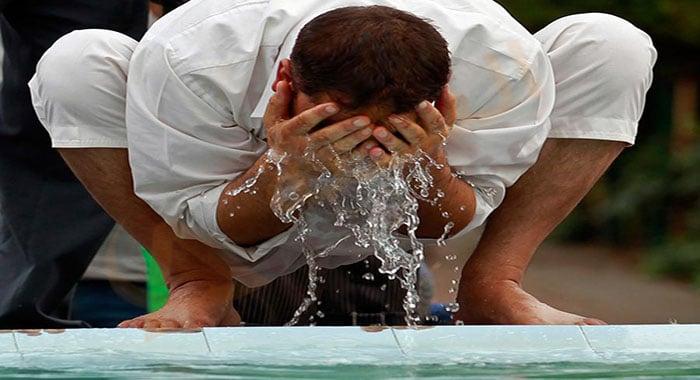

What should a Muslim say after completing Wudu? The Sunnah includes authentic remembrance that can be said after purification, most notably the two declarations of faith.
Remembering Allah after Wudu is a simple act of worship that connects physical purification with spiritual awareness.
What Is the Authentic Dhikr After Wudu?
After completing Wudu, a Muslim may say:
“I bear witness that there is no god but Allah alone, without partner, and I bear witness that Muhammad is His servant and Messenger.”
This remembrance is authentically reported from the Prophet Muhammad, peace and blessings be upon him.
A hadith also mentions a great virtue for the person who says this after Wudu: the eight gates of Paradise are opened for him, allowing him to enter through whichever gate he wishes.
The Supplication for Repentance and Purity
Another well-known supplication associated with the remembrance after Wudu is:
“O Allah, make me among those who constantly repent and make me among those who purify themselves.”
Its meaning combines two important forms of purification: cleansing the body through Wudu and cleansing the heart through sincere repentance.
Is “Subhanaka Allahumma Wa Bihamdik” a Supplication After Wudu?
The following remembrance is also authentically known:
“Glory be to You, O Allah, and praise be to You. I bear witness that there is no god but You. I seek Your forgiveness and repent to You.”
However, this remembrance is known as the expiation of the gathering. It should not be presented as a specific Sunnah that must be said after Wudu unless there is evidence establishing that specification.
A Muslim may say it in its established context as a remembrance for concluding a gathering.
The Virtue of Remembrance After Wudu
One of the most significant virtues connected with remembrance after Wudu is the promise associated with the Shahada.
The Prophet, peace and blessings be upon him, taught that the person who says the two declarations of faith after completing Wudu will have the eight gates of Paradise opened for him.
This highlights the importance of ending purification with remembrance of Allah rather than immediately turning away from worship.
How Can You Maintain the Dhikr of Wudu?
The easiest way is to make the remembrance part of your daily routine. After completing Wudu, pause briefly and say the established Shahada with sincerity and awareness of its meaning.
It is also important to learn authentic supplications and avoid attributing specific wording or rewards to the Sunnah without reliable evidence.
Conclusion
The authentic remembrance after Wudu includes:
“I bear witness that there is no god but Allah alone, without partner, and I bear witness that Muhammad is His servant and Messenger.”
The Sunnah reports a great virtue for this remembrance, including the opening of the eight gates of Paradise.
The supplication asking Allah to make the believer among those who repent and purify themselves is also widely mentioned in connection with Wudu, while “Subhanaka Allahumma Wa Bihamdik” is established as the expiation of a gathering rather than a specific post-Wudu formula.
What should I say after Wudu?
Say the two declarations of faith: “I bear witness that there is no god but Allah alone, without partner, and I bear witness that Muhammad is His servant and Messenger.”
What is the virtue of the Shahada after Wudu?
The Sunnah reports that the eight gates of Paradise are opened for the person who says it after Wudu.
Can I say the supplication for repentance after Wudu?
Yes, it is commonly mentioned among the remembrances associated with Wudu and contains a meaningful request for repentance and purity.
Is “Subhanaka Allahumma Wa Bihamdik” specifically for Wudu?
No. It is established as the expiation of a gathering, so it should not be presented as a specific Wudu remembrance.