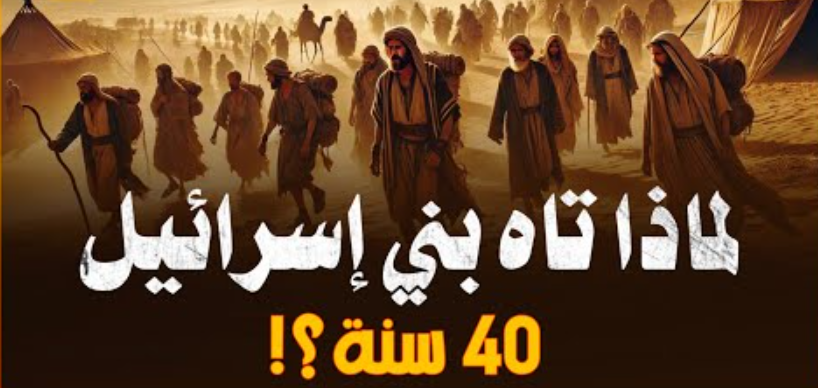

The story of the Israelites in the wilderness is an important part of the account of Moses عليه السلام and his people. After leaving Egypt, the Israelites spent a period in the desert and witnessed remarkable signs, including the provision of manna and quails, water emerging from a rock, and shade provided by clouds.
The wilderness period followed their refusal and hesitation concerning the command to enter the Holy Land. During this time, several significant events were also reported in traditional accounts.
Manna and Quails in the Wilderness
When the Israelites needed food during their time in the wilderness, Allah provided them with manna and quails.
Manna was a special provision granted to them, and classical scholars offered different descriptions of its nature. Some described it as a substance resembling gum with a sweet taste, while other explanations were also reported.
The quails were described as birds resembling quail, and they were part of the food Allah provided for the Israelites.
Thus, despite living in the desert, they were provided with food by Allah’s favor.
Water Emerging From the Rock
The Israelites also needed water. Allah commanded Moses عليه السلام to strike a rock with his staff.
When Moses struck the rock, twelve springs emerged, with a spring designated for each tribe of the Israelites.
This was among the remarkable signs associated with Moses and the blessings granted to his people during their difficult journey.
The Cloud That Shaded the Israelites
Another blessing mentioned in accounts concerning this period was that Allah provided the Israelites with shade from clouds, protecting them from the harsh conditions of the desert.
They were therefore given food, water, and shade despite the difficult environment surrounding them.
The Clothing of the Israelites
Traditional accounts also mention that the clothing of the Israelites remained with them and did not become worn out in the ordinary way during this period.
This is among the extraordinary matters reported in connection with their life in the wilderness.
The Israelites Asked for Other Food
Despite receiving manna and quails, the Israelites complained that they could not remain content with one type of food.
They asked Moses عليه السلام to call upon his Lord to provide them with vegetables, cucumbers, garlic or similar produce, lentils, and onions.
Allah says:
“Would you exchange what is better for what is inferior? Go down to a town, and you will have what you have asked for.”
When they eventually left the wilderness, the provision of manna and quails was no longer given to them.
Joshua and the Battle During the Wilderness Period
Among the events reported during this period is the story of Joshua, whom Moses عليه السلام prepared to fight a group of enemies.
Traditional accounts relate that Moses, Aaron, and Hur were positioned on a hill. Whenever Moses’ hands remained raised, Joshua and his forces prevailed, but when his hands became tired and lowered, the enemy gained the advantage.
Aaron and Hur therefore supported Moses’ hands until sunset, after which Joshua and his forces achieved victory.
Jethro’s Visit to Moses
Accounts also mention the arrival of Jethro, the priest of Midian, after he learned what had happened to Moses and how Allah had granted him victory over Pharaoh.
Zipporah, Moses’ wife, and their two sons, Gershom and Eliezer, accompanied him. Moses welcomed Jethro and honored him, and the elders of the Israelites also received him with respect.
Organizing Judicial Affairs
Jethro observed that many Israelites came to Moses whenever disputes arose among them.
He advised Moses to appoint trustworthy and God-fearing men who would avoid bribery and betrayal. They could serve as leaders over groups of thousands, hundreds, fifties, and tens.
They would settle ordinary disputes, while difficult cases could be referred to Moses.
Moses عليه السلام followed this advice and organized the handling of disputes among his people.
The Israelites at Mount Sinai
Traditional accounts state that the Israelites reached the wilderness near Sinai during the third month after leaving Egypt and settled around Mount Sinai.
Moses then ascended the mountain, where Allah spoke to him and commanded him to remind the Israelites of the blessings they had received, including their rescue from Pharaoh and his people.
Moses was also instructed to tell them to purify themselves and prepare for the third day, when they would gather near the mountain without crossing the appointed boundary.
The Signs at the Mountain
When the third day arrived, a great cloud covered the mountain, accompanied by thunder, lightning, and the powerful sound of the trumpet.
The Israelites were deeply frightened by the scene.
The mountain was surrounded by dense smoke, with a column of light in its midst, and it shook intensely. Moses عليه السلام was on the mountain speaking with his Lord.
He was then instructed to descend and bring his brother Aaron, while the people remained at the appointed distance.
The Ten Commandments
Moses was then given the Ten Commandments, containing fundamental principles concerning worship, morality, and human relations.
Among the principles mentioned were:
- Worshipping Allah alone and avoiding associating partners with Him.
- Avoiding false oaths.
- Honoring and treating parents well.
- Prohibiting murder.
- Prohibiting adultery.
- Prohibiting theft.
- Avoiding false testimony.
- Avoiding envy and coveting what belongs to others.
Some early scholars noted that the meanings of these commandments are reflected in Quranic verses 151–153 of Surah Al-An'am, which contain major principles of faith, morality, and social conduct.
Lessons From the Israelites’ Wilderness Journey
The story of the Israelites in the wilderness highlights numerous blessings from Allah, while also demonstrating the danger of ingratitude and rejecting divine favors.
The Israelites received food, water, and shade under extremely difficult circumstances, yet they complained about their provision and requested other foods.
The story also emphasizes obedience to Allah and the importance of learning from the accounts of earlier nations.
Conclusion
The wilderness period was a significant stage in the history of the Israelites after their departure from Egypt. It included the provision of manna and quails, the emergence of twelve springs from the rock, and the shade provided by clouds.
It was also associated with other reported events, including Joshua’s battle, Jethro’s visit to Moses, the organization of judicial affairs, and the events at Mount Sinai.
These accounts provide lessons about gratitude, obedience, divine blessings, and the consequences of disobedience.
Why did the Israelites enter the wilderness?
They entered the wilderness following their refusal and hesitation regarding the command to enter the Holy Land.
What food did Allah provide for the Israelites?
Allah provided them with manna and quails during their time in the wilderness.
How many springs emerged from the rock?
Twelve springs emerged, with one associated with each tribe of the Israelites.
How did the Israelites obtain water?
Moses عليه السلام struck the rock with his staff by Allah’s command, and twelve springs emerged from it.
What were the main commandments given to Moses?
They included worshipping Allah alone, honoring parents, and prohibitions against murder, adultery, theft, false testimony, and envy.