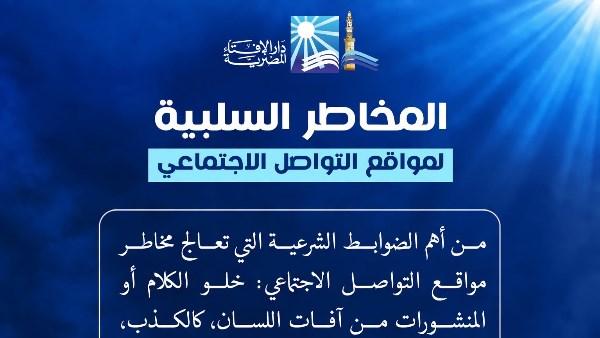

Egypt’s Dar Al-Ifta has warned about the risks of using social media incorrectly, emphasizing the importance of following Islamic guidelines when writing posts, comments, and interacting with others online.
The guidance highlights that digital communication should be based on awareness, responsibility, and respect, particularly because online content can spread rapidly and reach a large audience.
Islamic Guidelines for Using Social Media
Dar Al-Ifta emphasized that one of the most important ways to avoid the risks of social media is to ensure that posts and comments are free from harmful forms of speech.
These include lying, insulting others, mockery, vulgarity, indecent language, false or meaningless discussion, and exposing other people's private matters.
Users should also be careful about what they share and avoid spreading content that could harm individuals, damage their reputation, or violate their dignity and privacy.
Avoiding Harmful Arguments
Another important principle is avoiding arguments that create resentment and hostility between people.
Not every online disagreement requires participation. Engaging in unnecessary disputes can turn social media into a source of tension and hostility rather than a useful means of communication and knowledge exchange.
Users are also encouraged to avoid wasting time on excessive and meaningless discussions that provide no real benefit.
Responsibility When Posting and Commenting
Responsible social media use requires users to think carefully before publishing or sharing content.
Before posting, a person can consider whether the information is accurate, whether it provides a genuine benefit, and whether it could harm another person or violate their privacy.
Sharing content also carries responsibility. Users should therefore consider the consequences of reposting material before helping it reach a wider audience.
What Forms of Harmful Speech Should Be Avoided?
Harmful forms of speech include lying, insults, mockery, vulgarity, indecent language, false statements, and discussions that serve no legitimate purpose.
Respecting these principles applies not only to original posts but also to comments, private messages, reposts, and other forms of digital interaction.
Excellence in Sending Blessings Upon the Prophet
Dar Al-Ifta also explained the meaning of showing excellence in sending blessings upon Prophet Muhammad, peace and blessings be upon him and his family.
This includes honoring the Prophet, praising him appropriately, following his example, and expressing appreciation for his noble character and status.
The guidance also indicates that blessings upon the Prophet may be expressed through eloquent and appropriate formulations that convey respect and admiration, provided that they remain suitable and respectful.
Responsible Social Media Use
Responsible digital communication is part of treating others with respect. Because online content can spread quickly, every user should consider the potential consequences of their words and interactions.
Choosing words carefully, respecting privacy, avoiding insults, and staying away from destructive arguments can help make social media a more beneficial and respectful environment.
What are the main Islamic guidelines for using social media?
Users should avoid lying, insults, mockery, vulgarity, harmful arguments, and violations of other people's privacy.
Is sharing harmful content also a responsibility?
Yes. Users should verify content before sharing it because reposting contributes to its spread.
Why should people avoid unnecessary online arguments?
Because destructive arguments can create resentment, hostility, and further conflict.
What are harmful forms of speech on social media?
They include lying, insults, mockery, vulgarity, false statements, and harmful discussions that serve no beneficial purpose.