
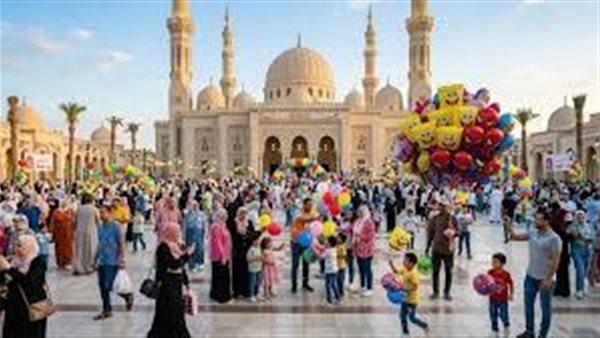

As the first moments of Eid morning arrive, Muslims gather to perform Eid al-Fitr prayer, one of the most important rituals of the blessed day, where spirituality blends with joy in a collective scene that fills mosques and open spaces with happiness and light.
Egypt’s Dar Al-Ifta explains that Eid al-Fitr prayer consists of two rak’ahs, differing from regular prayers in the number of extra takbeers and the recitation method.
In the first rak’ah, the worshipper makes seven takbeers after the opening takbeer, then recites Al-Fatiha followed by a short surah such as Al-A’la, and continues with bowing and prostration as usual.
In the second rak’ah, five takbeers are made after the standing takbeer, followed by Al-Fatiha and a surah such as Al-Ghashiyah or any verses from the Quran, then the prayer is completed until tasleem.
Takbeers are one of the most prominent features of Eid prayer, and it is recommended to raise the hands with each takbeer and separate them with remembrance of Allah such as praise, glorification, and declaration of His greatness.
It is also recommended to perform Eid prayer in congregation, followed by a sermon in which the imam reminds worshippers of gratitude and the blessings of the day.
The timing of Eid prayer begins shortly after sunrise, approximately 15 to 20 minutes later when the sun rises to the height of a spear, and continues until just before Dhuhr prayer, with preference for early performance.
Eid prayer remains a unique spiritual moment that brings hearts together in joy, remembrance, and renewal of faith.
For more health updates, follow Egypt Connect.




