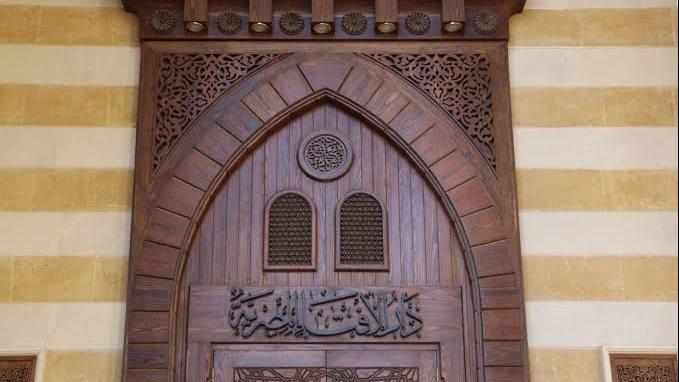

The Egyptian Dar al-Ifta has explained that sending blessings and peace upon Prophet Muhammad, peace and blessings be upon him and his family, may be expressed through established or newly composed formulas, provided their wording and meanings are appropriate and do not contradict Islamic principles.
This includes the commonly used formula beginning:
“O Allah, send blessings upon our master Muhammad, the healer of hearts and their remedy, the well-being of bodies and their cure, the light of eyes and their radiance, the nourishment of souls and their sustenance…”
The wording has prompted questions about whether it is permissible and whether using it should be considered an innovation.
The Formula “Healer of Hearts and Their Remedy”
The commonly circulated wording is:
“O Allah, send blessings upon our master Muhammad, the healer of hearts and their remedy, the well-being of bodies and their cure, the light of eyes and their radiance, the nourishment of souls and their sustenance, the spirit of souls and the secret of their continued existence, and upon his family and companions, and grant them peace.”
The formula expresses praise for the Prophet Muhammad, peace and blessings be upon him, while asking Allah to send blessings and peace upon him.
Its language highlights the Prophet’s honored status and the guidance, mercy and goodness conveyed through his message.
Is This Formula an Innovation?
According to the explanation presented by Dar al-Ifta, sending blessings upon the Prophet is not restricted to a single wording, provided that the formula contains sound meanings and does not include anything prohibited by Islamic law.
Therefore, a person may use a permissible formula such as this without declaring it to be a prophetic hadith or a specifically prescribed Sunnah.
A distinction should be made between a permissible formula for sending blessings upon the Prophet and a formula that is itself established as a prophetic Sunnah.
Not every newly composed wording should automatically be attributed to the Prophet.
Different Formulas of Salawat
Throughout Islamic history, scholars and worshippers have used various formulas for sending blessings and peace upon the Prophet.
Some formulas became associated with particular scholars and spiritual traditions and were given distinctive names.
The existence of different formulas does not mean that all of them are prophetic hadiths. Some were composed as devotional supplications by later scholars and worshippers, provided that their meanings remain sound and permissible.
The Difference Between Established and General Formulas
There is an important distinction between formulas established from the Prophet and general devotional formulas composed by scholars or Muslims.
The Salat Ibrahimiyyah, for example, is firmly established in the Sunnah and is recited in the prescribed prayer.
Other formulas may be used as general supplications and expressions of love and reverence for the Prophet, provided that their wording is permissible and they are not falsely presented as prophetic statements.
What Does “Healer of Hearts and Their Remedy” Mean?
The phrase “healer of hearts and their remedy” can be understood as devotional praise referring to the guidance, faith and mercy conveyed through the Prophet’s message.
It should not be understood as meaning that the Prophet independently possesses the power to cure or control creation.
Ultimate healing belongs to Allah alone. The phrase can instead be understood in a rhetorical and spiritual sense, referring to the guidance and goodness brought through the Prophet Muhammad, peace and blessings be upon him.
This distinction is important when interpreting highly expressive formulas of praise.
Sending Blessings Upon the Prophet
Sending blessings and peace upon the Prophet is an important act of worship encouraged in the Quran.
Allah says:
“Indeed, Allah and His angels send blessings upon the Prophet. O believers, send blessings upon him and greet him with peace.” [Quran 33:56]
Muslims are encouraged to frequently send blessings and peace upon the Prophet while maintaining sound meanings and avoiding claims that an unestablished formula is itself a prophetic tradition.
Conclusion
The formula “Healer of Hearts and Their Remedy” may be used as a form of salawat when its intended meaning is sound and consistent with Islamic belief.
However, it should not be presented as a prophetic hadith simply because it is widely circulated. Muslims should also understand expressions of praise within the boundaries of Islamic creed.
Healing and independent power belong to Allah alone, while the Prophet’s message brought guidance, mercy and goodness to humanity.
What is the ruling on saying “Healer of Hearts and Their Remedy”?
It may be used as a permissible formula for sending blessings upon the Prophet when its intended meaning is sound and does not contradict Islamic belief.
Is “Healer of Hearts and Their Remedy” a prophetic hadith?
It should not be considered a prophetic hadith merely because it is commonly recited.
Must Muslims use only the Salat Ibrahimiyyah?
The Salat Ibrahimiyyah is an established prophetic formula, particularly within the prescribed prayer. Other permissible formulas may be used as general devotional supplications.
Does “Healer of Hearts” mean that the Prophet independently cures people?
No. Ultimate healing belongs to Allah alone. The expression can refer to the guidance, faith and mercy conveyed through the Prophet’s message.
Are all formulas of salawat part of the Sunnah?
No. Some formulas are established in the Sunnah, while others are later devotional formulas that may be permissible if their wording and meanings are sound.