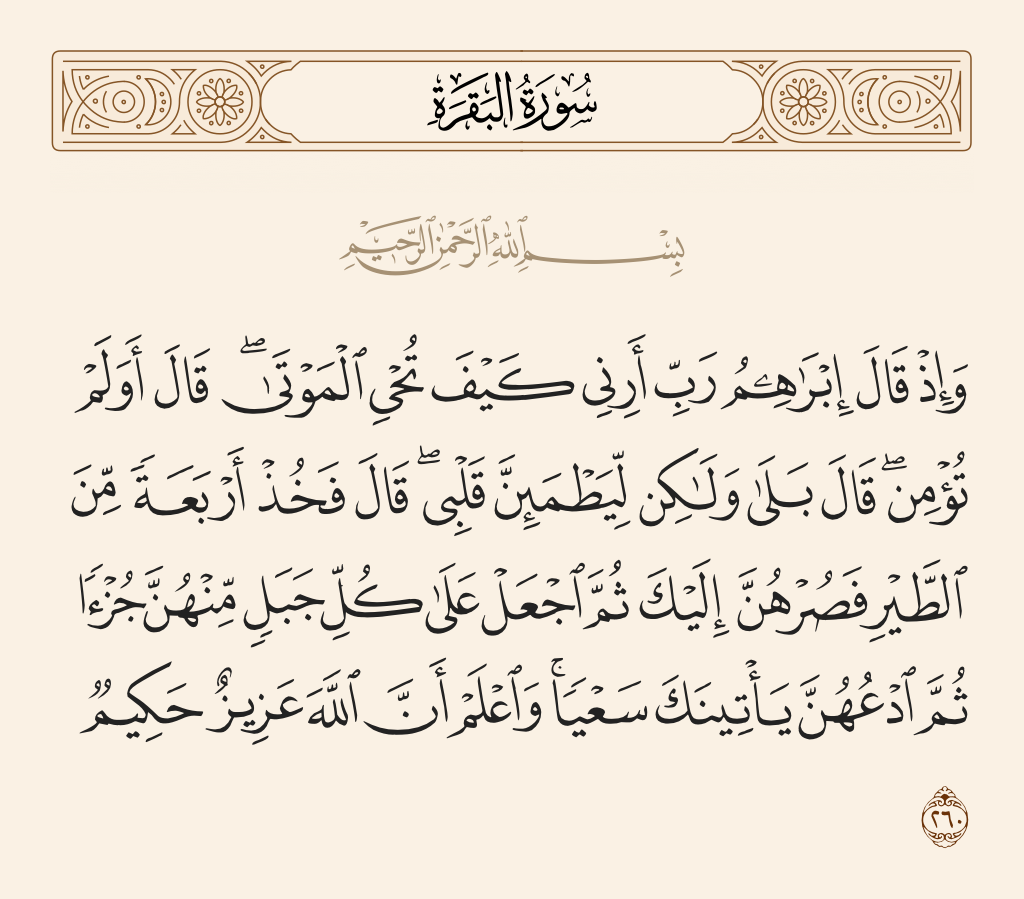

The Quran recounts that Prophet Ibrahim, peace be upon him, said: “My Lord, show me how You give life to the dead.” Allah then asked him: “Do you not believe?” Ibrahim replied: “Yes, but just to reassure my heart.”
This exchange does not indicate that Ibrahim doubted Allah’s ability to resurrect the dead. Rather, his question concerned how resurrection takes place, with the aim of gaining greater reassurance through witnessing it.
Did Prophet Ibrahim Doubt Allah’s Power?
Prophet Ibrahim did not doubt Allah’s power. He had already affirmed that Allah gives life and causes death during his debate with Pharaoh-like ruler Nimrod.
The wording of the Quran is also significant. Ibrahim did not ask whether Allah was capable of resurrecting the dead. He asked how Allah gives them life.
Therefore, his question was about the manner of resurrection, not about Allah’s ability to perform it.
What Does “So That My Heart May Be Reassured” Mean?
Ibrahim’s statement, “but just to reassure my heart,” indicates that he sought an even greater level of certainty and tranquility.
A person may already possess firm knowledge of a truth and still gain greater reassurance when that truth is witnessed directly. This is why scholars have explained Ibrahim’s request as a movement from knowledge of certainty to the certainty of direct observation.
Witnessing something does not mean that the previous belief was doubtful. Rather, observation can strengthen certainty and bring additional tranquility to the heart.
How Did the Prophet Explain Ibrahim’s Question?
The Prophet Muhammad, peace and blessings be upon him, said:
“We have more right to doubt than Ibrahim.”
This statement was not an affirmation that Ibrahim actually doubted Allah. Rather, it was understood as an expression of humility and as a clarification that Ibrahim’s question was not based on doubt.
His request was specifically about the manner of resurrection, as confirmed by his own words: “but just to reassure my heart.”
Can a Person Ask Allah for a Sign?
Scholars have mentioned that asking Allah for a sign may be permissible in certain circumstances, particularly when the purpose is to strengthen faith or assist in calling people toward the truth.
An example appears in the well-known story of the boy of the trench. He asked Allah to kill a great animal that had blocked people from passing so that he could know whether the way of the monk or the way of the magician was more beloved to Allah.
Another example involves Al-Tufayl ibn Amr Al-Dawsi, may Allah be pleased with him. After accepting Islam, he intended to return to his people and invite them to Islam. He asked the Prophet to pray that Allah give him a sign that would help him in his mission. The Prophet prayed for him, and Allah granted him a visible light.
These examples show that asking Allah for assistance or a sign can occur within a context of faith, conviction, and a legitimate purpose.
What Can We Learn From the Story of Ibrahim?
The story teaches several important lessons. One of the most important is that seeking greater certainty does not necessarily mean that doubt exists.
It also teaches us to distinguish between asking about the foundation of a belief and asking about how something occurs. Ibrahim already believed that Allah could resurrect the dead; he wanted to see how that resurrection would occur.
The story also highlights the importance of tranquility of the heart and seeking beneficial knowledge that strengthens faith and certainty.
Can Believers Ask Allah for Greater Certainty?
Yes. A believer may ask Allah to strengthen faith, increase certainty, grant steadfastness, and bring tranquility to the heart.
Such a request should be based on faith and trust in Allah, rather than doubt in the foundations of belief. Muslims can continually ask Allah for guidance, steadfastness, stronger faith, and peace of heart.
Conclusion
Prophet Ibrahim did not doubt Allah’s ability to resurrect the dead. His question concerned how resurrection takes place, as reflected in his words: “but just to reassure my heart.”
His story shows that seeking greater knowledge, certainty, and tranquility can be part of sincere faith. It also reminds believers that increased certainty does not necessarily mean that doubt existed beforehand.
Did Prophet Ibrahim doubt Allah’s ability to resurrect the dead?
No. He already believed in Allah’s power. His question concerned how resurrection takes place.
Why did Ibrahim say, “but just to reassure my heart”?
He wanted greater tranquility through witnessing how the resurrection would occur.
What did Ibrahim mean by asking “how” Allah gives life to the dead?
He was asking about the manner of resurrection, not questioning Allah’s ability to perform it.
Can a believer ask Allah for a sign?
It can be permissible in certain circumstances when the purpose is legitimate, such as strengthening faith or assisting in calling people to Islam.
What is the main lesson from Ibrahim’s story?
Greater certainty and reassurance do not necessarily indicate previous doubt. Seeking beneficial knowledge can strengthen faith and bring tranquility to the heart.