

Maher Al-Qamhawy
Dr. Maher Al-Qamhawy
Contact
Available Now1 Mosque Street, Sidi Beshr, Sidi Beshr Bahri, in front of Montazah District, above Canary Café, Alexandria, Egypt, , Alexandria
Overview
Doctorate in Orthopedics and Traumatology, Alexandria University
Description
Dr. Maher Al-Qamhawy
Orthopedic Surgery and Fractures Consultant
📍 Address:
1 Mosque Street, Sidi Beshr, Sidi Beshr Bahri, in front of Montazah District, above Canary Café, Alexandria, Egypt
📞 Phone Numbers:
+20 10 92266656
+20 10 98201845
🩺 Specialties:
🔹 Orthopedic Surgery
🔹 Fracture Surgery
🔹 Joint Replacements
🔹 Arthroscopy
🔹 Pediatric Bone Deformity Diagnosis and Correction
🎓 Academic Qualifications
PhD in Orthopedic Surgery and Fractures – Alexandria University
Advanced Training Courses in:
Joint Replacement Surgery
Arthroscopy Techniques
Pediatric Bone Deformity Correction
🔹 Medical Services Provided
Orthopedic Surgery and Fractures
Treatment of complex fractures using the latest surgical techniques.
Managing open and closed fractures in adults and children.
Providing comprehensive treatment plans including both medical and surgical treatments.
Sports Injuries: Treatment of ligament tears, sprains, and bone fractures.
Joint Replacements
Joint replacement for the knee, hip, shoulder, and ankle.
Using advanced artificial joints that provide better comfort and natural movement after surgery.
Joint replacement surgery to relieve pain from wear or degeneration.
Post-Surgery: Close follow-up to ensure complete healing and patient recovery.
Arthroscopy
Minimally invasive surgery using a small camera and precise tools to treat joint problems without large incisions.
Early diagnosis of problems in the knee, shoulder, ankle, etc.
Treatment of sports injuries (tendon tears, tendonitis, etc.).
Advanced techniques to speed up recovery and reduce downtime.
Pediatric Bone Deformity Diagnosis and Correction
Diagnosis and treatment of pediatric bone deformities such as flat feet, scoliosis, hip dysplasia, and congenital deformities.
Correction of deformities that arise from injuries or growth problems.
Treatment plans include surgery or natural therapies to correct deformities and ensure proper growth.
X-ray and Imaging Services in the Clinic
Diagnostic imaging such as X-rays to locate fractures or deformities.
MRI to assess soft tissue and joint conditions.
CT scans for more complex cases providing 3D imaging.
In-house exams to save time and speed up diagnosis and treatment.
📞 Additional Services
Contact and Booking:
You can contact the clinic via phone or WhatsApp for appointments and inquiries.
Remote consultations are available for follow-up and ongoing care via video.
The clinic is equipped with the latest medical devices to provide the best possible healthcare for patients.
Tags

Suggested Results
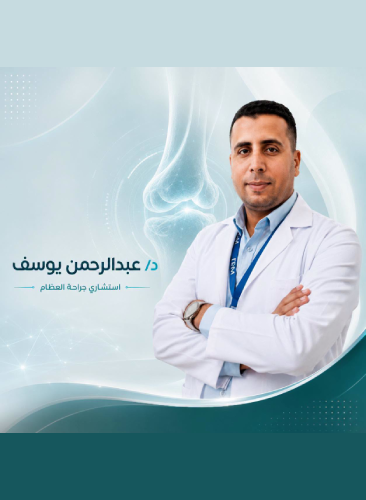
🦴 Orthopedic, Joint Arthroscopy Surgery in Alexandria Dr. Abdelrahman Youssef Consultant of Orthopedic Surgery, Knee... Read More: Dr. Abdelrahman Youssef
Bone pain can result from several causes, including:
- Injuries such as fractures or contusions.
- Osteoporosis or vitamin D deficiency.
- Arthritis or bone infections.
- Overexertion or intense physical activities.
- Other diseases such as tumors or infections.
Orthopedic surgery is a medical procedure used to fix fractures and injuries affecting bones and joints. This surgery helps in realigning the bones or replacing damaged joints, which aids in restoring mobility and relieving pain.
The ACL is one of the ligaments in the knee that helps stabilize the joint. If torn due to a sports injury, it can be treated through knee arthroscopy, where the arthroscope is used to repair the damaged ligament without fully opening the knee.
When a bone fractures, it is realigned into its proper position using surgery or a cast, depending on the type of fracture. If the fracture is complex, screws or plates may be used to stabilize the bone until it heals. After surgery, physical therapy is followed to rehabilitate the bones and joints.
Arthritis is a condition that causes swelling and pain in the joints and can be due to cartilage damage. If the condition is severe, it may be treated by replacing the damaged joint with a prosthetic device, such as in knee or hip replacement surgery.
A torn knee cartilage can happen due to an injury or sudden movement. If the tear is significant, it is treated with knee arthroscopy, where the damaged parts of the cartilage are removed using precise techniques without the need for a large incision.
Spinal surgery is used to fix vertebral or intervertebral disc problems that may cause back pain. If there is a herniated disc or spinal stenosis, treatment may involve removing the damaged part of the disc or bone, helping relieve pain.
A shoulder sprain can occur due to a sudden movement or heavy lifting. In some cases, shoulder arthroscopy may be needed to repair damaged tendons or ligaments. This is done through a small incision using precise tools to fix the shoulder without the need for major surgery.
Joint replacement surgery is needed when a joint becomes too damaged due to conditions like arthritis or osteoarthritis. In this surgery, the damaged joint is removed and replaced with a prosthetic joint to improve movement and reduce pain.
Sports injuries include ligament tears or muscle injuries. Orthopedic surgery is used to fix these injuries using techniques like arthroscopy to repair ligaments or damaged tissues, helping athletes return quickly to their activities.
Bone lengthening surgery is used to treat shortened limbs or bone deformities. In this surgery, a part of the bone is gradually separated using a special device to lengthen the bone until it reaches the desired length.
Knee pain can occur due to several factors, such as injuries (like sprains or ligament tears), arthritis (such as osteoarthritis), or excess weight, which places additional pressure on the joint. Sports activities or repetitive movements can also contribute to pain.
Treatment depends on the cause: if the injury is mild, rest and physical therapy may be sufficient to alleviate the pain. Cold or hot compresses can help reduce swelling, and if inflammation is present, the doctor may recommend pain-relieving or anti-inflammatory medications. In more severe cases, surgery or joint injections may be required.
