
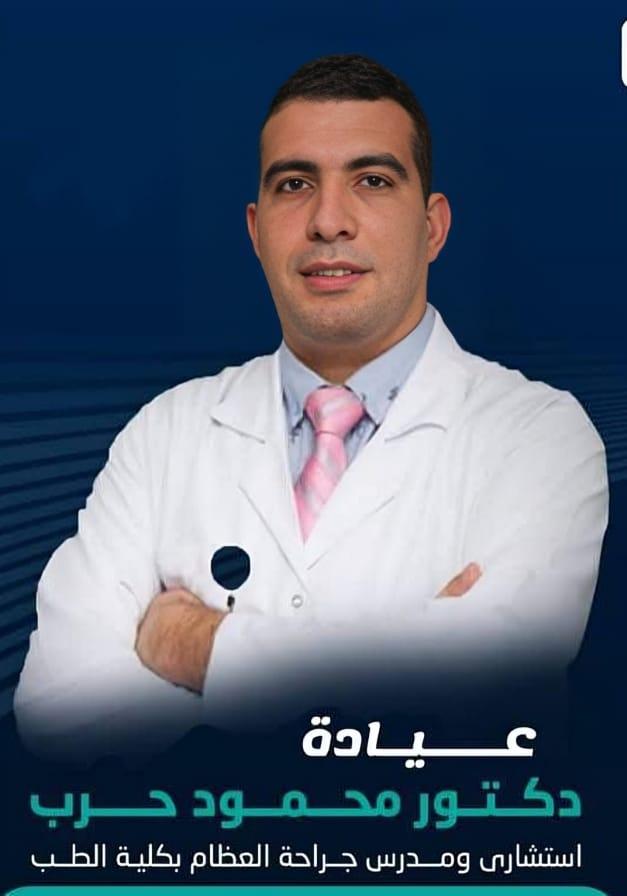
Dr. Mahmoud Harb

Dr. Mahmoud Harb

Dr. Mahmoud Harb

Neuro and spine surgery Qalyubia 5 (10 Reviews)
Egypt's #1 Verified Directory Verified Information
Contact
Available Now
Book Appointment / Phone
Address

Qalyub Station - Rosal Yusuf Railway Crossing - Noor El-Din Tower, 3rd Floor, Above Alpha Laboratory, in front of Qalyub Hospital, next to Qalyub Bridge., , Qalyubia

Follow Us
Overview

Consultant of Orthopedic Surgery, Joints, Spine, and Sports Injuries
Fractures and Trauma Specialist

Full Name Dr. Mahmoud Harb
City / Area Qalyubia
Description

Dr. Mahmoud Harb
Consultant Orthopedic Surgeon, Joint and Spine Specialist
Sports Injuries and Fractures

Medical Specializations:

Sports Injuries & Arthroscopy ๐Ÿƒ‍โ™‚๏ธโšฝ

Treating sports injuries using advanced arthroscopy techniques.

These techniques reduce recovery time and improve surgical outcomes.

Treatment for ligament and tendon tears, cartilage injuries, and sports fractures.

Spinal Surgery for Adults ๐Ÿ‹๏ธ‍โ™€๏ธ๐ŸŒ€

Treating herniated discs and relieving chronic back pain.

Surgery for spinal deformities like scoliosis and kyphosis.

Treating conditions such as cervical stiffness and degenerative spine issues.

Bone Deformities ๐Ÿฆต๐Ÿ”จ

Correcting bone deformities caused by injuries or congenital conditions.

Using advanced surgical techniques to straighten misaligned bones.

Bone correction surgeries for realignment and optimal function.

Foot and Ankle Surgery ๐Ÿ‘ฃ๐Ÿฆถ

Diagnosing and treating fractures and injuries in the foot and ankle such as:

Severe ankle sprains.

Complex fractures in foot bones.

Bone diseases and disorders in these areas.

Joint Replacement ๐Ÿ”„๐Ÿฆต

Joint replacement surgeries for severe joint degeneration, such as:

Knee replacement.

Hip replacement.

Using high-quality prosthetic joints to improve mobility and reduce pain.

Orthopedic Surgery ๐Ÿ”งโš™๏ธ

Correcting bone deformities using advanced surgical techniques.

Enhancing bone function and strengthening the skeletal system through precise surgeries.

Treating fractures that require surgical correction for proper healing.

Hand and Shoulder Surgery ๐Ÿ’ช๐Ÿ–๏ธ

Treating injuries and inflammation in the hand and shoulder such as:

Rotator cuff tears.

Hand fractures.

Shoulder issues like frozen shoulder.

Peripheral Nerve Surgery ๐Ÿง ๐Ÿ’ฅ

Treating damaged peripheral nerves due to injuries or swelling.

Using advanced surgical techniques to restore nerve function.

Treating nerve inflammations that may cause chronic pain and limited mobility.

Pediatric Orthopedics ๐Ÿ‘ถ๐Ÿฆต

Diagnosing and treating bone injuries in children caused by growth or accidents.

Correcting congenital bone deformities.

Sports injuries in children and safe treatment methods.

Rheumatism in Adults & Children ๐ŸŒฑ๐Ÿฉบ

Treating rheumatoid arthritis in adults.

Managing rheumatic diseases that affect joints and bones in both adults and children, such as:

Juvenile arthritis.

Chronic rheumatism in adults.

Comprehensive care for bone-related inflammatory conditions.

Academic Qualifications:

Master's and PhD in Orthopedic Surgery from Al-Azhar University ๐ŸŽ“

British Fellowship in Orthopedic Surgery and Joints ๐Ÿ‡ฌ๐Ÿ‡ง

Professional Experience:

Consultant Orthopedic Surgeon at Al-Azhar University Hospitals ๐Ÿฅ

Consultant Orthopedic Surgeon in Qalyoub City since 2018 ๐ŸŒŸ

Clinic Address 

Private Clinic:
๐Ÿ“ Qalyoub Station - Rozalyousif Railway Crossing - Nour El-Din Tower, 3rd Floor, above Alpha Lab, in front of Qalyoub Hospital, next to Qalyoub Bridge.

For Appointments and Inquiries:
๐Ÿ“ฑ 01029213043

Dr. Mahmoud Harb offers orthopedic and joint surgery services using the latest medical techniques, always ensuring the best care for patients at every step of treatment, from diagnosis to post-surgery care.

FAQ

FAQ

Comprehensive and direct answers to the most frequently asked questions about available services and specialties.

Egypt's #1 Verified Directory

โš ๏ธ Be cautious, as this is often due to trigeminal neuralgia. Its symptoms can be numerous and difficult to bear, such as: ๐Ÿ‘‡

๐Ÿ’ข Electric shock-like sensations lasting from seconds to minutes, and they may recur. ๐Ÿ’ข Difficulty chewing. ๐Ÿ’ข Loss of taste. ๐Ÿ’ข Facial numbness. ๐Ÿ’ข Headaches.

Treatment options include: ๐Ÿ‘‡

Medication ๐Ÿ’Š

Radiofrequency therapy โšก

Surgical intervention ๐Ÿ”ช

โญ• Treatment varies depending on the patient's condition and needs.

Nerve compression in the spine occurs when something like a disc or bone puts pressure on a nerve in the back or neck.

Symptoms:
๐Ÿ”ธ Pain in the back or neck.
๐Ÿ”ธ Numbness or tingling in the arms or legs.
๐Ÿ”ธ Muscle weakness or difficulty moving the hands or feet.
๐Ÿ”ธ A sensation of tingling or warmth in the limbs.

Treatment:
๐Ÿ’Š Medications: Such as pain relievers or anti-inflammatory drugs.
๐Ÿ’ช Physical therapy: Exercises to relieve pressure on the nerves and improve movement.
๐Ÿ›Œ Rest: Avoid activities that may increase pain.
๐Ÿฉบ Surgery: In rare cases, surgery may be needed to relieve pressure on the nerve.

If you experience these symptoms, it’s important to visit a doctor to determine the most appropriate treatment for your condition.


โœ… Yes, it is possible to treat a pituitary tumor without surgery in certain cases.

๐Ÿงช If the tumor secretes prolactin hormone (๐Ÿ“‰ prolactinoma), treatment typically involves:

Using medications such as:

Cabergoline

Bromocriptine

โžก๏ธ These medications help to:

Reduce hormone production.

Shrink the tumor size.

Sometimes, they are sufficient to achieve complete recovery.

๐Ÿ” In other cases:

If the tumor:

Puts pressure on nearby nerves (e.g., the optic nerve).

Does not respond to medication.

The recommended options may include:

๐Ÿฉบ Endoscopic surgery.

โ˜ข๏ธ Radiotherapy if surgery is not feasible.

๐Ÿฉป Conclusion: The appropriate treatment plan is determined by the physician based on the tumor's type, size, and the patient's symptoms.


โœ… Yes, surgery can be performed on the pituitary gland to remove tumors or treat conditions that affect it.

๐Ÿฉบ The most common surgery is endoscopic transsphenoidal surgery or pituitary gland endoscopic surgery. This procedure uses delicate endoscopes inserted through the nose to reach the pituitary gland, making it a minimally invasive alternative to traditional surgery.

โžก๏ธ Benefits of endoscopic surgery include:
๐Ÿ“‰ Less pain for the patient.
โฑ๏ธ Shorter recovery time.
๐ŸŽฏ High precision in tumor removal.

๐Ÿ” When is surgery performed?
It is recommended if the tumor:

  • Compresses surrounding nerves, such as the optic nerve.
  • Significantly affects hormone production.
  • Does not respond to medication.

โ˜ข๏ธ Surgical alternatives:
If surgery is not possible, options include:

  • Radiotherapy.
  • Medications (depending on the type of tumor).

๐Ÿฉป Conclusion: Endoscopic pituitary surgery is considered the best option for treating large or complex tumors due to its safety and effectiveness in most cases

โœ… Pituitary adenomas are common tumors, accounting for about 10% to 15% of all brain tumor cases. These tumors are most frequently seen in individuals in their thirties or forties and are rarely found in children.

๐Ÿฉบ Treatment for a pituitary tumor depends on several factors:

The type and size of the tumor.

The symptoms it causes.

The impact on glands and hormones.

1. Medication Treatment

๐Ÿ“… Duration:

In cases where the tumor secretes hormones like prolactin (prolactinoma), medications such as Cabergoline or Bromocriptine can show significant improvement in a short period. Medication treatment may continue for extended periods, ranging from several months to years, depending on the patient's response.

2. Surgery

๐Ÿ“… Duration:

If surgery is required to remove the tumor (especially if it’s pressing on nerves or causing hormonal issues), the procedure typically takes several hours.

Recovery Time:

Recovery is generally short, with most patients returning to normal activities within 2-4 weeks after surgery.

3. Radiotherapy

๐Ÿ“… Duration:

Radiotherapy may take several weeks or months, depending on the tumor’s response to treatment. It is usually complementary to surgery or medication when the tumor does not respond to either of the first two treatments.

4. Future Outlook

๐Ÿ”ฎ Prognosis is excellent in most cases:

Since most pituitary tumors are benign, the prognosis is very good after treatment.

Complete recovery may take several months to years, depending on the type of treatment the patient receives.

๐Ÿฉป Conclusion: The duration of treatment depends on the tumor type and the treatment method used. Medication may take longer, while surgery provides faster improvements.



โœ… Recovery time depends on several factors, such as the type of surgery and the patient’s overall health. In general, recovery can be divided into the following:

Returning to work:

๐Ÿง‘‍๐Ÿ’ป Office jobs: You can return after 2-4 weeks.

๐Ÿ› ๏ธ Active jobs: It is recommended to take 6 weeks off before returning to work.

Daily activities:

๐Ÿƒ‍โ™‚๏ธ Physical activities: Wait 6 weeks before resuming sports or intense exercise.

๐Ÿ›๏ธ Sexual activity: It can be resumed after 6 weeks.

Self-care and follow-up:

๐Ÿ’Š Medications: Patients may need hormonal medications or pain relievers.

๐Ÿฉบ Medical follow-up: Regular check-ups are needed to monitor hormone levels and pituitary health.

Life after surgery:

๐ŸŒฑ Healthy lifestyle: A balanced diet and sufficient sleep are essential.

๐Ÿฉป Conclusion:
The recovery time after pituitary gland surgery ranges from 2-6 weeks, with the importance of proper self-care and follow-up with the doctor for an effective recovery.


โœ… Pituitary gland tumor removal surgery is a sensitive procedure due to the gland's proximity to critical nerves and tissues. While the surgery is generally safe, it does carry some potential risks:

1. Potential Risks:

โš ๏ธ Damage to the pituitary gland: This can affect hormone production, leading to health issues such as diabetes insipidus.
โš ๏ธ Vision problems: The nearby optic nerves may be affected during surgery.

2. Post-Surgery Follow-up:

๐ŸŒฑ Hormone monitoring: Hormone levels will be closely monitored after surgery.
๐Ÿฉบ Medical care: Regular follow-up is essential to ensure proper recovery of the pituitary gland.

๐Ÿฉป Conclusion:
The surgery may pose risks if it causes damage to the gland or hormonal issues. However, with proper care and monitoring, complications can be minimized.

Symptoms of a herniated disc may include:
1๏ธโƒฃ Severe pain in the back or neck
2๏ธโƒฃ Numbness or weakness in the limbs (hands or legs)
3๏ธโƒฃ Difficulty with movement or balance
4๏ธโƒฃ Pain that worsens with movement or coughing

Treatment for migraines caused by spine problems includes:
1๏ธโƒฃ Physical therapy to strengthen the neck and back muscles.
2๏ธโƒฃ Medication to relieve pain and inflammation.
3๏ธโƒฃ Localized injections (such as steroid injections) to reduce inflammation in the spine area.
4๏ธโƒฃ Chiropractic adjustments to relieve pressure on the nerves.

Non-surgical treatment offers several benefits, such as:
1๏ธโƒฃ Quick results in pain relief and improved mobility.
2๏ธโƒฃ Avoiding the risks associated with surgery.
3๏ธโƒฃ Restoring daily activity quickly with no long recovery period.
4๏ธโƒฃ Providing long-term solutions for chronic pain relief.


Bone pain can result from several causes, including:

  • Injuries such as fractures or contusions.
  • Osteoporosis or vitamin D deficiency.
  • Arthritis or bone infections.
  • Overexertion or intense physical activities.
  • Other diseases such as tumors or infections.

Orthopedic surgery is a medical procedure used to fix fractures and injuries affecting bones and joints. This surgery helps in realigning the bones or replacing damaged joints, which aids in restoring mobility and relieving pain.

The ACL is one of the ligaments in the knee that helps stabilize the joint. If torn due to a sports injury, it can be treated through knee arthroscopy, where the arthroscope is used to repair the damaged ligament without fully opening the knee.

When a bone fractures, it is realigned into its proper position using surgery or a cast, depending on the type of fracture. If the fracture is complex, screws or plates may be used to stabilize the bone until it heals. After surgery, physical therapy is followed to rehabilitate the bones and joints.

Arthritis is a condition that causes swelling and pain in the joints and can be due to cartilage damage. If the condition is severe, it may be treated by replacing the damaged joint with a prosthetic device, such as in knee or hip replacement surgery.

A torn knee cartilage can happen due to an injury or sudden movement. If the tear is significant, it is treated with knee arthroscopy, where the damaged parts of the cartilage are removed using precise techniques without the need for a large incision.

Spinal surgery is used to fix vertebral or intervertebral disc problems that may cause back pain. If there is a herniated disc or spinal stenosis, treatment may involve removing the damaged part of the disc or bone, helping relieve pain.

A shoulder sprain can occur due to a sudden movement or heavy lifting. In some cases, shoulder arthroscopy may be needed to repair damaged tendons or ligaments. This is done through a small incision using precise tools to fix the shoulder without the need for major surgery.

Joint replacement surgery is needed when a joint becomes too damaged due to conditions like arthritis or osteoarthritis. In this surgery, the damaged joint is removed and replaced with a prosthetic joint to improve movement and reduce pain.

Sports injuries include ligament tears or muscle injuries. Orthopedic surgery is used to fix these injuries using techniques like arthroscopy to repair ligaments or damaged tissues, helping athletes return quickly to their activities.

Bone lengthening surgery is used to treat shortened limbs or bone deformities. In this surgery, a part of the bone is gradually separated using a special device to lengthen the bone until it reaches the desired length.

Knee arthroscopy is a medical procedure that uses a small camera (called an "arthroscope") and precise surgical instruments to treat knee problems. This surgery is performed through very small incisions rather than large cuts, reducing pain and speeding up recovery.

How is Knee Arthroscopy Performed?

Preparation: The patient is given local or general anesthesia depending on the case.

Inserting the Arthroscope: The arthroscope is inserted through a small incision in the knee, allowing the doctor to view the inside of the knee on a computer screen.

Treatment: Using small instruments, the doctor repairs any issues in the knee, such as cartilage tears or ligament injuries.

Closing the Incisions: After the procedure is complete, the small incisions are closed with stitches or medical strips.

When is Knee Arthroscopy Needed?

Torn Cartilage or Ligaments: When there is damage to the cartilage or ligaments stabilizing the knee.

Joint Inflammation: If there is joint damage due to conditions like arthritis.

Sports Injuries: Common for knee injuries resulting from sports or physical activities.

Benefits of Knee Arthroscopy Surgery:

Less Pain: Because the surgery is done through small incisions.

Faster Recovery: Smaller wounds result in quicker recovery compared to traditional surgery.

Quicker Return to Daily Activities: Patients can resume normal activities and sports much sooner.

Are There Any Risks? While arthroscopic surgery is less risky than traditional surgery, complications such as swelling or infection can occur, but these are rare.

In summary, knee arthroscopy is a modern and effective way to treat knee issues with reduced pain and faster recovery time.


Shoulder arthroscopy is a surgical procedure that uses a small camera (arthroscope) and precise tools to repair shoulder problems, such as torn tendons or cartilage damage. The procedure is performed through very small incisions, which reduces pain and speeds up recovery.

Shoulder arthroscopy is used

Torn Tendons or Cartilage: Such as torn tendons or damaged cartilage.

Arthritis: Especially when medications do not help with treatment.

Sports Injuries: Such as shoulder injuries caused by intense exercise or improper movements.

Benefits of Shoulder Arthroscopy Surgery:

Minimal Pain: Due to the small incisions.

Quick Recovery: The precise tools help minimize damage to tendons and tissues.

Quick Return to Daily Activities: You can return to your daily activities, including sports, faster after surgery.

Advantages of Arthroscopic Surgery:

Precision in Treatment: It is done with precise tools, reducing the likelihood of complications.

Reduced Swelling: Small incisions reduce swelling and pain compared to traditional surgery.

Excellent Results: Helps restore normal shoulder movement quickly.

With these advanced techniques, patients can regain their natural function faster and more effectively, with minimal risks and pain.

Knee pain can occur due to several factors, such as injuries (like sprains or ligament tears), arthritis (such as osteoarthritis), or excess weight, which places additional pressure on the joint. Sports activities or repetitive movements can also contribute to pain.
Treatment depends on the cause: if the injury is mild, rest and physical therapy may be sufficient to alleviate the pain. Cold or hot compresses can help reduce swelling, and if inflammation is present, the doctor may recommend pain-relieving or anti-inflammatory medications. In more severe cases, surgery or joint injections may be required.

To prevent bone and joint injuries, it's important to engage in regular exercise to strengthen the muscles that support the joints. Activities like walking or swimming can improve joint flexibility. Maintaining a healthy weight is also crucial, as excess weight places additional stress on the joints, particularly the knees and hips. Additionally, wearing appropriate shoes that provide good support for the joints and avoiding sudden movements or overloading the body are key steps in preventing injuries.

 
Search Directory