Important Health Awareness from the Clinic
Reliable medical information to protect your liver, digestive system, and kidneys
Does Gout Only Affect the Rich?
No… it does not distinguish between rich and poor. It can affect anyone who frequently consumes certain foods or has a genetic predisposition. Gout is not linked to wealth but to lifestyle and diet. Stress, insufficient water intake, and some medications may increase the risk.
Symptoms: Sudden severe joint pain (often the big toe) – redness, swelling and heat – pain that worsens at night – may be accompanied by a slight fever – attacks recur if untreated.
Causes: Elevated uric acid – excessive red meat, organ meats, seafood, sardines and legumes – alcoholic and carbonated drinks – obesity and inactivity – genetic factors – high blood pressure, diabetes and kidney disease.
Prevention: Regular uric acid testing – regular physical activity – reduce red meat, organ meats and seafood – avoid alcohol, carbonated drinks and sweetened juices – balanced low-purine diet – healthy weight – adequate water intake. Early treatment and a healthy lifestyle prevent recurrent attacks and protect joints and kidneys.
5 Causes That Destroy Your Kidneys Without You Noticing!
• Uncontrolled high blood pressure
• Diabetes and poor blood sugar control
• Using painkillers and medications without medical supervision
• Kidney stones and recurrent urinary tract infections
• Excess salt and processed foods
The kidneys are damaged silently and symptoms usually appear only in advanced stages.
Golden Tips: Control blood pressure and sugar – reduce salt and processed foods – drink enough water – use medications only when needed and under medical guidance – regularly monitor kidney function. Your kidneys are a trust… protect them.
10 Golden Tips to Protect Your Digestive System (Your Stomach Health is the Secret to Your Comfort and Life)
- Eat a healthy, balanced diet rich in fiber, vegetables and fruits
- Drink water regularly in sufficient amounts throughout the day
- Avoid fatty, fried foods and fast food
- Reduce spicy seasonings and foods that cause acidity
- Use medications carefully and avoid unnecessary painkillers
- Reduce stress and anxiety – they are major causes of digestive problems
- Exercise regularly and avoid prolonged sitting
- Stick to meal times and avoid eating at least two hours before bed
- Maintain a healthy weight – obesity increases stomach and liver problems
- Care for gut health and take probiotics when needed after consulting a doctor
Shortness of Breath While Walking Is Not Just Ordinary Fatigue!
It may be a sign of a health problem that needs attention.
Causes: Anemia and iron deficiency – heart diseases, especially coronary artery weakness – respiratory and lung problems – diabetes and its complications – dizziness and low blood pressure – obesity and poor fitness – some medications.
Advice: Balanced diet rich in iron and vitamins (especially B12 and D) – walk gradually – drink enough water – control blood sugar and blood pressure – avoid smoking and alcohol – do not ignore recurrent shortness of breath and see a doctor. Your health is safe with medical follow-up.
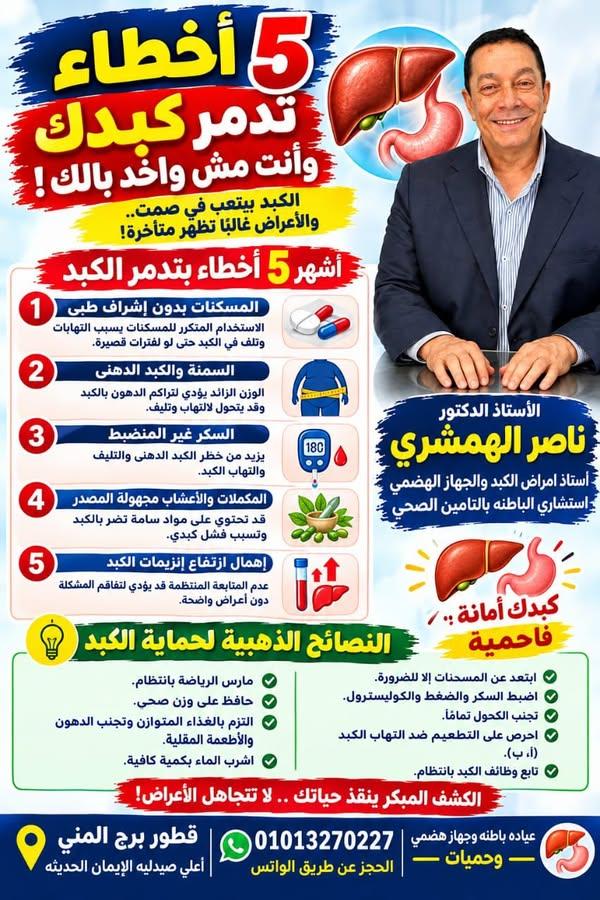
5 Mistakes That Destroy Your Liver Without You Noticing! (The Liver Suffers in Silence)
1. Painkillers without medical supervision (cause inflammation and damage even for short periods)
2. Obesity and fatty liver (may progress to inflammation and cirrhosis)
3. Uncontrolled diabetes (increases risk of fatty liver and cirrhosis)
4. Supplements and herbs of unknown origin (may contain toxic substances)
5. Ignoring elevated liver enzymes (worsens without clear symptoms)
Golden Tips: Avoid painkillers except when necessary – control sugar, blood pressure and cholesterol – completely avoid alcohol – get vaccinated against hepatitis (A, B) – regularly monitor liver function – exercise – maintain a healthy weight – follow a balanced diet – drink enough water. Early detection saves your life… your liver is a trust, so protect it.
Beware of 7 Signs Your Liver Is Giving You (You May Ignore Them… They Could Be the Start of a Serious Problem)
• Persistent fatigue and exhaustion
• Loss of appetite and weight loss
• Pain or heaviness in the upper right abdomen
• Yellowing of the skin and eyes (jaundice)
• Unexplained skin itching
• Darkening of urine (tea-colored)
• Swelling of the feet or abdomen in advanced stages
Advice: Avoid random medications and supplements without consultation – reduce fats, sugars and fried foods – healthy weight and physical activity – avoid alcohol and smoking – protect yourself from hepatitis viruses – eat healthy food – follow regular health check-ups. Early detection saves your liver… because the liver works in silence.
Beware of the Silent Liver (You May Have a Serious Disease Without Feeling It!)
The silent liver does not cause clear symptoms in its early stages, which is why it is called the silent killer – the disease can progress gradually without you noticing.
Early Symptoms: Persistent fatigue and exhaustion – loss of appetite and weight loss – mild upper abdominal pain – bloating and annoying gases – slight yellowing of the eyes or skin – dark urine and pale stools – nausea or early satiety.
Advice: Healthy and balanced food – avoid excess fats and fried foods – ideal weight and regular exercise – avoid alcohol and smoking – stick to viral hepatitis vaccinations – see a doctor if any worrying symptoms appear. Early detection protects you from the risk of liver disease. Your health is safe.
Constipation Is Not Just a Simple Problem – It Can Cause Serious Complications, So Don’t Ignore It!
Causes: Low fiber (vegetables, fruits, whole grains) – insufficient water intake – lack of movement – lifestyle changes (psychological stress, travel) – some medications (painkillers, iron supplements, blood pressure drugs) – certain diseases (IBS, thyroid, diabetes).
Complications: Hemorrhoids – anal fissures – rectal prolapse – intestinal obstruction (in severe cases) – increased risk of colon cancer with chronic constipation.
Golden Tips: Eat fiber daily – drink 6–8 glasses of water – do physical activity (even 30 minutes of walking) – do not ignore the urge to defecate – healthy lifestyle and adequate sleep – natural laxatives (prunes, flaxseeds) – see a doctor if it lasts more than two weeks. Together toward a healthier digestive system.