
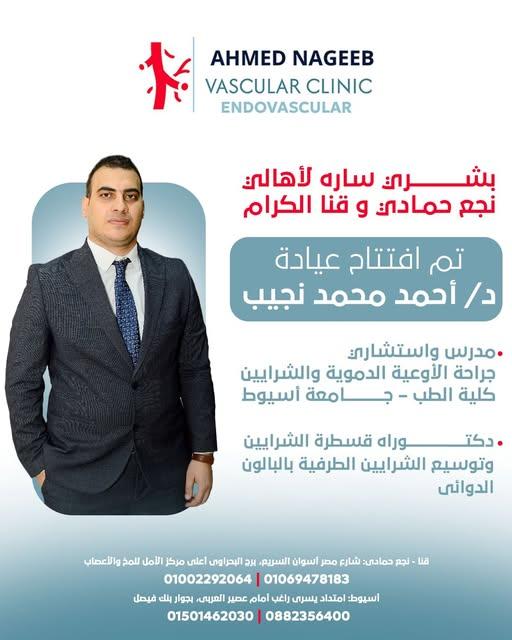
Dr. Ahmed Mohamed Naguib – Consultant Vascular & Arterial Surgeon in Assiut
Lecturer & Consultant of Vascular and Arterial Surgery – Faculty of Medicine, Assiut University
Dr. Ahmed Mohamed Naguib is a Lecturer and Consultant of Vascular and Arterial Surgery at the Faculty of Medicine – Assiut University. He holds a Doctorate in Arterial Catheterization and Peripheral Arterial Angioplasty using Drug-Eluting Balloons. He performs arterial catheterization and stent placement, treats peripheral arterial insufficiency, occlusion, and thrombosis, carotid artery disease, and aortic surgeries and stenting. He also treats varicose veins with injection, laser, and surgery, venous ulcers, diabetic foot, vascular birthmarks, and creates dialysis access fistulas, in addition to performing Doppler ultrasound for accurate evaluation of arteries and veins. He receives patients at his clinics in Assiut and Qena (Nagaa Hammadi).
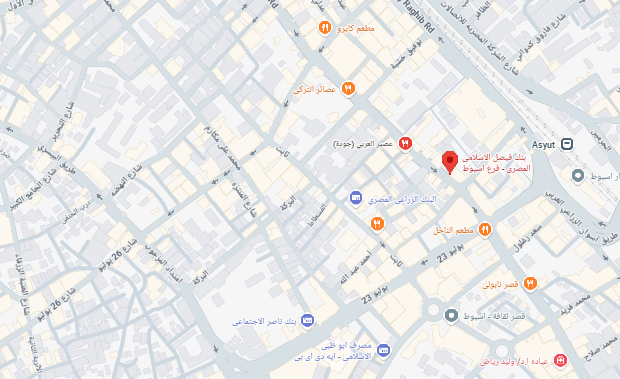
Assiut Clinic (Main Branch)
Location: Assiut
Booking & Inquiry Numbers: 01501462030 / 01105115737
WhatsApp: Available for booking and inquiries via clinic numbers.
Qena – Nagaa Hammadi Clinic (Second Branch)
Location: Qena – Nagaa Hammadi
Booking & Inquiry Numbers: 01501462030 / 01105115737
WhatsApp: Available for booking and inquiries via clinic numbers.
Curriculum Vitae & Academic Qualifications of Dr. Ahmed Mohamed Naguib
Faculty of Medicine – Assiut University.
Using drug-eluting balloons for treating leg and limb arterial occlusions.
Peripheral arterial, carotid, and aortic stents.
Injection, laser, and surgical treatment of varicose veins, and creation of dialysis access fistulas.
Book a Consultation with Dr. Ahmed Mohamed Naguib & Clinic Schedules
Working Hours: Appointments by prior booking and registration.
Booking Numbers: 01501462030 / 0883356400
WhatsApp: 01105115737 (available for booking and inquiries).
Services of Dr. Ahmed Mohamed Naguib in Vascular Surgery

Comprehensive diagnostic and therapeutic services for arterial and venous diseases in adults
Arterial Services
Doppler Ultrasound Examination
Accurate assessment of arteries and veins, blood flow direction, and valve efficiency before determining the appropriate treatment.
Arterial Insufficiency, Thrombosis & Occlusion
Treatment of peripheral arterial narrowing and occlusion causing leg pain on walking, cold feet, and color changes.
Arterial Catheterization & Stent Placement
Peripheral arterial angioplasty using drug-eluting balloons and modern stent placement without open surgery in suitable cases.
Carotid Artery
Treatment of carotid artery stenosis supplying the brain to prevent strokes.
Aortic Surgery & Stenting
Repair of aortic aneurysms surgically or with stent placement according to the patient's condition.
Venous Services
Varicose Veins & Venous Ulcers
Treatment of varicose veins, chronic venous ulcers, and leg swelling using the latest methods.
Sclerotherapy & Surgical Treatment of Varicose Veins
Treatment of varicose veins with intravenous injection or surgery based on Doppler examination results.
Laser Varicose Vein Treatment & Vein Sessions
Closure of the affected vein using a fine catheter that delivers laser energy, with faster recovery than traditional surgery in suitable cases.
Diabetic Foot
Examination of foot circulation and treatment of wounds and ulcers before they progress, to preserve the foot.
Vascular Birthmarks & Dialysis Access Fistulas
Evaluation and treatment of vascular-related birthmarks, and creation of arteriovenous fistulas for dialysis patients.
Frequently Asked Questions about Vascular Diseases
Do you feel pain in your leg while walking that disappears when you rest?

These symptoms may indicate reduced blood flow to the foot due to narrowing or occlusion of the leg arteries. As the occlusion progresses, the pain may appear with less effort or even at rest. Proper examination helps identify the location and severity of the problem and determine the appropriate treatment.
Why has laser become one of the most popular methods for treating varicose veins?
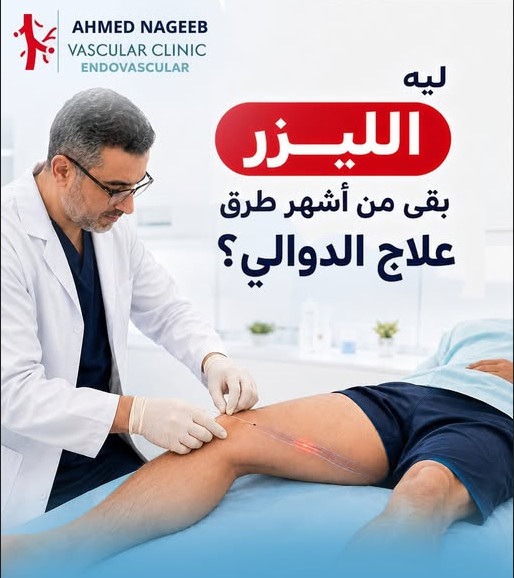
Because it is performed through a fine catheter that delivers laser energy to close the affected vein, while blood continues to flow through healthy veins. It is a relatively simple procedure with shorter recovery time in suitable cases. However, laser is not the best choice for every case of varicose veins — the method is determined after examination.
Why is Doppler examination so important before treating varicose veins?
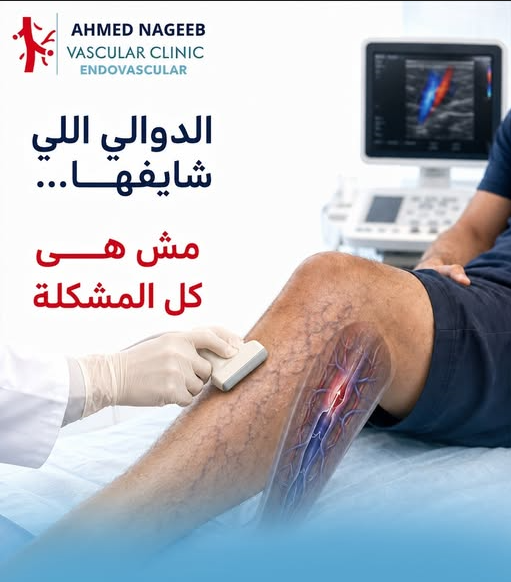
Because the external appearance of varicose veins does not tell the whole story. Doppler allows the doctor to see the condition of the veins from the inside, confirm blood flow direction and valve efficiency, and this helps choose the most suitable treatment method — whether injection, laser, or another approach.
Are all diabetic foot cases at risk of amputation?
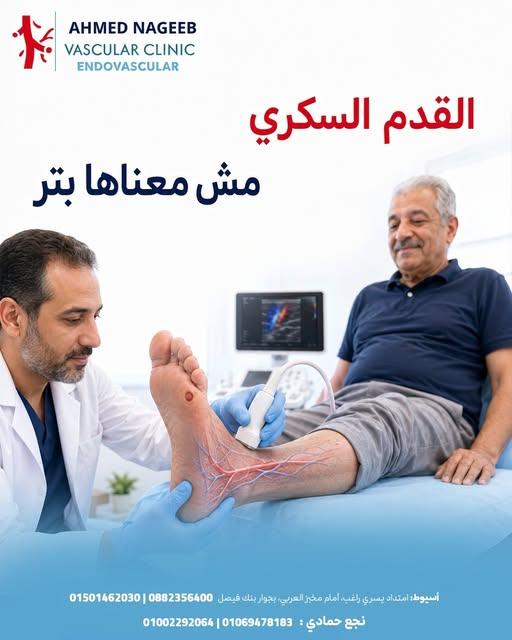
No, amputation is not inevitable. However, any wound or ulcer can progress if the underlying cause is not identified and treated in time, especially if there is poor circulation. Early detection of the problem and examination of the arteries can help choose the appropriate treatment before the condition worsens.
What is the difference between a regular birthmark and a vascular-related birthmark?

A vascular-related birthmark is caused by abnormal blood vessels and may change in color or size over time. If you have a birthmark that changes, causes pain, or swelling, it is best to have it evaluated to determine its nature and the appropriate way to manage it.
Why can vein thrombosis occur without injury?
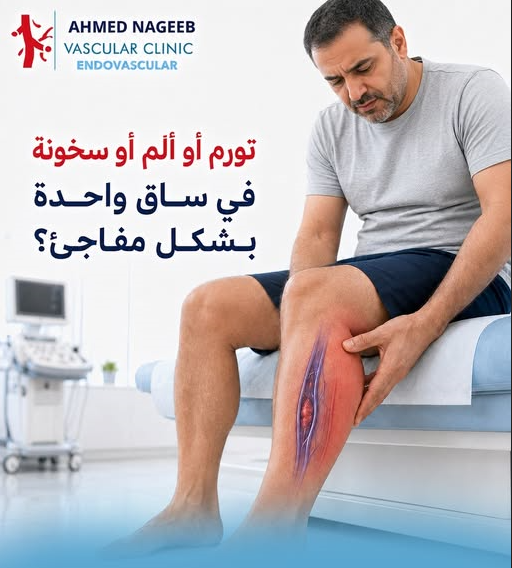
Because thrombosis does not necessarily require trauma or injury. It can result from prolonged immobility, long-distance travel, certain surgeries, or factors that increase the body's tendency to form clots. If sudden swelling, pain, or warmth appears in one leg, Doppler examination helps confirm the presence of a clot and assess the condition of the veins.

